Sickle Cell Anemia and Pregnancy in India for Nigerian Patients

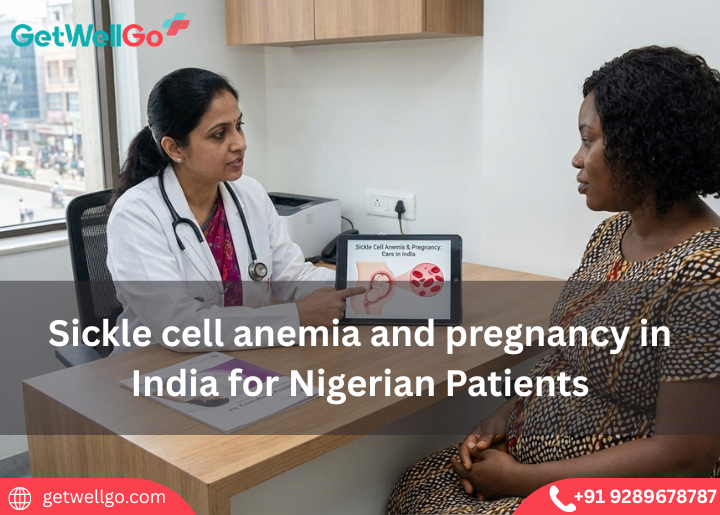
Sickle Cell Anemia and Pregnancy in India for Nigerian Patients is managed safely. GetWellGo ensures expert care for a healthy delivery. Start your journey.
Sickle Cell Anemia and Pregnancy in India for Nigerian Patients

Sickle cell anemia and pregnancy

Sickle cell anemia is a hereditary disease that causes volume depletion in red blood cells. Typically round and flexible, red blood cells become rigid, forming a crescent or sickle shape in SCA. These abnormally shaped cells can block blood flow, which causes pain, organ damage, and a greater vulnerability to infections. Pregnancy and sickle cell anemia is high-risk as both mother and fetus have higher chances to suffer complications. But close medical supervision and care, pregnancy in women with SCA is feasible and most of them are able to have successful pregnancies.

Sickle Cell Anemia and Pregnancy: The connection

Sickle Cell Anemia and Pregnancy are interrelated because pregnancy puts more strain on the body and can worsen SCA problems. Conversely, pregnancy is impacted by Sickle cell anemia by the things it has an effect on such as blood flow, oxygen levels and organ functions.

This synchronization means:

Increasing Vigourous Prenatal Physical Demand

  • Pregnancy increases blood volume, heart rate and oxygen need.
  • Red cells are already abnormal in oxygen transport in sickle cell anemia.
  • This exacerbates anemia and leads to more frequent sickle cell crises (painful crises caused by blocked blood vessels).

Placental and Vascular Complications

  • Sickle cells are sticky, and tend to clog blood vessels

Can reduce placental blood flow during pregnancy causing:

  • Oxygen and nutrient deprivation to the fetus
  • Risk of miscarriage, stillbirth, or IUGR. 

Impaired Immunity and Infectious Diseases 

  • Pregnancy and Sickle Cell Anemia both weaken the immune system.
  • Women with SCA who are pregnant are more prone to developing infections (such as UTIs, pneumonia) which may lead to crises or result in preterm labor.

Complications Asset Preeclampsia, Haemorrhage, Thrombocytopenia

  • SCA also increases the risk of preeclampsia and hypertension.
  • It also increases the risk of clotting, and pregnancy thins the blood, making it more prone to clotting — doubling the peril.

Genetic Link

  • SCA is inherited. An expectant mother with SCA can pass the gene to her child.

If both parents have the sickle cell trait, there's a:

  • 25% chance the child will have sickle cell anemia
  • 50% chance of inheriting the trait
  • 25 percent chance that the child will be unaffected.

Sickle cell anemia and pregnancy in India for Nigerian Patients

The following is an in-depth plan on sickle cell anemia and pregnancy that is applicable to the needs of Nigerian patients seeking care in India:

Sickle Cell Anemia Pregnancy -Why It Is High Risk?

Pregnant women who are affected with sickle cell anemia (SCA) have a high risk of having medical problems since:

  • Pregnancy raises the oxygen and nutrient requirements of the body, and SCA already impairs the delivery of oxygen and enhances hemolysis.
  • SCA is associated with increased maternal morbidities such as vaso-occlusive crisis (pain attacks), acute chest syndrome, infections, pre-eclampsia, and thrombosis.
  • Fetal risks are also high - Includes IUGR, preterm delivery, low birth weight, miscarriage and stillbirth. 

Prenatal Standards of Care and Management

The general best practices in the management of sickle cell in pregnancy are usually:

Pre-Pregnancy Planning

  • Preconception counselling: entails genetic counselling of both individuals to determine the risk of an infected child.
  • Baseline testing: kidney, heart, breathing ability prenatal.
  • Minimize nutrition and supplementation: including folic acid.

During Pregnancy

  • Obstetrician, hematologist, maternal-fetal specialist care.
  • Regular antenatal check-ups- to monitor the mother and fetus.
  • This can be prophylactic folic acid, prevention of infections and blood transfusion.
  • Infection and pain crisis treated timely using supportive care.

Delivery & Postpartum

  • Plan deliveries in well-equipped hospitals ready to provide emergency maternal or neonatal assistance.
  • The follow-up of the newly born baby with the hematology and infant monitoring are followed up with the postnatal care.

Indian Medical Tourism among the Nigerian patients

Why India?

India is a country where patients in Nigeria and other nations usually seek elaborate medical treatment due to:

  • Global classes of hospitals with qualified specialists.
  • Low cost treatment as opposed to the West.
  • International patient support services and English-speaking environment.
  • Hospitals are usually helpful in consultation, visa support paperwork, and international patient logistics.

Visa & Logistics

Nigerian patients seeking treatment in India require a visa of the type of Visa Medical Visa which they should usually back up with:

  • Invitation letter of the treatment plan with a hospital.
  • Doctors' reports and evidence of financial ability.
  • The patient is as a rule entitled to two attendant companions.

Useful Tips

  • A certain amount of planning may be helpful: It is advisable to get consultation from the Indian experts on line before going. 
  • Make sure that the medical records are translated (when required) and prepared.
  • Establish post-treatment follow-up procedures - a majority of providers provide telemedicine services once the patient gets home.

Sickle cell pregnancy complications India Nigerians

High-risk pregnancy is observed in women with sickle cell anemia (HbSS), as well as other severe forms of SCD. Tertiary care centers in India provide combined services of hematology and maternal-fetal medicine where Nigerian patients, which usually harbour more severe genotypes, are given.

Maternal Complications

  • Vaso-occlusive crises
  • Severe anemia
  • Thromboembolism
  • Acute Chest Syndrome
  • High blood pressure in lung (pulmonary) arteries. 
  • Hypertensive disorders
  • Chronic kidney disease & proteinuria
  • Heart failure
  • Greater vulnerability to infections

Fetal and Infant Complications 

  • Restriction of fetal growth in uterus 
  • Preterm birth
  • Low birth weight
  • Stillbirth & miscarriage
  • Birth asphyxia
  • Neonatal anemia

Delivery-Related Complications

  • Higher cesarean section rates
  • Postpartum hemorrhage
  • Infections
  • Postpartum vaso-occlusive crises
  • Ischemic events in the postpartum period

Factors Affecting Sickle cell crisis during pregnancy India cost

The cost of managing a sickle cell crisis during pregnancy can take widely different amounts of money depending on the complexity of medical care, type of hospital used and duration of treatment. As such cases are categorized as the high-risk obstetric emergencies; costs are usually higher than the normal antenatal packages.

Hospital Type & Location

  • International patient centers and tertiary hospitals are usually higher in price.
  • The base charges are usually higher in the hospitals with ICU, NICU, and sophisticated blood banks.

The Crisis Severity and Frequency

  • Mild pain crisis that is treated using hydration, oxygen, and oral/IV drugs is cheaper.
  • Extremity crisis situations with acute chest syndrome, severe anemia or infection are costly because they necessitate ICU placement, ventilation and expert care.
  • Repeated hospitalization during pregnancy increases total costs tremendously.

Blood Exchange Therapy and Transfusion

  • Basic transfusion involves laboratory, blood unit and monitoring expenses.

Exchange transfusions (applied in case of severe complications are more costly because of:

  • Specialized equipment
  • ICU monitoring
  • Multiple blood units
  • Uncommon blood types or antibody-compatible blood make the matters more expensive.

Diagnostic and Monitoring Tests

Repeated:

  • CBC, reticulocyte count
  • Kidney & liver function tests
  • Chest X-rays / CT scans (for ACS)
  • Fetal ultrasound & Doppler examinations.

The high-risk pregnancies demand more frequent testing which adds to overall bills.

Age of Gestation and Fetus’s Complications

Preterm birth or fetal distress may necessitate:

  • Emergency cesarean section
  • NICU admission for the baby
  • Neonatal ICU has the potential to be an enormous expense generator of international patients.

Length of Hospital Stay

  • Observation stays (1 to 3 days) are less expensive.
  • ICU or HDU admission (5-14 days or more) has a great impact on the overall expenditures.
  • Prolonged antenatal stay during late pregnancy to monitor is an addition of room and nursing expenses.

Patient Services 

These additional expenses are common to the Nigerian patient:

  • Hospital invitation letters and medical visa documentation.
  • International patient co-ordinators.
  • Interpreter services (where necessary)
  • Pick up at the airport and medical accommodation.
  • Long-term accommodation around the hospital.

Drugs and Advocacy

  • Narcotics (IV opioids, oxygen therapy)
  • Antibiotics (to infection/sepsis)
  • Anticoagulants (to risk thrombosis)
  • Nutritional supplementation and folic acid.
  • Produced drugs and long-lasting IV treatment make things more expensive.

Mode of Delivery

  • Normal delivery is less expensive through vaginal means.

Emergency or scheduled cesarean section incurs additional costs because of:

  • Operating theater fees
  • Anaesthesia
  • Longer hospital stay
  • Postoperative monitoring

Anemia sickle cell pregnant women India Nigeria

Pregnancy is a predisposing factor for increased blood volume and iron demand. This natural change worsens chronic hemolytic anemia in those with sickle cell disease (SCD), especially HbSS (sickle cell anemia), and these pregnancies are high risk and require specialist care. 

Key Mechanisms:

  • Chronic hemolysis Sickle-shaped red blood cells lyse more rapidly than usual.
  • Hemodilution of pregnancy: There is an increase in plasma volume and a decrease in red mass.
  • Nutritional deficiencies: Folate, and iron (only in case of deficiency) in particular.
  • Infection and inflammation: Malaria, UTIs and sepsis increase the destruction of red blood cells.
  • Bone marrow stress: It cannot withstand the pressure of red cell production. 

High risk pregnancy sickle cell India treatment

Pregnant women with sickle cell anaemia (HbSS) or other severe phenotypes of the disease also have markedly increased risks of maternal and fetal complications. Usually these cases are managed with multidisciplinary care using protocols in tertiary hospitals in India. 

Multidisciplinary Model of Care

Most developed Indian hospitals offer coordinated care by:

  • MFM specialist/ high-risk obstetrician
  • In maternal and fetal medicine.
  • Hematologist
  • Anaesthesiologist
  • Neonatologist (NICU team)
  • Critical care specialist
  • This multidisciplinary approach forms the basis of reduced complications and improved outcomes. 

Observation and Prevention in Pregnancy

Monitoring Regularly 

  • Hemoglobin & reticulocyte count (after each 2-4 weeks or more often in case of unstable condition)
  • Kidney & liver function tests
  • Blood pressure and urine protein (pre-eclampsia screening)
  • Fetal ultrasounds and Doppler scans (blood flow of the placenta and the fetus)
  • Screening for UTI, malaria, hepatitis, HIV and respiratory infections. 

Preventive Measures 

  • Folic acid (standard in all SCD pregnancy)
  • Iron should be used when iron deficiency is ascertained.
  • Hydration education, prevention of stimuli (cold, dehydration, stress)
  • Updates on vaccination (as recommended by the care team)
  • Aspirin low dose in pre-eclampsia prevention (physician-directed) in selected patients.

Treatment of pregnant women

Pain & Crisis Management

  • Rapid hospitalization of vaso-occlusive crisis.
  • IV fluids, oxygen therapy
  • Nursing analgesia (safe and opioids when needed)
  • Pre-natal infection prevention using antenatal-safe antibiotics.

Blood Transfusion Strategy

  • Symptomatic anemia or fetal compromise Simple transfusion.

Transfuse with extreme complications including:

  • Acute chest syndrome
  • Stroke
  • Severe hypoxia or multi-organ.

There are centers that employ prophylactic transfusion on women who experience recurrent crises or have poor obstetric history.

Genetic Counselling, Fetus Testing

  • Partner testing (among these are Hb electrophoresis or genetic testing)

In case both parents are carriers of sickle genes:

Prenatal diagnosis 

  • Newborn screening and early pediatric follow-up counselling.

Planning of delivery in Indian Hospitals

  • Scheduled delivery in tertiary care unit ICU and NICU.
  • Vaginal delivery is typically recommended if the mother and fetus are healthy. 
  • Elective cesarean section for obstetric or medical indications (fetal distress, severe maternal comorbidities) 
  • Constant oxygen, liquid and temperature regulation during childbirth to avoid crisis.

Postpartum & Neonatal Care

Close monitoring for:

  • Postpartum pain crises
  • Thromboembolism
  • Infections

Neonatal:

  • Newborn screening for SCD
  • NICU assistance: in case of preterm or low weight of birth.
  • Medication safety counseling on breastfeeding.

Sickle cell pregnancy success rate India Africans

These are the results of pregnancy of women with sickle cell disease (SCD) in India - with an Indian context regarding African (e.g., Nigerian) patients wanting treatment or counselling:

  • The rate of stillbirth between women with SCD and those without SCD is 9.9% and 4.2 respectively.
  • 45% SCD deliveries were pre-term (compared to 17.3% non-SCD)
  • Low birth weight was observed in 70 percent of cases of SCD births.
  • Almost half of them had to receive blood transfusion during labor.

These results demonstrate considerably high risks, which suggests the absent perfection (e.g. >90% uncomplicated) of the success rates is typical in nature/untreated environments.

Conclusion

Pregnancy with sickle cell disease is a high-risk clinical situation for maternal complications, such as anemia, vaso-occlusive crisis, acute chest syndrome, infections, and hypertensive disorders, and fetal complications including preterm birth, growth retardation, and stillbirth. Tertiary hospitals with multidisciplinary teams, well-equipped blood transfusion services, intensive care, maternal and neonatal care, genetic counselling and an established system of antenatal monitoring can be a beacon of hope for African and specifically Nigerian patients who come to India for treatment, immensely improving their chances of survival and successful delivery. Although standardized success rates are not consistently reported, there is always evidence to support the idea that the most important determinants of attaining positive maternal and neonatal outcomes among this risk group of the population are early referral, ongoing specialist care, timely post-partum management of complications, and a planned delivery in a properly equipped center.

Sickle cell pregnancy India GetWellGo Nigerians

GetWellGo is regarded as a leading supplier of healthcare services. We help Nigerian patients choose the best treatment locations that suit their needs both financially and medically.

We offer:

  • Complete transparency
  • Fair costs.
  • 24 hour availability.
  • Medical E-visas
  • Online consultation from recognized Indian experts.
  • Assistance in selecting India's top hospitals for sickle cell pregnancy.
  • Expert doctor with a strong track record of success
  • Assistance during and after the course of treatment.
  • Language Support
  • Travel and Accommodation Services
  • Case manager assigned to every patient to provide seamless support in and out of the hospital like appointment booking
  • Local SIM Cards
  • Currency Exchange
  • Arranging Patient’s local food

Recent Blogs

GetWellGo Team • September 12, 2025

GetWellGo helps international patients access top pelvic organ prolapse treatment in India with expert care, advanced surgery & complete support.

Read More