General Surgery
Sub-Total Thyroidectomy Treatment
Sub-Total Thyroidectomy
Thyroidectomy is the technique of removing all or part of the thyroid gland. The thyroid gland produces hormones that regulate every aspect of an individual’s metabolism, from the patient’s heart rate to how rapidly they burn their calories. It is used to treat thyroid disorders, like cancer, a noncancerous enlargement of the thyroid and overactive thyroid.
What is Thyroidectomy?
Thyroidectomy is the technique of removing all or part of the thyroid gland. The thyroid gland produces hormones that regulate every aspect of an individual’s metabolism, from the patient’s heart rate to how rapidly they burn their calories. It is used to treat thyroid disorders, like cancer, a noncancerous enlargement of the thyroid (goiter) and overactive thyroid (hyperthyroidism). How much of the patient’s thyroid gland will required to remove during thyroidectomy depends on the reason for surgery. If only a small portion is removed (partial thyroidectomy), the patient’s thyroid may be able to function normally like before, after surgery. If the patient’s entire thyroid is removed (total thyroidectomy), they will require daily treatment with thyroid hormone for replacing their thyroid's natural function.
Types of Thyroidectomy are as follows:
- Hemithyroidectomy: Entire isthmus is being removed along with one lobe. Performed in benign diseases of only one lobe.
- Subtotal thyroidectomy: Removing the majority of both lobes, which leaves behind four to five grams (which is approximately equal to the size of a normal thyroid gland) of thyroid tissue on one or both the sides, this is considered to be the most common operation for multinodular goiter.
- Partial thyroidectomy: Removing the gland in front of trachea after the mobilization. Done in nontoxic MNG (Benign multinodular goiter), its role is quite controversial.

 ?
? - Near total thyroidectomy: In near total thyroidectomy both lobes are being removed except for a small amount of thyroid tissue (on one or both sides) which lies in the vicinity of the recurrent laryngeal nerve access point and the superior parathyroid gland.
- Total thyroidectomy: In total thyroidectomy removal of an entire gland takes place. It is performed in the cases of medullary carcinoma of thyroid, papillary or follicular carcinoma of the thyroid. This is now also the most common operation performed by the surgeons for multinodular goiter.
- Hartley Dunhill operation: Removing one entire lateral lobe with isthmus subtotal removal or part of the opposite lateral lobe. It is performed in nontoxic MNG.
Thyroid Hormone Supplementation Therapy
Thyroid hormone supplementation therapy therefore involves the use of artificial thyroid hormones. Most commonly it is used to manage hypothyroidism which is an underactive thyroid caused by conditions such as Hashimoto’s thyroiditis, thyroidectomy or any other thyroid disorders.
Total Thyroidectomy Treatment
Total thyroidectomy is a comprehensive procedure to remove the entire gland where Persistence of hyperthyroidism is the presence of high levels of hormones in the body long after treatment. It is usually used in certain thyroid disorders, for example thyroid cancer, large multinodular goiters, or Graves’ disease when drugs or other therapies are contraindicated or have failed.
Need for Sub-Total Thyroidectomy Treatment
A subtotal thyroidectomy (or a partial thyroidectomy) means that only a part of the thyroid gland is to be removed. The decision to perform a subtotal thyroidectomy may be recommended for several reasons, including:
- Thyroid Cancer
- Benign Thyroid Disorders
- Hyperthyroidism
- Thyroid Nodules
- Thyroid Dysfunction
 Free Consultation on WhatsApp
Symptoms leading to Sub-Total Thyroidectomy Surgery
Possible symptoms which may lead to the decision for subtotal thyroidectomy includes thyroid cancer, benign thyroid diseases, hyperthyroidism or goitre. Here are the common symptoms and conditions that may prompt a subtotal thyroidectomy:
- Enlarged Thyroid
- Thyroid Nodules
- Hyperthyroidism
- Thyroid Cancer
- Multinodular Goitre
- Difficulty Swallowing
What are the risks involved?
Most of the time, Thyroidectomy is a safe procedure. But as with any other surgery, thyroidectomy carries a risk of some complications.
Potential complications caused due to Sub-Total Thyroidectomy include:
- Bleeding
- Infection
- Airway obstruction caused due to the bleeding
- Permanent hoarse or voice may become weaker due to nerve damage
- Harm to the 4 small glands located behind the patient’s thyroid, which can lead to hypoparathyroidism, and thus resulting in abnormally low calcium levels and an increased amount of phosphorus in the patient’s blood.
Facilities and Services offered for International Patients for Sub-Total Thyroidectomy Surgery
Many hospitals and/or medical centres invite international patients for subtotal thyroidectomy; most of them provide specialized facilities and services. These services help to maintain continuity from consultation, through the surgery and into the post-operative phase. Here are the typical facilities and services offered to international patients seeking subtotal thyroidectomy:
- Pre-Consultation and Assessment
- Surgical Team and Expertise
- Language Support
- Travel Services
- Personalized Care
- Recovery and Rehabilitat ion
How must the patients prepare themselves for the surgery?
Food and medications
If an individual has hyperthyroidism, the patient’s surgeon may prescribe medication to them — such as iodine and potassium solution — for regulating the thyroid function in the right way and thus decreasing the risk of bleeding. The patients may need to avoid eating and drinking for a certain period of time before the surgery, as well, to avoid anaesthesia complications. The surgeon will provide specific instructions.
Other precautions
Before the scheduled surgery, the patient must ask a friend or relative to help them home after the procedure. The patients must make sure to leave all their jewelry and other valuables at home.
What can the patient expect from the Sub-Total Thyroidectomy?
Before the sub-total thyroidectomy:
Surgeons usually perform thyroidectomy during general anaesthesia, so that they won't be conscious during the surgery. The anaesthesiologist or anaesthetist gives the patients an anaesthetic medication in the form of gas (to breathe through a mask) or injects a liquid medication into a vein. A breathing tube will then be placed in the patient’s trachea for assisting breathing throughout the surgery. The surgical team places some monitors on the body to make sure that the patient’s heart rate, blood pressure, and blood oxygen are at safe levels throughout the surgery. These monitors include a blood pressure cuff on the patient’s arm and heart-monitor leads are attached to the patient’s chest.
Diagnostic Tests for Sub-Total Thyroidectomy Surgery
However, potential diagnosis before subtotal thyroidectomy includes several investigations to evaluate the actual function of the thyroid gland, confirm the presence of thyroid pathology and establish the strategy of the surgery. These tests are so important that they assist the medical team in making good decisions that can also lower the risks that come with surgery. Here are the main diagnostic tests typically conducted for patients considering a subtotal thyroidectomy:
- Blood Tests
- Ultrasound of the Thyroid
- Fine Needle Aspiration
- Radioactive Iodine Uptake Test
- CT Scan or MRI
- Thyroid Scan
- Calcitonin Test
- Neck Ultrasound for Lymph Nodes
- Voi ce and Nerve Function Tests
What does the procedure involve?
- Bilateral subtotal thyroidectomy can be done by a standard technique under the endotracheal anaesthesia.
- The recurrent laryngeal nerves were displayed.
- The parathyroid glands were first identified and then safeguarded.
- The branches of the poor thyroid arteries were ligated and then cut close to the thyroid gland; the main trunk of the artery was spared, ultimately safeguarding the blood supply to the parathyroid glands.
- Thyroid remnant of about 6 grams was left behind though actual estimation of the remnant was not part of the study.
- Post-operative follow up was done at intervals of 1 month, 3 months, 6 months, 9 months, 1 year and thereafter at yearly intervals.
Free Consultation on WhatsApp
Post-Treatment Process of Sub-Total Thyroidectomy
The structured post-treatment course is necessary for the patient’s recovery, for control or prevention of different complications of the surgery, and for thyroid function assessment after subtotal thyroidectomy. Here is an overview of what patients can typically expect in the post-treatment phase of a subtotal thyroidectomy:
- Immediate Postoperative Care
- Hospital Stay and Discharge
- Incision and Wound Care
- Calcium and Vitamin D Monitoring
- Follow-up Appointments
- Diet and Activity Recommendations
- Voice and Swallowing Recovery
- Long-Term Health Management
Advantages of Subtotal Thyroidectomy on other Thyroidectomy
The Patients between the ages of 6 and 45 years with distant metastases from papillary carcinoma of the thyroid can be treated as effectively by subtotal thyroidectomy and suppressive doses of thyroid hormone as by total thyroidectomy followed by treatment with iodine 131 (131I). Moreover, distant metastases can be treated by either 131I or suppression as effectively after they are apparent on x-ray as they can be when treated in a subclinical stage. Therefore, in patients younger than 45 years old it is rarely necessary to perform a total thyroidectomy or to do frequent postoperative scans. In patients older than 44 or younger than 7 who have distant metastases or extensive involvement of both lobes, total or almost total thyroidectomy is justified if it can be done with minimal morbidity. In patients of this age group whose tumors fail to respond to suppressive doses of the thyroid, 131I should be used. In view of the importance of diagnostic related groups (DRG) to the economy of hospitals, we note that the cost of total thyroidectomy, ablation by 131I, and intermittent body scans is at least three times that of less radical procedures which, in conjunction with suppression by thyroid feeding, give the same survival with less morbidity.
Best Hospital for Sub-Total Thyroidectomy
- Artemis Hospital, Gurgaon
- Medanta The Medicity, Gurgaon
- Fortis Memorial Research Institute, Gurgaon
- Max Hospital, Delhi
- BLK-Max Super Speciality Hospital, Delhi
Best Doctors for Sub-Total Thyroidectomy
- Dr. T. Krishan Thusoo
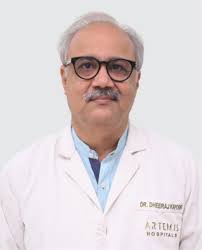
- Dr. Dheeraj Kapoor
- Dr. Rajesh Rajput
- Dr. Sujit Bhattacharya
- Dr. Ambrish Mithal
- Dr. Ashok Kumar Jhingan
Why Choose GetWellGo for Sub-Total Thyroidectomy?
Including GetWellGo in a subtotal thyroidectomy provides several benefits for affairs regarding overseas patients who choose quality medical care with cooperative service. Here’s why GetWellGo may be a strong choice:
- Experienced Specialists and Advanced Surgical Facilities
- Comprehensive Pre- and Post-Operative Care
- Affordable and Transparent Pricing
- State-of-the-Art Facilities and Technology
- Focus on Patient Education
- Travel and Accommodation Services
- Visa Assistance
Conclusion
Subtotal thyroidectomy is the surgical removal of the lobe or lobes of the thyroid gland to treat diseases such as large goitres, hyperthyroidism, and benign nodules while leaving enough gland tissue to produce hormone at least. Used in symptom management, in enhancing the quality of life and in reducing risk. However, if there is an inadequate amount of tissue left, then the patient might require thyroid hormone replacement therapy.
Free Consultation on WhatsApp
FAQ
1. What defines a subtotal thyroidectomy?
- Symptom Relief: Decreases the discomfort generated by goiter, such as swallowing disorder, neck fullness, and breathing problem.
- Improved Hormone Regulation: May help lessen some hyperthyroid symptoms including loss of weight, irregular heartbeat, and nervousness.
- Cosmetic Improvement: Reduces the size of the neck lump for those with big lumps in their neck known as goitres.
- Potential to Maintain Thyroid Function: Surgical removal of total thyroid gland may be disadvantageous in that some people may not require constant hormonal supplementing since the remaining thyroid tissue permits some amount of natural supplement production.
2. What is the success rate of sub-total thyroidectomy?
- The ultimate result from subtotal thyroidectomy is that over 90% of the patients are bound to undergo remarkable improvement of their symptoms and general quality of life. Although 20- 60% of the patients may need after surgery thyroid hormone replacement therapy because of hypothyroidism, many of them have normal thyroid function.
3. How long does recovery take?
- Hospital Stay - Admission: Most patients are admitted and treated as outpatients in a one- two day stay while others may be discharged on the same day.
- Initial Recovery: The primary rehabilitation days range from 1-2 days after surgery the patient is recommended to avoid excessive activities and follow the wound care procedures.
- Full Recovery: Most patients are ready to fully carry on with their regular tasks within 2-4 weeks but it’s not uncommon for individuals to experience low energy levels and/or persisting swelling.
TREATMENT-RELATED QUESTIONS
GetWellGo will provide you end-to-end guidance and assistance and that will include finding relevant and the best doctors for you in India.
A relationship manager from GetWellGo will be assigned to you who will prepare your case, share with multiple doctors and hospitals and get back to you with a treatment plan, cost of treatment and other useful information. The relationship manager will take care of all details related to your visit and successful return & recovery.
Yes, if you wish GetWellGo can assist you in getting your appointments fixed with multiple doctors and hospitals, which will assist you in getting the second opinion and will help you in cost comparison as well.
Yes, our professional medical team will help you in getting the estimated cost for the treatment. The cost as you may be aware depends on the medical condition, the choice of treatment, the type of room opted for etc. All your medical history and essential treatment details would be analyzed by the team of experts in the hospitals. They will also provide you with the various types of rooms/accommodation packages available and you have to make the selection. Charges are likely to vary by the type of room you take.
You have to check with your health insurance provider for the details.
The price that you get from GetWellGo is directly from the hospital, it is also discounted and lowest possible in most cases. We help you in getting the best price possible.
No, we don't charge patients for any service or convenience fee. All healthcare services GetWellGo provide are free of cost.