Urology
Nephrectomy Laparoscopic
Nephrectomy Laparoscopic
Laparoscopic nephrectomy removes kidney through small incisions using camera guidance. Minimally invasive with faster recovery, less pain than open surgery. Ideal for cancer, donation, or non-functioning kidneys by urologists.
Nephrectomy laparoscopic surgery
In this surgery, the whole or part of a kidney is removed using small incisions and a camera (a laparoscope). It is also less painful than open surgery, faster and has reduced scars.
Types of Laparoscopic Nephrectomy
- Simple laparoscopic nephrectomy: Excision of a non-working or significantly injured kidney
- Radical laparoscopic nephrectomy: Removal of whole kidney with adjacent tissues (and occasionally adrenal gland or lymph nodes), for renal cell carcinoma
- Laparoscopic partial nephrectomy: Only what is diseased is removed, so a lot more harm is done to healthy tissue
- Hand-assisted laparoscopic nephrectomy: A technique enables complicated cases to be performed more easily, as the surgeon’s hand assists laparoscopic instruments.
Requirements
- Kidney cancer (in early to moderate stages)
- Obstruction, stones, or infection causing a kidney to not function
- Severe renal trauma
- Congenital kidney defect
- Donor nephrectomy
Benefits over Open Nephrectomy
- Smaller incisions and scarring is minimal
- Less postoperative pain
- Reduced blood loss
- Shorter hospital stay (2–4 days)
- Faster return to normal activities (2–4 weeks)
Laparoscopic nephrectomy procedure
Preparation before Surgery
- Full evaluation
- Imaging
- Kidney function evaluation (renal scan if necessary)
- Nothing by mouth for 6–8 hours before operation
- General anaesthesia planned
Anaesthesia & Positioning
- General anaesthesia is given
- Patient is positioned in a lateral (side-lying) position with the diseased kidney facing up
- Padding of pressure points to prevent nerve damage
Port (Incision) Placement
- 3–5 tiny incisions (5–12 mm) are made in the flank or abdomen
- A laparoscope (camera) is introduced through one port
- Surgical instruments enter the body through other ports
- Carbon dioxide gas is used to inflate the abdomen to enhance visualization
Access to the Kidney
- The colon is carefully mobilized to gain access to the kidney
- Perirenal fat and surrounding tissue are meticulously dissected
- The ureter is located and followed to the kidney
Control of Blood Vessels
- The renal artery and the renal vein are both clearly visualized
- The vessels are clipped or stapled securely
- This step is critical to prevent hemorrhage
Kidney Removal
Full or simple nephrectomy:
-
Entire kidney is mobilized from attachments
Partial nephrectomy:
- The diseased portion of the kidney alone is removed
- Kidney defect is sutured to maintain function
- Kidney is placed in a retrieval bag
Specimen Extraction
- One incision is extended (usually 4–6 cm)
- Kidney is removed whole or piece by piece (morcellation if needed)
Final Inspection & Closure
- Bleeding is observed and controlled
- Drain can be inserted if necessary.
- Carbon dioxide is vented
- Sutures or staples are used to close the incisions.
Duration of Surgery
-
2-4 hours (may be longer for partial or complex cases)
After the Care of Surgery
- Medications for pain control
- Early ambulation within 24 hours
- Oral fluids commenced after the return of bowel function
- Catheter is usually removed in 1-2 days
- Length of hospital stay: 2–4 days
Laparoscopic nephrectomy recovery
The healing process after laparoscopic nephrectomy is usually much more rapid and uneventful compared with open surgery, as smaller incisions are used and less tissue is injured. The majority of patients are able to resume their normal activities within a few weeks.
Immediate Post-operative Period (Day 0–1)
- After anaesthesia, the patient is monitored in the recovery room
- Pain typically is mild to moderate, and analgesics are given
- IV fluids are administered
- It is recommended to sit up and walk within 12–24 hours
- Urinary catheter (retained for 1–2 days)
Hospital Stay
- The majority of patients will be hospitalized for 2 to 4 days
- Oral fluids when bowel return
- Progressively advances to soft and regular diet
- Drain (if place) remove discharge or follow up
First 1–2 Weeks at Home
- Mild fatigue and abdominal soreness
- They recommend daily walking
- No bending, strenuous activity, and lifting of heavy objects
- Keep the incision sites clean and dry
- Stitches/Staples are removed in 7 to 10 days if they are nonabsorbable
3-4 weeks
- At the most you can resume work or light exercises
- Pain is greatly reduced
- Appetite and energy level dramatically improved
- No heavy lifting (>5–7 kg) allowed
Weeks 4–6
- Phased return to normal day to day living
- Gradual resumption of Exercise - Light exercise with surgeon's consent
- Drive Typically 3 Weeks
- Physically-tiring work may be recommenced after 4-6 weeks
Nutrition and lifestyle after surgery
- Stay hydrated
- Eat a healthy, low-salt diet
- Don’t smoke or drink alcohol
- Limit protein intake (especially if you have a single kidney)
- Keep your weight within a healthy range
Ensure follow-up and monitoring.
- One to two weeks after the surgery
- Kidney function testing (blood and urine)
- Imaging if surgery performed for cancer
- Long-term Annual Kidney Function Monitoring
Laparoscopic nephrectomy complications
Laparoscopic nephrectomy is the standard and well-established method, yet it entails risks as any other major operation. The rate of complications is usually less than those following open procedures, especially in high-volume centers.
Complications during Surgery
- Bleeding
- Injury to nearby organs
- Vascular injury
- Gas-related complications
- Conversion to open surgery
Early Complications
- Bleeding or hematoma
- Wound infection
- Urine leakage
- Ileus
- Blood clots
- Complications associated with Respiration
Late Complications
- Incisional hernia
- Chronic pain
- Adhesion formation
- Hypertension
- Reduced kidney function
Robotic laparoscopic nephrectomy
Robotic laparoscopic nephrectomy is a novel laparoscopic approach to performing nephrectomy utilizing a robotic surgical system. It has all the advantages of laparoscopy combined with increased dexterity, stereoscopic vision, and improved manipulation of instruments.
Indications
- Localized kidney cancer
- Small to moderately complex renal tumors
- Non-functioning or severely damaged kidney
- Congenital or obstructive kidney disease
- Living kidney donation
Best hospital laparoscopic nephrectomy India
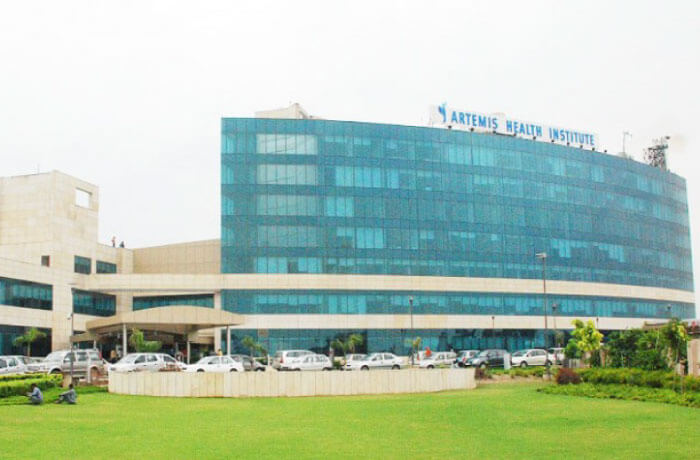
- Artemis Hospital, Gurgaon
- Medanta-The Medicity, Gurgaon
- Fortis Memorial Research Institute, Gurgaon
- Max Hospital, Saket
Conclusion
Laparoscopic and robotic (transperitoneal or retroperitoneal) approaches to nephrectomy have transformed the field of kidney surgery by offering minimally invasive, safe, and effective alternatives to the open technique. These methods provide superior surgical results with less pain, smaller skin incisions, decreased blood loss, shorter hospital stay, and accelerated convalescence. Robotic assistance allows for even greater precision and visualization, and is particularly useful for partial (kidney-sparing) nephrectomy and for complex cases. Most patients should expect smooth recovery and a good quality of life with appropriate patient selection and an experienced team of surgeons—even with a single kidney.
Laparoscopic nephrectomy India GetWellGo
GetWellGo is regarded as a leading supplier of healthcare services. We help our foreign clients choose the best treatment locations that suit their needs both financially and medically.
We offer:
- Complete transparency
- Fair costs.
- 24 hour availability.
- Medical E-visas
- Online consultation from recognized Indian experts.
- Help in choosing from among Best Laparoscopic nephrectomy surgery Hospitals in India.
- Deserve expertise of nephrologist with proven results in success.
- Assistance during and after the course of treatment.
- Language Support
- Travel and Accommodation Services
- Case manager assigned to every patient to provide seamless support in and out of the hospital like appointment booking
- Local SIM Cards
- Currency Exchange
- Arranging Patient’s local food
FAQ
Is nephrectomy a major surgery?
- Yes, nephrectomy is a major surgery. But laparoscopic and robotic procedures are less invasive and the recovery is faster than with traditional surgery.
Do I need dialysis after nephrectomy?
- Dialysis is rarely required unless the residual kidney is already diseased or poorly functioning.
Is robotic always better than laparoscopic nephrectomy?
- Robotic surgery is more accurate, but also more expensive. The decision is based on complexity of the tumour, surgeon expertise and availability.
Are there any long term lifestyle restrictions?
- No greater restrictions. Patients are encouraged to drink plenty of fluids, not smoke, avoid excess salt and protein, and have regular check-ups.
TREATMENT-RELATED QUESTIONS
GetWellGo will provide you end-to-end guidance and assistance and that will include finding relevant and the best doctors for you in India.
A relationship manager from GetWellGo will be assigned to you who will prepare your case, share with multiple doctors and hospitals and get back to you with a treatment plan, cost of treatment and other useful information. The relationship manager will take care of all details related to your visit and successful return & recovery.
Yes, if you wish GetWellGo can assist you in getting your appointments fixed with multiple doctors and hospitals, which will assist you in getting the second opinion and will help you in cost comparison as well.
Yes, our professional medical team will help you in getting the estimated cost for the treatment. The cost as you may be aware depends on the medical condition, the choice of treatment, the type of room opted for etc. All your medical history and essential treatment details would be analyzed by the team of experts in the hospitals. They will also provide you with the various types of rooms/accommodation packages available and you have to make the selection. Charges are likely to vary by the type of room you take.
You have to check with your health insurance provider for the details.
The price that you get from GetWellGo is directly from the hospital, it is also discounted and lowest possible in most cases. We help you in getting the best price possible.
No, we don't charge patients for any service or convenience fee. All healthcare services GetWellGo provide are free of cost.