Dental
Mandibular sagittal split osteotomy Treatment
Mandibular sagittal split osteotomy
A bilateral sagittal split osteotomy is a type of jaw procedure in which the mandible (lower jaw) is split bilaterally (moved backward or forward) for straightening the jaw to a more functional and balanced position. It is done for correcting types of malocclusion, a misalignment of teeth.
Overview
A bilateral sagittal split osteotomy is a type of jaw procedure in which the mandible (lower jaw) is split bilaterally (moved backward or forward) for straightening the jaw to a more functional and balanced position. It is done for correcting types of malocclusion, a misalignment of teeth.
The operation will change the relationship between the patient’s upper jaw and lower jaw and will correct these problems. The surgery will take place under a general anesthetic, i.e. the patients are going to be put to sleep completely.
Need for Mandibular Sagittal Split Osteotomy Treatment
Mandibular Sagittal Split Osteotomy (MSSO treatment) can be defined as the surgical procedure designed mainly to treat the patient with jaw deviation or displacement, favoring the anterior-posterior shift of the mandible.
It's commonly used to address conditions like:
- Malocclusion
- Facial Asymmetry
- Sleep Apnea
- Jaw Function and Pain
- Cosmetic Concerns
Symptoms Leading to Mandibular Sagittal Split Osteotomy
Mandibular Sagittal Split Osteotomy (MSSO treatment) is a surgical treatment for jaws which are misaligned but before the operation can be carried out, the symptoms associated with the disorder that the operation seeks to fix are usually prevalent. They are commonly a result of certain postural dysfunction of the jaw included malocclusion or asymmetric face. Some common symptoms of conditions that may lead to the need for MSSO include:
- Difficulty Chewing or Biting
- Jaw Pain
- Misaligned Teeth
- Uneven Facial Appearance
- Protruding Jaw
- Abnormal Facial Profile
- Jaw Clicking or Popping
- Jaw Locking
- Pain Around the Jaw Point
- Obstructive Sleep Apnea
- Moth Breathing
- Impaired Speech
- Headaches
- Neck and Shoulder Pain
 Free Consultation on WhatsApp
Possible Risks due to Mandibular sagittal split osteotomy
As always there are some potential complications with any procedure. Fortunately, with this type of surgery complications are very rare and may not happen to the patients. However, it is important that the patients are aware of the complication and the patients have the opportunity to discuss them with the surgeon.
Some of the complications that occur are stated below:
- Bleeding: Some flow of the bleeding from the incision inside the patient’s mouth on the night of operation is quite normal and to be expected. Heavy amount of the bleeding is very rare but if it occurs it can generally be stopped by applying pressure over the site for at least 10 minutes with the help of a rolled up handkerchief or swab.
- Numbness: The patient’s bottom lip will be numb and tingly after the surgery; the sensation on the lip is very similar to that felt after having an injection at the dentist. This numbness usually takes several months to disappear and in a minority of the patients may last forever.
- Infection: The small screws and plates that help in holding the patient’s jaw in its new position are generally left in place permanently. It is very rare that the screws and plates can become infected and may be required to be removed but if this occurs it is not normally a problem until several months after the operation.
- Adjustment of the bite: In the weeks following operation it is generally necessary to put elastic bands on the patient’s orthodontic braces for guiding the patient’s bite into its new position. It is very rare that a second small operation is required for repositioning the fixing screws and plates if the patient’s new bite is not quite right.
Causes Leading to Mandibular sagittal split osteotomy
MSSO is not a disease or disorder that a person gets but a surgical procedure that is taken to treat some particular irregularity of the jaw position.
The need for MSSO typically arises due to the following causes:
- Malocclusion (Bite Problems)
- Facial Asymmetry
- Temporomandibular Joint Disorders
- Obstructive Sleep Apnea
- Cosmetic Concerns
- Genetic or Developmental Factors
- Trauma or Injury
Facilities and Services offered for International Patients for Mandibular sagittal split osteotomy
If one opts to get an MSSO, some services and facility that are available for international patients will include the following. These services vary depending on the hospital or clinic, but the key offerings generally include:
- Pre-Surgery Consultation and Assessment
- International Patient Coordination
- Surgical Services
- Post-Operative Care and Monitoring
- Recovery and Rehabilitation Services
- Accommodation and Hospitality Services
- Telemedicine and Remote Follow-up Care
- Post-Treatment Long-Term Care
Free Consultation on WhatsApp
Pre-Treatment Procedure for Mandibular sagittal split osteotomy
Preoperative manipulation of the mandibular sagittal split osteotomy surgery (MSSO) is important in achieving the best results. They include the following steps that help the medical team on patient consideration for surgery, surgery planning, and management of comorbidities.
Below is an outline of the key steps involved:
- Initial Consultation
- Diagnostic Imaging and Tests
- Blood Tests and General Evaluation
- Pre-Surgical Planning
- Pre- Surgery Preparations
- Anaesthesia Consultation
Diagnostic Tests for Mandibular sagittal split osteotomy
Several diagnostic procedures are carried out to determine the necessity of the Mandibular Sagittal Split Osteotomy surgery (MSSO); diagnosis of the jaws and teeth structure and function and adjacent structures. Some of these tests assist the surgeon in developing the best strategy for conducting the surgery, and confirm that the complications to be addressed will be effectively dealt by the surgery in question.
Here are the key diagnostic tests involved:
- X-rays
- 3D imaging or CT Scan
- MRI
- Dental Impressions
- Photographs
- Bite Analysis and Occlusion Evaluation
- Blood Tests
Procedure for the Mandibular sagittal split osteotomy
The surgery is almost fully carried out from the inside of the patient’s mouth for minimizing the visible scars on the skin of the patient’s face. An incision is made through the gum behind the back teeth for gaining access to the jawbone. The lower jaw is then cut with the help of a small saw for allowing it to be broken in a controlled manner. It is then moved into its new position and held in place with the help of small screws and metal plates.
Sometimes it is required for making a small stab cut on the skin of the face for allowing the screws to be placed. This cut is usually a few millimeters long and generally requires a single stitch for holding it back together. The gum inside the mouth is stitched back into place with the help of dissolvable stitches that can take a fortnight or even longer fall out.
After the Mandibular sagittal split osteotomy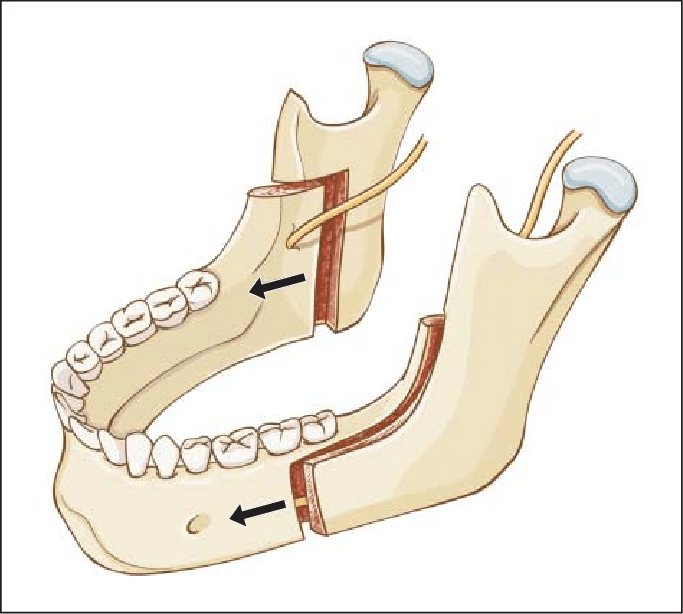
The mandibular sagittal spilt osteotomy is usually not a particularly painful surgery but the mandibular sagittal split osteotomy can still cause pain and regular painkillers will be provided to the patients. The discomfort is generally worse for the first few days but it may require a couple of weeks to completely disappear. It is also necessary to make sure that the site heals without any infection and so the patients will be given antibiotics through a vein in their arm whilst the patients are in hospital. The patients will be sent home with antibiotics and painkillers.
Immediately after the surgery the patient’s face will be swollen and may feel tight, the patient’s jaws will be stiff and the patients will find that they are not able to be open their mouth widely. The patient’s throat may also be swallowing and uncomfortable to begin with.
Bruising and swelling are variable but these usually get worse on the second or third day after the surgery. The swelling can be reduced by the use of cold compresses and sleeping propped upright for a few days. Most of the swelling will be disappeared after a fortnight but there is usually some subtle swelling that can take several months to disappear although this will only be noticed by the patients and their family.
Can the patients eat after the Mandibular sagittal split osteotomy?
For the first day or two, the patients will only want liquids but very quickly the patient should be able to manage a soft diet and then with the time build up their diet to normal food over a few weeks.
Stay of the patients at the hospital after the Mandibular sagittal split osteotomy
This usually varies from patient to patient but most of the patients spend one or maybe two nights in hospital after their procedure. The position of the patient’s jaw will be checked with the help of X-rays before the patients are allowed to go home.
Time off the work
Again this varies from patient to patient and also depends on what kind of the job the patients do. The patients are usually recommended to take about three weeks off from their work. It is vital the patients remember that they will not be able to operate or drive any machinery for 48 hours after their general anesthetic.
Success Rate of Mandibular sagittal split osteotomy
The success rate of Mandibular or bilateral Sagittal Split Osteotomy is high and varies between 85% and 95% of patients who reported satisfactory functional and aesthetic outcomes. High chances of success depend on achieving the following objectives; planning before the surgery, skilful surgery, competent treatment following surgery, and physical health. The risks are not extremely high and with proper attention being paid to patients the results are almost always good.
Best Hospitals for Mandibular sagittal split osteotomy
- Artemis Hospital, Gurgaon
- Medanta The Medicity, Gurgaon
- Fortis Memorial Research Institute, Gurgaon
- Max Hospital, Saket New Delhi
- BLK-Max Super Speciality Hospital, Delhi
Best Doctors for Mandibular sagittal split osteotomy
- Dr. Anjana Satyajit
- Dr. Ankur Rustagi
- Dr. Amit Mohan
- Dr. Mridul Seth
- Dr. Neetu Kamra
Free Consultation on WhatsApp
Why Choose GetWellGo for Mandibular sagittal split osteotomy?
It would be pertinent to recommend GetWellGo for MSSO surgical treatment to international patients who may want to access the best quality treatment within a competent and efficient treatment. The potential reasons why such a platform might be a great choice for your surgery:
- Comprehensive International Patient Services
- Access to Experienced Surgeons
- State-of-the-Art Medical Facilities
- Comprehensive Pre- and Post-Surgery Care
- Affordable Treatment Options
- Streamlined Medical Tourism Experience
- Holistic patient Support
- Accommodation
- Visa Assistance
Conclusion
Mandibular Sagittal Split Osteotomy (MSSO) is a surgical intervention for treating skeletal abnormalities of the mandible, including a Class II or III malocclusion, facial asymmetry, and obstructive sleep apnea. It enhances functional prognosis and aesthetic result in patients through correcting the position of the lower jaw. MSSO is successful 85-95% of patients, and is adjusted according to the degree of jaw misalignment. Planning before surgery and after-surgery rehabilitation are diagnostics and patient engagement. But there are minor complications; overall, with due diligence, MSSO has potential of improving the quality of lives of patients by enhancing their mouth/jaw satisfaction and aesthetics.
FAQs
1. What are the advantages of mandibular sagittal split osteotomy?
- MSSO aligns crooked jaws, which may result in chewing, biting and speaking difficulties. It realigns the facial structure making it symmetrical, treats TMJ disorders as well as enhances the breathing among obstructive sleep apnea patient. It normally has the possibility to go for long term outcomes.
2. What is the success rate of Mandibular Sagittal Split Osteotomy?
- Basically, the success rate of MSSO is comparatively good and it varies from 55% to 75%. Through various surveys around the world done on patients that underwent the surgery, majority of them have shown great improvements in their jaw movements and facial aesthetics /appearance and therefore quality of life. The incidence of complications is relatively small and even lesser, if the surgery is done by an expert surgeon and if proper post-operative care is taken.
3. How long is the recovery time?
- The patient is free to go after 6-8 weeks if he or she follows a soft diet and does not indulge in rigorous exercises. Recovery period is 3-6 months, a period after which the patient is advised to pay a follow-up visit. Most response and inflammation may reduce with development of swelling and bruising. There is usually little dysfunction after the procedure and patients can engage in normal activity from the next week or the following week
TREATMENT-RELATED QUESTIONS
GetWellGo will provide you end-to-end guidance and assistance and that will include finding relevant and the best doctors for you in India.
A relationship manager from GetWellGo will be assigned to you who will prepare your case, share with multiple doctors and hospitals and get back to you with a treatment plan, cost of treatment and other useful information. The relationship manager will take care of all details related to your visit and successful return & recovery.
Yes, if you wish GetWellGo can assist you in getting your appointments fixed with multiple doctors and hospitals, which will assist you in getting the second opinion and will help you in cost comparison as well.
Yes, our professional medical team will help you in getting the estimated cost for the treatment. The cost as you may be aware depends on the medical condition, the choice of treatment, the type of room opted for etc. All your medical history and essential treatment details would be analyzed by the team of experts in the hospitals. They will also provide you with the various types of rooms/accommodation packages available and you have to make the selection. Charges are likely to vary by the type of room you take.
You have to check with your health insurance provider for the details.
The price that you get from GetWellGo is directly from the hospital, it is also discounted and lowest possible in most cases. We help you in getting the best price possible.
No, we don't charge patients for any service or convenience fee. All healthcare services GetWellGo provide are free of cost.