Urology
Total Urogenital Mobilisation
Total Urogenital Mobilisation
Experience trusted Total Urogenital Mobilisation at GetWellGo, offering skilled surgeons, modern facilities, and seamless care for international patients worldwide.
Total urogenital mobilisation
Total urogenital mobilisation (TUM) is now considered the surgical technique of choice for the correction of congenital urogenital anomalies—particularly cloaca and persistent urogenital sinus (PUGS)—in the female child. The procedure is based on mobilising the urethra and vagina as one unit to create anatomically separate and functionally normal urethral and vaginal orifices.
Total urogenital mobilisation surgery
Total Urogenital Mobilisation (TUM) is a reconstructive surgery for children that enables correction of congenital urogenital anomalies in girls— most commonly persistent urogenital sinus (PUGS) and cloacal malformations.
The urethra and vagina are mobilised as a unit, to create two separate, anatomically normal openings for urethra and vagina.
Indications for TUM Surgery
TUM is used in treatment of conditions such as:
- Constant urogenital sinus.
- Common channel cloacal malformations.
- Sex development disorders of fused urethra and vagina.
- Comorbid anorectal malformations.
- Anomalies of the urogenital sinus of the high or mid-level type
Surgery Objectives
- Isolate the urinary and the reproductive outlets.
- Normal anatomy of the perineum.
- Ensure urinary continence
- Restore normal menstruation, sexual function and fertility in adulthood.
- Improve cosmetic and psychological results.
Total urogenital mobilisation procedure
The Total Urogenital Mobilisation (TUM) operation is a reconstructive surgery performed on children to correct urogenital sinus anomaly and cloacal anomaly in female children. In the procedure, mobilisation of the urethra and vagina are done together as one to make them separate, functional openings and natural perineal anatomy.
Preparation before Operation
Clinical Evaluation
- Comprehensive physical examination.
- Measurement of localization and duration of the urogenital sinu.
- Assessment of accompanying anorectal malformations
Imaging & Diagnostic Tests
- Pelvic ultrasound
- MRI or CT scan of pelvis
- Genitourethrogram
- Cystoscopy/vaginoscopy in order to visualise internal anatomy.
Renal function tests
-
Surgical Planning
Deciding if the case is:
- Minimal mobilisation Low urogenital sinus.
- High urogenital sinus- wide ranging mobilisation.
- Co-ordination with colorectal surgery in case of cloaca repair (possibly together with PSARP)
Positioning and Anaesthesia
- General anaesthesia
- Child lying in lithotomy or prone (in case of posterior sagittal approach) as per the preference of surgeon.
- The catheter was introduced in order to define urethral and vaginal structures.
Surgical procedures, stepwise
Step 1: Perineal or posterior sagittal incision
- Midline perineal/ anterior sagittal incision is done.
- Urogenital sinus is exposed
- Extreme care in dissection so as to detect urethra, vagina and rectum.
Step 2: Mobilisation of Uogenital Tract
- The vagina and the urethra are moved as one urogenital unit.
- Mobilisation is inferior and backward.
- The dissection is continued till the urethral-vaginal confluence is achieved.
Step 3: Separation
Depending on anatomy:
- Low urogenital sinus
- Separation not necessary or minimal.
- The resultant unit is merely lowered down to perineum.
- High urogenital sinus
- Further deep mobilisation
- Vaginal and urethral lumens were parted, maintaining blood flow.
Step 4: Reconstruction and Repositioning
- New urethral aperture located in the anterior perineum.
- Bring down and place vagina in the back.
- Rebuke of perineal body.
- Normal labial reconstruction.
- In cloacal cases: rectum as well is parted and put back using PSARP.
Step 5: Urethral and Vaginal Calibration
- Calibration Openings can be pre-set to avoid stenosis.
- Vagina mucosa attached onto perineal skin.
- Mucosa Urethra in new position.
Step 6: Catheterisation
- Urethral catheter between 7 and 14 days.
- In complex cases, Suprapubic catheter can be used.
Step 7: Wound Closure
- Layers closed carefully
- Perineum cosmetic closure.
Duration of Procedure
-
2-4 hours depending on the complexity and related anomalies.
Postoperative Care
Hospital Stay
-
Typically 3–7 days
Care Instructions
-
Daily perineal cleaning
Pain management
- Antibiotics to prevent infection.
- None of the pressure on the perineal area.
Follow-Up
- Removal of catheters 1-2 weeks.
- Frequent check-ups to determine healing.
- Observing urinary continence.
- Dilatation of the vagina on demand during puberty.
Total urogenital mobilisation recovery
The management of Total Urogenital Mobilisation (TUM) recovery includes wound healing, urinary and vaginal rehabilitation and long-term outcomes of urinary Continence and reproductive growth. The majority of children are successfully cured in case of adequate postoperative care and follow-up.
Post-operative Hospitalization in TUM
-
Usual stay: 3–7 days
Monitoring includes:
- Urine output
- Catheter positioning
- Pain control
- Infection or edema.
- Children might need an extended hospitalization in case surgery was incorporated in cloacal repair or in combination with PSARP.
Pain Management
-
The first few days mild to moderate pain.
Managed with:
- Pediatric analgesics
- Warm dressings (with permission of surgeon)
- No pressure in the perineal area.
Catheter Care
Types:
- Urethral catheter (pre-eminent)
- Suprapubic catheter (in complicated cases)
Duration:
-
Typically kept for 7–14 days
Care Instructions for Home:
- Untwisted and straight catheter tube.
- Keep the urine bag low below the bladder.
- Wipe over clean perineal area with warm water.
- Observe the possibility of blockage or infection.
Wound Care
- Wipe the perineal region clean and dry.
- Warm water rinsing as an alternative to wiping.
- Do not use soaps or powders, unless instructed.
- Lightweight, bishop diapers or underwear suggested.
- Keep the wound latent to the child.
Activity Restrictions
For 4–6 weeks:
- No straddle (cycling, rocking toys).
- Avoid hard sitting surfaces
- None until incision heals (takes a shower only)
- Restrict over-spreading of legs.
- Prevent constipation - straining may influence recovery.
Diet and Bowel Care
- Light diet initially
- Foods rich in fiber to stop constipation.
- Plenty of fluids
- Stool softeners can be used between 2 to 4 weeks.
- The constipation is prevented because the pressure may influence repair.
Follow-Up Schedule
Routine follow-ups:
- 1 week: wound inspection
- 2 weeks: catheter removal
- 6 weeks: healing and urinary flow examination.
- 3-6 months: continence assessment.
- Every year: urological and gynaecological evaluation.
Imaging/Tests (as needed):
- Ultrasound
- Uroflowmetry
- Renal function tests
Best hospital for total urogenital mobilisation India
- Artemis Hospital, Gurgaon
- Medanta-The Medicity, Gurgaon
- Fortis Memorial Research Institute, Gurgaon
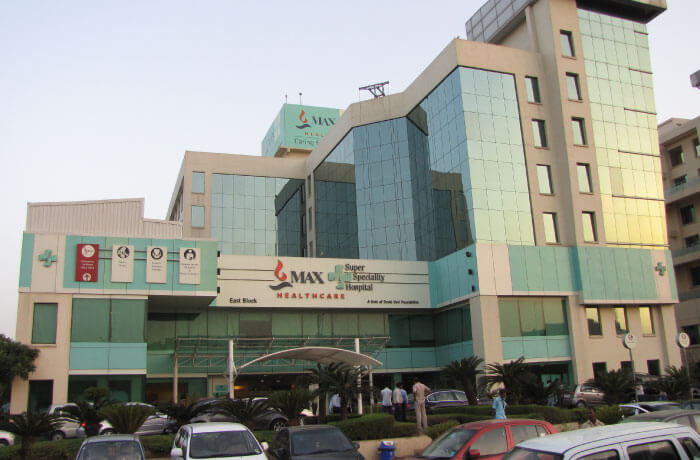
- Max Hospital, Saket
Conclusion
Total Urogenital Mobilisation (TUM) is a long-standing and successful reconstructive surgical practice used to restore the urogenital sinus anomalies and cloacal malformation of female child. The surgery re-establishes normal perineal anatomy by mobilisation of the urethra and vagina as a unit, separate the urinary and reproductive passages and retain long-term urinary continence and reproductive functionality. TUM has good functional, cosmetic and developmental outcomes through careful planning during pre-operation, skilled surgical performance, as well as, organized postoperative follow-up. Additional intervention at a young age, wound management, and follow-up during adulthood through puberty will further guarantee optimal urinary, menstrual, and sexual health.
Affordable total urogenital mobilisation India GetWellGo
GetWellGo is regarded as a leading supplier of healthcare services. We help our foreign clients choose the best treatment locations that suit their needs both financially and medically.
We offer:
- Complete transparency
- Fair costs.
- 24 hour availability.
- Medical E-visas
- Online consultation from recognized Indian experts.
- Assistance in selecting India's top hospitals for total urogenital mobilisation.
- Top paediatric urosurgeons who have a proven record of success
- Support during and after treatment.
- Language Support
- Travel and Accommodation Services
- Case manager assigned to every patient to provide seamless support in and out of the hospital like appointment booking
- Local SIM Cards
- Currency Exchange
- Arranging Patient’s local food
FAQ
1. What is the age when TUM is performed in most patients?
- Most procedures are performed in infancy or early childhood, when the anatomy is well defined and the child is stable enough for anaesthesia.
2. Is TUM a single-stage procedure?
- Yes, TUM is generally a one stage procedure. In cloacal malformations, though, it can be combined with antegrade continence enema (ACE) and PSARP.
3. Will my child be able to urinate normally after TUM?
- Most children become normally continent of urine especially if surgery is done early by experienced paediatric surgeons.
4. Will TUM have any effect on future menstruation or fertility?
- Most have normal menstruation and many can have children in adulthood; follow-up in the long-term for proper development is warranted.
5. Is vaginal dilatation necessary post-surgery?
- A few girls, particularly those with high urogenital sinus or cloacal repairs will need to undergo vaginal dilatation at puberty to avoid stenosis.
TREATMENT-RELATED QUESTIONS
GetWellGo will provide you end-to-end guidance and assistance and that will include finding relevant and the best doctors for you in India.
A relationship manager from GetWellGo will be assigned to you who will prepare your case, share with multiple doctors and hospitals and get back to you with a treatment plan, cost of treatment and other useful information. The relationship manager will take care of all details related to your visit and successful return & recovery.
Yes, if you wish GetWellGo can assist you in getting your appointments fixed with multiple doctors and hospitals, which will assist you in getting the second opinion and will help you in cost comparison as well.
Yes, our professional medical team will help you in getting the estimated cost for the treatment. The cost as you may be aware depends on the medical condition, the choice of treatment, the type of room opted for etc. All your medical history and essential treatment details would be analyzed by the team of experts in the hospitals. They will also provide you with the various types of rooms/accommodation packages available and you have to make the selection. Charges are likely to vary by the type of room you take.
You have to check with your health insurance provider for the details.
The price that you get from GetWellGo is directly from the hospital, it is also discounted and lowest possible in most cases. We help you in getting the best price possible.
No, we don't charge patients for any service or convenience fee. All healthcare services GetWellGo provide are free of cost.