Cosmetic Surgery
Pectus Deformity Correction
Pectus Deformity Correction
Explore world-class pectus deformity correction with GetWellGo. Trusted care, skilled surgeons, and full support for international patients seeking safe treatment.
Pectus deformity correction
Pectus deformities are an abnormality of the chest wall whereby the rib cartilage is grown abnormally resulting in a chest that is either sunken (Pectus Excavatum) or bulging (Pectus Carinatum). These ones may be cosmetic or symptomatic causing problems with breathing, exercise tolerance, and posture.
Types of Pectus Deformities
Pectus Excavatum
- Chest appears sunken inward
- Is able to squeeze the heart and lungs in serious instances.
- Usually observed in childhood or adolescence.
Pectus Carinatum
- Chest wall projects outward
- Cosmetic, with some patients developing exercise intolerance.
Indications for Correction
Correction is advised in case of:
- Cosmetic problems are important for confidence and psychosocial well-being.
- Chest pain, shortness of breath, or breathlessness.
- CT scan or echo cardiac or pulmonary compression.
- Quick deterioration during the growth spurts (they are common in teens).
Methods of Correction
Pectus Excavatum
- Minimally Invasive Procedure (Nuss).
- 2–3 small side incisions
- A curved stainless steel rod is put behind the sternum.
- Bar inverts to push the chest upwards.
- Bar remains for 2–3 years
- Perfect with children and adolescents.
- Benefits: low scarring, fast healing.
Ravitch Procedure (Open Repair)
- Ectodermal and lymphatic growth.
- Sternum repositioned using support bar.
- Available with gross asymmetry or adults with rigid chest walls.
- Pro: adequately suitable with complicated deformities.
Pectus Correction Advantages
- Improved chest appearance
- Better posture
- Improved cardiac output (excavatum cases)
- Improved lung capacity
- High exercise capacity.
- Enhanced self-confidence
Pectus carinatum correction
Pectus carinatum (PC), also known as pigeon chest, is a chest wall deformity in which the sternum protrudes outward. It occurs due to overgrowth of the rib cartilage, and it is generally visible during childhood or teenager years.
Although this is usually cosmetic, other people suffer:
- Chest pain
- Pneumpnea during physical activity.
- Exercise intolerance
- Poor posture
- Psychosocial distress or poor self-esteem.
Methods of Correction
Pectus carinatum can be treated both non-surgically and surgically. Treatment depends on the age of patient, severity of the condition and flexibility of the chest wall.
External Bracing- non-surgical correction (First-line treatment)
How It Works
-
The chest is subjected to constant outward pressure with a custom-made compression brace, which over time modifies the shape of the rib cartilage and the protrusion is corrected.
Ideal Candidates
- Children and teens
- Flexible chest wall
- Moderate deformity
Duration
- Worn 8–12 hours/day
- Total treatment time: 12–24 months
- Follow up after every 6-12 weeks.
Advantages
- Non-invasive
- No scars
- Very high success rate
- Only mild discomfort or painless.
Surgical Correction- modified Ravitch operation
Surgery is considered when:
- Bracing fails
- Sternal angle is rigid (characteristic of adults)
- Extreme asymmetry or developmental defects.
- Patient would like permanent fix.
Procedure Steps
- Incisions are made over the chest, small.
- Abnormal cartilage fragments of ribs are excised.
- Sternum is re-positioned towards the inward.
- A support bar (strut) is inserted to keep it in shape, small.
- Bar remains for 6–12 months
Duration
- Operation time: 2–4 hours
- Hospital stay: 4–6 days
Recovery
- Return to school/work: 3–4 weeks
- Avoid heavy lifting: 6–8 weeks
- Support bar was later removed in a minor operation.
Benefits
- Flexible correction of rigid deformities.
- Applicable to the complex or the asymmetrical cases.
Nuss procedure for pectus deformity
Nuss procedure is a minimally invasive procedure applied to correct Pectus Excavatum (intruded chest). It is the surgery most frequently done to treat this deformity in the world particularly among children and teenagers.
What is the Nuss Procedure?
Nuss procedure is associated with the insertion of a curved metal bar through the sternum by way of small side incisions. This is done by flipping the bar to cause the sternum to push out, and immediately fix the sunken chest.
Key Features
- Minimally invasive
- Minor cuts on the sides of the chest 2-3cm.
- No cartilage removal
- Short recovery time
- Bar stays in place for 2–3 years
Ideal Candidates
The Nuss operation is most effective in:
- Pectus excavatum (not applied to pectus carinatum)
- 10-20 years (pliable chest wall)
- The deformity is moderate to severe.
Symptoms such as:
- Breathlessness
- Exercise intolerance
- Chest tightness
- Cardiac compression
- The procedure can also be performed on adults although more bars and stabilizers are needed because the chest wall tends to be rigid.
Preoperative Evaluation
Doctors before surgery do:
- Chest CT scan → in order to measure Haller Index and determine severity.
- Echocardiography → to determine heart compression.
- Pulmonary function tests
- ECG
- Photographs and measurement of deformity.
- This provides proper size of bars and ensuring safety in surgical planning.
The Procedure is conducted in the following way:
Anaesthesia
- Ventilated general anaesthesia.
- Postoperative pain Epidural or paravertebral nerve block.
Incisions
- Two small cuts on the side of the chest.
- A single incision in the middle (not compulsory).
Inserting the Bar
- A curved stainless steel bar is inserted in the sternum.
- To avoid injury bar is directed with a thoracoscope (camera).
- After positioning the bar, it is moved 180 -degree to push the sternum out.
Stabilization
- Bar rotation is prevented by the use of lateral stabilizers or sutures.
- Incisions are closed
Duration
-
Surgery time: 45–90 minutes
Ravitch procedure for pectus deformity
Ravitch procedure is an open surgical process that is carried out to rectify the deformities of a chest wall, particularly when the chest is fixed, asymmetric, and does not offer an opportunity to use minimally invasive surgical procedures.
It is useful for both:
- Pectus Excavatum (Sunken Chest)
- Pectus Carinatum (Protruding Chest)
What is the Ravitch Procedure?
In the Ravitch procedure, the following is involved:
- The abnormal, overgrown costal cartilages are to be removed.
- Moving (either lifting up or down) the sternum (depending on the deformity)
- Using temporary metal strut/bar to support the chest.
- It permanently remodels the chest wall and provides a permanent correction.
Who is ideal for Ravitch Procedure?
Ideal candidates include:
- Adults that have stiff chest walls.
- Extreme, unilateral, or combined defects.
- Where cases of pectus carinatum fail to respond to bracing.
- Patients who are in contraindication to the Nuss procedure.
- Repeat deformities following preceding surgery.
- Complicated inborn anomalies of the chest wall.
Preoperative Evaluation
Pre-surgery physicians assess:
- To determine the severity, chest CT/MRI.
- Pulmonary function test
- Cardiac compression by echocardiography.
- ECG
- Blood tests
- Photographic documentation
- Adaptability test of the chest.
The way the Procedure is done:
Anaesthesia
-
General anaesthesia
Incision
-
Horizontal or vertical chest incision (610 cm according to the approach).
Cartilage Removal
- Abnormal cartilages of the costal are excised cautiously.
- The perichondrium (cartilage sheath) is spared and new cartilage is able to grow normally.
Sternum Repositioning
- In Pectus Excavatum → the sternum is raised outwards.
- Of Pectus Carinatum → the sternum is drawn together.
Placement of Support Bar
- One puts a temporary metallic bar or struts behind or in front of the sternum.
- Maintains a new chest shape during the healing process.
- Removed after 6–12 months
Duration of Surgery
-
2-4 hours with the complexity of deformity.
Minimally invasive pectus deformity correction
Minimally invasive surgery of pectus deformities is a procedure that tries to reshape the chest wall through use of minimal incisions, the use of endoscopic guidance and internal support bars as opposed to large open surgeries. It’s most common use is in Pectus Excavatum but some methods can be applied to complex deformities.
Pectus Correction Minimally Invasive Forms
Nuss Procedure (Pectus excavatum -Sunken chest)
-
It is the most minimal invasive, gold-standard method on an international level.
How It Works
- A metal curved bar is passed under the sternum.
- The chest is raised, by turning around the bar.
- No cartilage removal.
- Bar stays for 2–3 years.
Key Features
- 2–3 small incisions
- Short recovery
- Perfect in children and adolescents (10-20 years)
- Indications of moderate to severe deformities are responsive.
Minimally Invasive Modified Nuss in Adults
In the case of adults, the chest wall is stiff; therefore, alterations are:
- Using two or more bars
- Extra stabilizers
- Pre-operative vacuum bell therapy (elective)
- Minimally invasive yet a little more complicated than pediatric cases.
Hybrid Minimally Invasive Surgeries
-
Applied to asymmetric, mixed excavatum + carinatum, or complicated deformities.
Techniques include:
- Limited cartilage resection + Nuss bar.
- Sternal osteotomy + bar support.
- Lateral stabilizers to avoid asymmetry.
- They still remain far less intrusive than a complete Ravitch.
Pectus Carinatum (Non-Surgical Minimally Invasive) Bracing
-
But not a surgery, bracing can be regarded as a least invasive procedure to correct pectus carinatum.
Key Points
- External compression brace
- Worn 8–12 hrs/day
- Fixes chest form within 12-24 months.
- Initial management of carinatum in children/ teenagers.
- Open or hybrid procedures can be required in case bracing fails or chest rigid.
Pectus deformity correction recovery
The postoperative period following correction of pectus deformity depends on the kind of surgery used:
- Nuss Procedure (Minimally Invasive) - applied in pectus excavatum.
- Ravitch Procedure (Open Repair) - applied to excavatum, carinatum, rigid and asymmetric deformities.
The following is a detailed recovery plan of the two.
0 to 72 Hours After Surgery
Common to Both Procedures:
- High-dependency/step-down unit during first 24 hours of patients monitored.
- Chest drain might be present (particularly in Ravitch)
- Epidural / PCA pump pain management.
- Early incentive spirometry.
- Premature ambulation was promoted.
Nuss-Specific:
- Shoulder movements limited
- Additional precautions to prevent bar displacement.
- Inhalation of deep breath may be difficult within the first 48 hours.
Ravitch-Specific:
- Heal usually exuded by day 2-3.
- Sternum is rigid; discomfort at higher incision site.
First 2 Weeks After Discharge
Pain Management
- NSAIDs + neuropathic drugs (gabapentin against Nuss) oral.
- The pain is also reduced to significant levels on day 10-14.
- The first week is easier in terms of sleep.
Activity Recommendations
- Slow walking daily
- No bending, twisting, or lifting.
- No sleeping on the side (first 23 weeks with Nuss)
- Avoid pressure on the chest
Wound Care
- Keep incision clean and dry
- Shower permissible 48-72 hours (surgeon)
- Observing redness, discharge, or fever.
Going back to Daily Routine (2 to 6 Weeks)
Nuss Procedure
- School/office work: 2–3 weeks
- Driving without pain and without powerful pain drugs.
- Slow improvement in mobility.
- Avoid lifting >2–3 kg
Ravitch Procedure
- School/office work: 3–4 weeks
- Further limited because of bigger incision.
- Chest pressure, heavy bag straps to be avoided.
Exercise and Physical Activity
Nuss
- Light activity: 4-6 weeks.
- Jogging: after 6 weeks
- Swimming: after 6–8 weeks
- Impact sports (football, cricket, martial arts): no 3-4 months.
- Gym training (light weights): in 3 months’ time.
Ravitch
- Light exercise: 6–8 weeks
- Strain in the upper part of the body to be avoided in 8-10 weeks.
- Contact sports: after 3 months
- Gym training: after 3–4 months
Long-term recovery (Up to 12-24 months)
Nuss
- Bar remains for 2–3 years
- You can feel the bar when lying/twisting to your sides.
- In the majority of patients the bar is forgotten in 6-8 months.
- Cartilage healing is accompanied by full chest remodelling.
- Bar removal is a fairly simple (20-40 minutes) operation.
Ravitch
- After 6-12 months, support strut/bar is removed.
- The process of cartilage being regenerated occurs in the perichondrial sheath.
- When healing is complete, it has low recurrence.
Best hospital for pectus deformity correction India
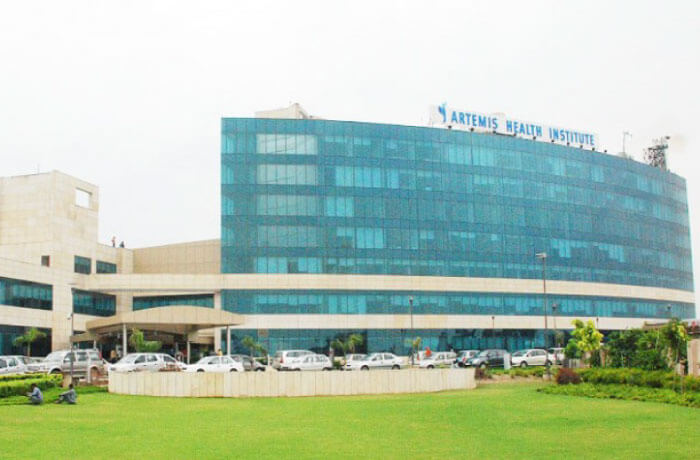
- Artemis Hospital, Gurgaon
- Medanta-The Medicity, Gurgaon
- Fortis Memorial Research Institute, Gurgaon
- Max Hospital, Saket
Conclusion
Repair of pectus deformity in patients, whether by a minimally invasive procedure such as Nuss procedure or by an open operation procedure, has shown considerable benefits in terms of appearance of the chest, breathing ability, posture and quality of life. The postoperative period of recovery is usually uneventful provided that patients adhere to postoperative instructions, such as pain treatment, activity limitations, breathing practice, and frequent follow-ups. Most patients would be able to resume normal daily routine within weeks and normal physical functioning within some few months with proper care and monitoring. As early as possible, treating the deformity of the chest wall on time and complying with the postoperative guidelines will guarantee optimal long-term outcomes and a permanent fix of the defect.
Affordable pectus deformity correction India GetWellGo
GetWellGo is regarded as a leading supplier of healthcare services. We help our foreign clients choose the best treatment locations that suit their needs both financially and medically.
We offer:
- Complete transparency
- Fair costs.
- 24 hour availability.
- Medical E-visas
- Online consultation from recognized Indian experts.
- Assistance in selecting India's top hospitals for pectus deformity correction treatment.
- Expert surgeon with a strong track record of success
- Assistance during and after the course of treatment.
- Language Support
- Travel and Accommodation Services
- Case manager assigned to every patient to provide seamless support in and out of the hospital like appointment booking
- Local SIM Cards
- Currency Exchange
- Arranging Patient’s local food
FAQ
1. Will there be visible scars?
- The minimal invasion surgeries leave little scars on the sides of the chest.
- Open surgeries have long-term and well-stitched scars.
2. What is the duration of correction bars?
Typically:
- Nuss bar: 2–3 years
- Abramson bar: 1–2 years
When the shape of the chest becomes stable the bars are taken out by a little operation.
3. Is pectus correction surgery possible in adults?
- Yes. Whereas the surgeries are simpler in younger patients because of the flexibility of the chest wall, adults may as well receive minimally invasive or open surgeries with desirable results.
4. When do I have a normal sleep after the surgery?
- The patients normally spend 2-3 weeks lying on their backs and slowly resume sleeping on their side when the pain reduces.
TREATMENT-RELATED QUESTIONS
GetWellGo will provide you end-to-end guidance and assistance and that will include finding relevant and the best doctors for you in India.
A relationship manager from GetWellGo will be assigned to you who will prepare your case, share with multiple doctors and hospitals and get back to you with a treatment plan, cost of treatment and other useful information. The relationship manager will take care of all details related to your visit and successful return & recovery.
Yes, if you wish GetWellGo can assist you in getting your appointments fixed with multiple doctors and hospitals, which will assist you in getting the second opinion and will help you in cost comparison as well.
Yes, our professional medical team will help you in getting the estimated cost for the treatment. The cost as you may be aware depends on the medical condition, the choice of treatment, the type of room opted for etc. All your medical history and essential treatment details would be analyzed by the team of experts in the hospitals. They will also provide you with the various types of rooms/accommodation packages available and you have to make the selection. Charges are likely to vary by the type of room you take.
You have to check with your health insurance provider for the details.
The price that you get from GetWellGo is directly from the hospital, it is also discounted and lowest possible in most cases. We help you in getting the best price possible.
No, we don't charge patients for any service or convenience fee. All healthcare services GetWellGo provide are free of cost.
.jpg)
.jpg)

.jpg)
.png)