Gastroenterology
Haemorrhoidectomy Treatment
Haemorrhoidectomy
Hemorrhoids (piles) are the swellings that contain enlarged blood vessels found inside or around the bottom (anus and the rectum). In most of the cases, hemorrhoids don't result in any symptoms and some people don't even realize that they have hemorrhoid.
What is Haemorrhoidectomy Surgery?
Haemorrhoidectomy is an operation for removing severe haemorrhoids (also known as piles). It is usually a day procedure and is usually carried out under a general anaesthetic. The procedure is quite common and generally safe, but recovery after the surgery can take a few weeks and can be quite painful.
Stapled Haemorrhoidectomy
Stapled haemorrhoidectomy (Circular Stapled Haemorrhoidectomy) also called Procedure for Prolapse and Haemorrhoids is another surgical technique of treating haemorrhoids especially prolapsed ones or also larger haemorrhoids. This technique is described as less painful and with a more rapid postoperative recovery time than the standard haemorrhoidectomy.
Ligasure Haemorrhoidectomy
Ligasure haemorrhoidectomy is a relatively newer method of treatment of haemorrhoids, especially the large or prolapsed ones. It is a procedure in which a unique tool called Ligasure is utilized and it employs enhanced radiofrequency energy for coagulating the blood vessels besides reducing or eradicating the size of the haemorrhoidal tissue with little or no bleeding.
 Free Consultation on WhatsApp
Conventional Haemorrhoidectomy
Conventional haemorrhoidectomy is an older technique that is recommended where there are large, prolapsing haemorrhoids or where the symptoms of the haemorrhoid are severe: this includes patients who present with pain, bleeding or marked discomfort. Haemorrhoidectomy is regarded as the best procedure for treating third-degree and fourth-degree haemorrhoids, but it takes a longer time to heal and causes more pain after surgery than other techniques.
Diathermy Haemorrhoidectomy
Diathermy haemorrhoidectomy, also referred to as electrocoagulation haemorrhoidectomy is a surgical procedure which employs electrical energy to coagulate and excise tissue disease haemorrhoids. The surgery is usually considered in managing 3rd and 4th degree haemorrhoids, those that are bulky or prolapsed and have not responded to conservative measures.
Why is haemorrhoidectomy surgery performed?
Most haemorrhoids can either be treated with the help of some non-surgical procedure or medicines or avoided with appropriate exercise and diet. If non-surgical treatments do not work, or the haemorrhoids are particularly large, a doctor might recommend a haemorrhoidectomy. Removing the haemorrhoids will help in relieving the uncomfortable symptoms, but haemorrhoids can also return back.
What is Hemorrhoid?
Hemorrhoids (piles) are the swellings that contain enlarged blood vessels found inside or around the bottom (anus and the rectum). In most of the cases, hemorrhoids don't result in any symptoms and some people don't even realize that they have hemorrhoid.
But when symptoms do occur, the symptoms may include the following:
- Bleeding after the passage of a stool (the blood is generally bright red)
- The bottom is itchy
- A lump hanging down outside of the patient’s anus, which may be required to be pushed back in after the passage of a stool
- A mucous discharge after the passage of a stool
- Redness, swelling, and soreness, around the patient’s anus
Hemorrhoids aren't generally painful unless their blood supply is being slowed down or it is interrupted.
What are the risks that occur to the patients during haemorrhoidectomy?
Haemorrhoidectomy is a quite common and usually safe surgical method.
But the patients can also experience some complications, which might include the following:
- Excess of bleeding
- Difficulty in urinating
- Infection, which might result in a high temperature
- Loss of control of the rectal sphincter
- Damaging or narrowing of the anal canal
If the patients have any of the above symptoms, or the pain around their anus gets worse rather than better, they should seek advice from their doctor.
What are the causes of Haemorroid?
The exact known cause of hemorrhoids is still unclear, but they're related with increased pressure in the blood vessels in and around the patient’s anus. This pressure can result in the blood vessels present in the back passage to become inflamed and swollen.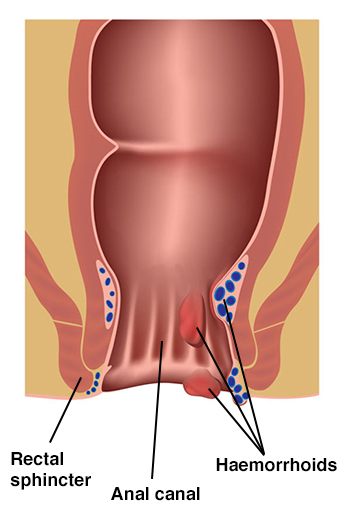
Other factors that might increase the patient’s risk of developing hemorrhoids include:
- The patients being obese or overweight
- Age: As the people get older, their body's supporting tissues get weaker and weaker, increasing the risk of hemorrhoids
- Being pregnant: Pregnancy can place increasing pressure on the patient’s pelvic blood vessels, resulting in them to enlarge
- The patients have a family history of hemorrhoids
- Regularly lifting off heavy objects
- Repeated vomiting or a persistent cough
- Patients sit down for very long periods of time
How to prepare for a haemorrhoidectomy?
- If the patients are undergoing a haemorrhoidectomy, they should follow the guidelines, the clinic or hospital gives guidelines to the patients on how to prepare for the surgery.
- The patients will be asked not to drink or eat for some hours before being admitted to the clinic.
- If the patients often take blood-thinning medication, they might be asked to stop taking them for some days before the surgery.
- The patients might also be asked to take a laxative or an enema to empty out their bowel.
What happens during a haemorrhoidectomy?
A haemorrhoidectomy is done under a general anaesthetic so that the patients won't be awake during the whole surgery.
There are several types of haemorrhoidectomy methods:
- One of the methods includes the haemorrhoids being cut away.
- Another method includes the haemorrhoids being pulled back inside the rectum and stapled in its place.
- And lastly, the arteries supplying blood to the haemorrhoids are being closed for helping them to shrink.
Free Consultation on WhatsApp
What to expect after a haemorrhoidectomy?
- After the surgery has been performed, the patients will probably feel sore and they might have some bleeding.
- Many of the people go home the same day as the surgery is performed, but it must be made sure the patients must be collected by someone who can take them home.
- It is important for the patients to avoid constipation, so they must drink plenty of water and eat a healthy diet that is rich in vegetables, fiber, and fruit.
- The general anaesthetic might make the patients feel tired and sick for a few days.
- Many people may be required to take at least one week off work to recover.
- The doctor will probably ask them to return for a check-up sometime after the operation.
Other Surgeries that can be done instead of Hearmorrhoidectomy are as follows:
-
Hemorrhoid Artery Ligation: Hemorrhoidal artery ligation is an operation for reducing the blood flow to the patient’s hemorrhoids. It is generally carried out under general anesthetic and also involves the insertion of a small ultrasound probe into the patient’s anus. The small ultrasound probe produces high-frequency sound waves that help the surgeon to locate the vessels that supply the blood to hemorrhoid. Each blood vessel is being stitched back together for blocking the blood supply to hemorrhoid, which results in it to shrink over the following weeks. The stitches can also be helpful in reducing the hemorrhoids that hang down from the prolapsing (anus).
- Stapling: Stapling (stapled haemorrhoidopexy) is another option to a conventional haemorrhoidectomy. It is sometimes used for treating prolapsed hemorrhoids and is usually carried out under general anesthetic. The process is not carried out as usually as it used to be because it has a slightly higher risk of some serious complications as compared to the other alternative methods available in the field of medicine. During the surgery, part of the anorectum (the last section of the large intestine) is being stapled. This means that the hemorrhoids are less likely to prolapse. Thus the supply of blood to the hemorrhoids is being reduced, which results in them to shrink with time.
Best Hospitals for Haemorrhoidectomy Treatment
- Artemis Hospital, Gurgaon
- Medanta The Medicity, Gurgaon
- Fortis Hospital
- BLK-Max Super Speciality Hospital, New Delhi
Best Doctors for Haemorrhoidectomy Treatment
- Dr. M. A Mir
- Dr. Amanjeet Singh
- Dr. Avnish Seth
- Dr. Yogesh Batra
Why Choose GetWellGo for Haemorrhoidectomy Treatment?
Getting treatment for the disease at a specially selected healthcare center like GetWellGo is helpful and carries a number of benefits that result from consideration of patient comfort, performance, and individuality.
Here's why GetWellGo can be a great choice:
- Skilled Specialists
- Advanced Diagnosis
- Non-Surgical Options
- Surgical Expertise
- Focus on Holistic Recovery
- Language Support
- Medical Visa Assistance
- Travel and Accommodation Services
Also read list of Best Neuro Hospital in India and Best Cancer Hospital in India
FAQ
1. What are the benefits of this treatment?
Haemorrhoids treatment offers several key benefits:
- Pain Relief: Help to reduce pain and extent of swelling, itching and other pain which is caused by haemorrhoids.
- Prevention of Complications: For internal or external piles that have not progressed to Bleeding, prolapsed, and thrombosed hemorrhoid causing severe situations like anemia or infections treatment is recommended at this stage.
- Improved Quality of Life: Removes the discomfort experienced to enable the patients to commence regular routines.
- Long-Term Solutions: Reduces the chances of having haemorrhoids by medically proven ways like rubber band ligation, Sclerotherapy and surgery.
2. What is the success rate of Haemorrhoidectomy treatment?
The success rate varies depending on the treatment approach:
- Conservative treatments (diet, fiber, topical creams): Effectiveness in the treatment of mild haemorrhoid symptoms is quite satisfactory in about 60-80% of cases, intended for internal haemorrhoids.
- Minimally invasive procedures (rubber band ligation, Sclerotherapy): Percutaneous lithotomy has a success rate of 70·90% in treating mild to moderate haemorrhoids and has low recurrence rates.
- Surgical treatments (haemorrhoidectomy, stapled haemorrhoidopexy): Acute thrombotic haemorrhoids are mostly treated with mode, reporting a 95% success rate of the acute symptoms and proposed recurrence.
3. What is the recovery time after haemorrhoid treatment?
Recovery time depends on the type of treatment used:
- Non-Surgical Treatments (Rubber Band Ligation, Sclerotherapy, Infrared Coagulation): Recovery is usually uncomplicated and most patients may resume their normal activities in 1-3 days. There may be some slight pain or even some bleeding within the first few days of treatment but this stops once the haemorrhoids reduce or ‘pop’.
- Haemorrhoidectomy (Surgical Removal):Recovery of the person is normally between two to four weeks. Lumbar intertrochanter fractures of the hip may cause substantial discomfort during the first week, but alleviation is possible. Healing after the surgery may take 6 weeks or more and the patient is advised to avoid lifting heavy objects and exercise rigorously.
- Stapled Haemorrhoidopexy (Surgical Procedure):It is normally faster as compared to haemorrhoidectomy since most patients take 1-2 weeks to recover fully. However, it may cause slight irritation in some people that lasts for about two weeks.
Free Consultation on WhatsApp
TREATMENT-RELATED QUESTIONS
GetWellGo will provide you end-to-end guidance and assistance and that will include finding relevant and the best doctors for you in India.
A relationship manager from GetWellGo will be assigned to you who will prepare your case, share with multiple doctors and hospitals and get back to you with a treatment plan, cost of treatment and other useful information. The relationship manager will take care of all details related to your visit and successful return & recovery.
Yes, if you wish GetWellGo can assist you in getting your appointments fixed with multiple doctors and hospitals, which will assist you in getting the second opinion and will help you in cost comparison as well.
Yes, our professional medical team will help you in getting the estimated cost for the treatment. The cost as you may be aware depends on the medical condition, the choice of treatment, the type of room opted for etc. All your medical history and essential treatment details would be analyzed by the team of experts in the hospitals. They will also provide you with the various types of rooms/accommodation packages available and you have to make the selection. Charges are likely to vary by the type of room you take.
You have to check with your health insurance provider for the details.
The price that you get from GetWellGo is directly from the hospital, it is also discounted and lowest possible in most cases. We help you in getting the best price possible.
No, we don't charge patients for any service or convenience fee. All healthcare services GetWellGo provide are free of cost.
.png)

.jpg)