Learn about atrial fibrillation symptoms, causes, and treatment options at GetWellGo. Get expert insights to manage and prevent AFib effectively today!
Atrial Fibrillation also referred to AF or AFib is a kind of irregular heartbeat or arrhythmia that involves the heart’s upper chambers known as the atria.
What Happens in AFib?
Usually, it is expected that the heart has a rhythmic contractions resulting from the electrical impulses originating in the atria.
In atrial fibrillation:
These electric signals become disorganized or go chaotic.
The atria quiver (fibrillate) instead of contracting effectively.
Consequently, reliable blood circulation into the ventricles (lower chambers) is not experienced.
Atrial Fibrillation Symptoms
Below are some of the Signs of atrial fibrillation:
Heart-Related Symptoms:
Palpitations meaning spasmodic or irregular and pounding in the chest or heart area.
Palpitations which can be described as a racing heart.
Skipped beats or pauses
General Symptoms:
Fatigue or tiredness, especially with exertion
Panting or shortness of breath that occurs with gentle exercise or when lying down
Dizziness or feeling lightheaded
Weakness
Heart failure is characterized by fainting (syncope) in more severe situations.
Chest Symptoms:
Chest discomfort or pain (not always present)
Tightness in the chest
Some People Feel:
Anxiety or a feeling of unease
Cold sweats (occasionally)
What causes atrial fibrillation?
AFib results from multiple conditions and life styles that impact the hearts electrical system to deceive and irregular.
Major Atrial fibrillation causes:
Heart-Related Causes
High blood pressure (hypertension) – most common risk factor
The specific name is coronary artery because it deals with narrowing of the arteries that supply blood to the heart muscles and it is known as coronary artery disease.
Heart attack (myocardial infarction)
Cardiosis – damaged or weary heart muscle
Heart valve disease – especially mitral valve problems
Malformations / Congenital anomalies – which include for instance congenital heart disease, affect one out of every one hundred children Makes up / constitutes about one percent of the population of children.
This, however, has limitations caused by pericarditis – inflammation of the heart’s lining.
Previous heart surgery
Other Medical Conditions
Hyperthyroidism (overactive thyroid)
Diabetes
Obesity
Chronic lung diseases – like COPD
The conditions put pressure on the airways and cause the levels of oxygen in the blood to reduce – sleep apnea.
Infections – such as pneumonia
Electrolyte imbalances – low potassium or magnesium
Lifestyle and External Triggers
Alcohol – oral, particularly old “holiday heart syndrome,” alcohol dependence
Caffeine and energy drinks, nicotine, legal and illicit drugs, etc
Severe stress or illness
Intense physical exertion – especially in endurance athletes
Age & Genetics
Age- risk increases one’s age is very important with the risk being higher when one is above the age of 60years.
Family history – genetic predisposition
AFib Treatment Options
Below are the best treatment for atrial fibrillation which depends on the type, severity, symptoms and the cause.
Medications
It is used to regulate heart rate, rhythm and to prevent blood clot formation.
Also, prescribed for those who have atrial fibrillation and require the heart to revert to its normal rhythm.
Blood Thinners commonly referred to as Anticoagulants: This remedy is used to cast off clots that can lead to the impairment of blood supply in the bloodstream.
Electrical Cardioversion
A controlled electric shock to the chest to reset the heart rhythm.
Done under sedation
May be followed by medication to keep rhythm normal.
Catheter Ablation
A minimally invasive procedure
Thin tubes (catheters) are gently passed through the blood vessels and directed towards the heart
Co-existent abnormal electrical signals are due to scar tissues or destruction of tissues typically around the pulmonary veins.
Especially useful for persistent or symptomatic AFib
Surgical Options
Maze procedure – lesions or ablations are made in the form of a maze to ensure the flow of the electricity in right manner
Left Atrial Appendage Occlusion (e.g. Watchman) – for the patients who can’t go on anticoagulants.
Lifestyle & Natural Approaches
Control and monitor blood pressure, diabetes and thyroid.
Quit smoking
Limit alcohol and caffeine
Treat sleep apnea
Exercise regularly (but not excessively)
Eat healthy foods, low in salt, more foods with vegetables and plenty of healthy fats.
Is Atrial Fibrillation Dangerous?
Well, atrial fibrillation is quite dangerous especially if not treated — and this forms the main difference between it and many other forms of arrhythmias. Despite the fact that some people have it and do not plan on undergoing any complex surgeries or activities, AFib is a dangerous condition.
Why AFib Is Dangerous:
Increased Risk of Stroke
Heart Failure
Other Heart Problems
Reduced Quality of Life
AFib Diagnosis
The diagnosis of Atrial Fibrillation (AFib) entails an assessment of the patient’s symptoms, physical examination and specific tests that would be conducted on the heart. Following is how most doctors diagnose it:
Medical History & Physical Exam
Review of symptoms: palpitations, fatigue, dizziness, etc.
Don’t neglect the questions about family history, lifestyle, and other conditions for the patient.
Take your pulse rate (abnormal or tachycardia) and blood pressure.
Electrocardiogram (ECG or EKG)
Main tool to diagnose AFib.
An easy procedure to make an electrocardiogram where the electrical signals of the heart are measured.
Can confirm it on AFib if that is present at the time of test is done.
Holter Monitor
A compact 24–48 hours wearing of an ECG monitor.
Identifies patients who have occasional (paroxysmal) AFib that is not captured during an initial ECG reading.
Event Monitor
Worn for weeks or months.
In the event of any of the above symptoms, a button is pressed to allow the device to record the heart rhythm.
Helpful for rare or unpredictable episodes.
Echocardiogram (Echo)
Utilizes the use of sound wave to produce pictures of the heart.
Checks for:
Blood clots
Heart valve problems
Size of the atria
Pumping function
Blood Tests
Check for:
The thyroid (AFib is associated with overactive thyroid)
Electrolyte imbalances
Signs of infection or anemia
Other Tests (if needed)
Stress test – to evaluate your heart activity during exercise
Cardiac MRI or CT – to investigate structures and its blood supply
Sleep research – if the population suffers from sleep apnea
Atrial fibrillation Medications
Blood Thinners (Anticoagulants)
It is used to prevent formation of intrinsic blood clots as well as minimize occurrence of stroke.
They do not treat the rhythm itself but are crucial when it comes to safety.
Rate Control Medications
Use in decreasing the ventricular rate (useful for managing palpitations, breathless in CHF)
Rhythm Control Medications (Antiarrhythmics)
To return the patients’ hearts to their normal rhythm
Risk reduction: Keep the rhythm abnormalities from returning
Others
AV nodal blockers – used in special situation to help to block signals.
Benzodiazepines – Even though not directly related to AFib, it may be used as temperamental treatment to some patients experiencing high anxiety levels.
How to stop Atrial Fibrillation naturally?
Though AFib is usually tamed with medications, several strategies that enhance AFib can be considered natural or non-pharmacological and may even help slow the disease progression in early/paroxysmal AFib.
How to Support AFib Naturally
Adopt a Heart-Healthy Diet
Increase:
‘Vegetables’: this category was found to mean mostly leafy green vegetables (however, if one is taking warfarin, one should avoid vitamin K.
Berries, bananas (potassium), avocados, nuts
Omega-3-rich foods: walnuts, flaxseeds, chia
Whole grains and legumes
Maintain a Healthy Weight
Obesity is a major AFib risk.
Just a 10% weight loss has been found enough to reduce the occurrence of AFib.
Start doing activities that involve moderate exercise such as walking, cycling and incorporate strength training.
Treat Sleep Apnea
Unrecognised sleep apnea is a contributing root cause of AFib in many patients.
That is why you should ask your doctor to refer you to a sleep aid, with a sleep study.
This greatly decreases risk and severity of AFib when CPAP therapy is available.
Reduce Stress
Stress is known to amplify and initiate AFib, whereby stress; irritations rank high amongst its causes.
Try:
Yoga or Tai Chi – increases rhythm and has positive effect on cardiovascular activity and blood pressure.
Prayer or deep breathing – soothes the vagus nerve
Mindfulness-based stress reduction (MBSR)
Stay Hydrated & Balance Electrolytes
Low water intake and dietary values of magnesium or potassium can cause AFib.
Consider natural sources:
Magnesium: pumpkin seeds, spinach, almonds
Potassium: bananas, sweet potatoes, coconut water
As it stands, it is advisable to consult your doctor before taking any supplement.
Quit Smoking & Limit Alcohol
Any amount of alcohol, even moderate, can increase the risk of AFib in certain individual.
Specifically, “holiday heart syndrome”, which is AFib due to alcohol binging.
Regular Check-ups
The population should also monitor their blood pressure, thyroid function, and glucose levels frequently.
Several cases of AFib are either provoked or aggravated by these in balance.
Atrial Fibrillation Surgery
Maze Procedure (Gold Standard for Surgical AFib Treatment)
Creating a “maze” of scar tissue in the atria in order to interrupt the propagation of the abnormal electrical impulses.
Can be done using:
Conventional sterotomy, which means opening of the chest.
[Majority of the patients underwent T2 or T3 thyroidate actual surgical approaches: thoracoscopic or robotic-assisted ].
It may be done together with other heart surgeries, like bypass surgery or cardiac valve surgery.
Success rates: Up to 90 percent plus in keeping normal rhythm
Most appropriate in: Patients with chronic AFib, enlarged atria or those requiring cardiac surgery anyway
Mini-Maze or Thoracoscopic Maze
Less invasive (small incisions, no open chest)
It employs radiofrequency or cryoablation in order to build up scar tissue.
No heart-lung machine needed
Shorter recovery
It may be performed if a catheter ablation did not work
Hybrid Ablation (Surgical + Catheter)
Combines surgical ablation (outside heart) and catheter ablation (inside heart)
Useful for complex or long-standing AFib
Typically done in two stages (or same hospital stay)
Left Atrial Appendage (LAA) Closure or Removal
Despite having the reality that, not every person can take blood thinning medications, there are measures that can be taken to prevent strokes.
Such devices are used as the Watchman in order to occlude the LAA.
In certain circumstances, the LAA may be surgically thromboembolism or ligated during Maze or other related processes.
Difference between AFib and Normal Heartbeat
Normal Heartbeat (Sinus Rhythm)
How It Works:
Starts in the sinoatrial (SA) node — your heart’s natural pacemaker
Contractions of atrial muscle send the electrical signals to the ventricles in a certain sequence.
Men and women and children have pulse in a steady, regular manner
Characteristics:
Rate: 60-100 beats per minutes in the resting state.
Rhythm: Regular
Atria: Strong, steady: these are those muscles that contract prior to the ventricles.
Atrial Fibrillation (AFib)
What Happens?
Disorganized electrical signals in the atria (upper chambers)
An Atria quiver instead of fully contract
Contractions of signals to the ventricles turn haphazard and tachycardia
Characteristics:
Frequency: Typically, the rate of atrial fibrillation is often fast between 100-175 beats per minute; however, they can be slow after appropriate treatment.
Rhythm: Irregular and chaotic
Contraction: Atria do not fully contract → blood pooling → clot risk
Restore safe brain blood flow with Carotid Artery Stenting in India organized smoothly by our team, from rapid specialist booking to a cozy recovery stay.
Experience advanced Venaseal for Varicose Veins in India to seal damaged veins with medical glue, fully managed by our fast-track medical visa travel team.
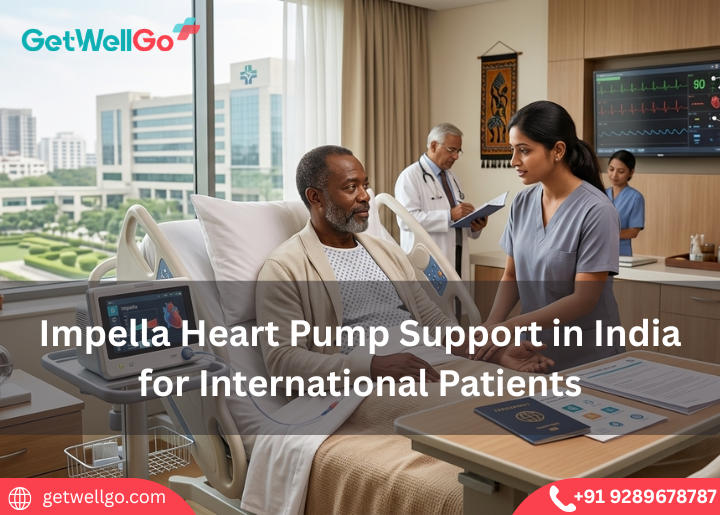
Protect failing heart function with Impella Heart Pump Support in India organized smoothly by our team, from emergency hospital booking to a safe recovery.
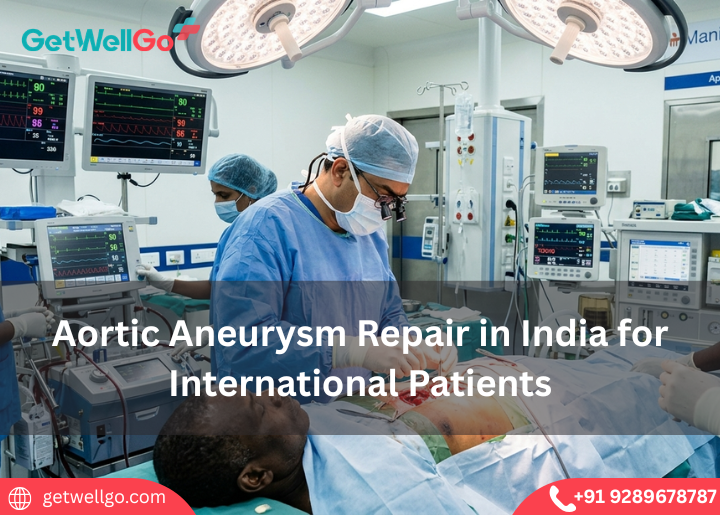
Aortic Aneurysm Repair in India: Fix weak artery walls safely before they rupture. We connect you to elite vascular teams, handle fast visas & a quiet stay.
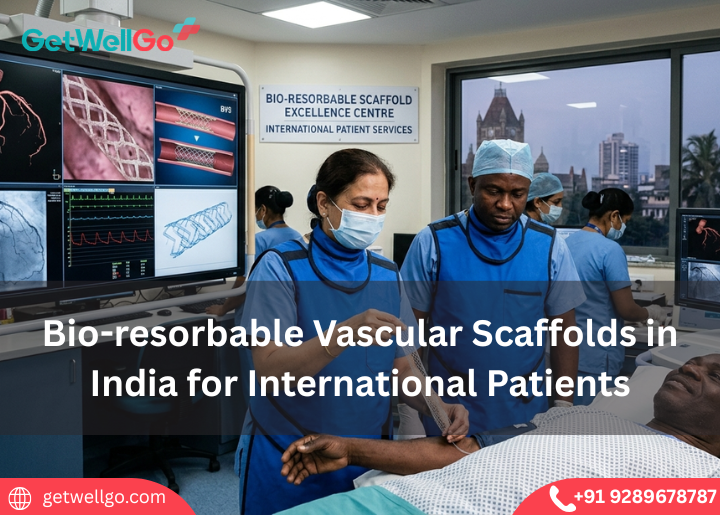
Bio-resorbable Vascular Scaffolds in India: Open your arteries with a stent that melts away naturally! We arrange top cardiologists, visas & a cozy stay.
Shockwave Lithotripsy for Arteries in India: Clear hard calcium gently with sonic waves! We arrange your top cardiologist, medical visa & a cozy recovery stay.
Explore safe, minimally invasive mitral valve repair in India for global patients with expert care, modern hospitals, and cost-effective treatment options.
Choose GetWellGo for Transcatheter Aortic Valve Replacement in India. International patients receive expert cardiac care, modern hospitals, and cost savings.
Choose GetWellGo for pediatric cardiac catheterization in India. International patients get advanced care, skilled pediatric cardiologists, and cost-effective treatment.
MitraClip Procedure in India fixes leaky heart valves without open surgery. GetWellGo handles your top cardiac clinic, medical visa, and safe recovery.
Endovascular Aneurysm Repair in India saves lives without major open surgery. GetWellGo handles your top vascular clinic bookings, visas, and safe recovery.
Get world-class varicose veins laser treatment in India at competitive costs, combining advanced technology, quick recovery options, and smooth travel support for global patients.


.png)