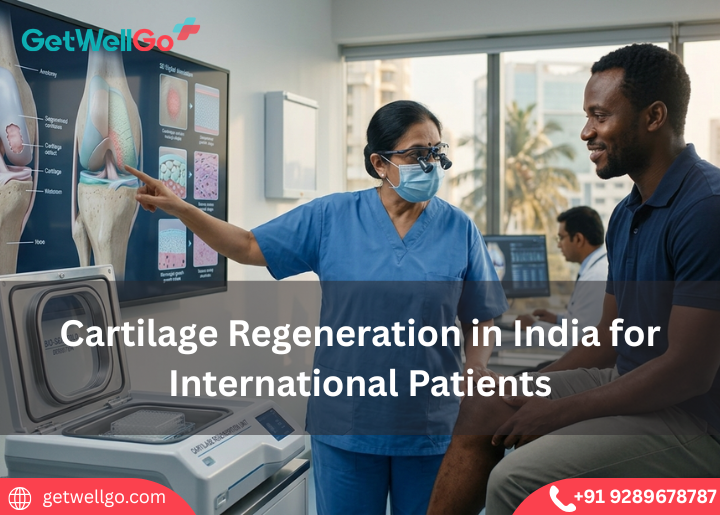
Cartilage Regeneration in India for International Patients
Cartilage Regeneration in India: Stop joint wear before it starts! We book your top sports specialist, handle the medical visa & provide a cozy stay to heal.
Read More
Knee Replacement Surgery in India for African Patients for Nigeria & Kenya patients. Affordable expert care! GetWellGo manage your travel and a warm sanctuary.

Knee replacement surgery (knee arthroplasty), can help in relieving pain and restoring function in severely diseased knee joints. The procedure involves cutting away damaged bone and cartilage from the thighbone, shinbone, and kneecap and replacing it with an artificial joint which is made up of metal alloys, high-grade plastics, and polymers. In determining whether a knee replacement is right for the patient, an orthopedic surgeon assesses the patient’s knee range of motion, stability, and strength. X-rays help determine the extent of damage of the knee joint. The doctor can choose from a variety of knee replacement prostheses and surgical techniques, depending upon age, weight, activity level, knee size and shape, and overall health.
Knee replacement is a surgical process that helps provide a few different benefits to patients in particular, people with arthritis, injury, or other painful or limited mobility in the knee area can benefit from this procedure. Here are the key benefits:
There are several reasons why one is recommended knee replacement surgery by their doctors. These problems may include:
The most common source of chronic knee pain and disability is arthritis. Knee pain is caused mainly due to three types: osteoarthritis, rheumatoid arthritis, and post-traumatic arthritis.
For several weeks after the procedure, the patient might need to use crutches or a walker, so these must be arranged before their surgery.
To make the home safer and easier to navigate during recovery, One must consider the following:
Knee replacement surgery carries many different risks; the majority of the risks are because of the surgery, while others stem from the body's reaction to the operation.
Some possible risks are disused below:
Any opening in the skin can allow bacteria to enter, which could lead to infection. The surgeon will take precautions measures to minimize this risk during surgery. Once the individual returns home, they should watch out for the following signs of infection:
Antibiotics are being by the doctor if an infection arises.
A knee replacement is surgery that replaces all or part of your knee joint with an artificial one. This kind of operation is also known as an arthroplasty, or joint replacement. A knee prosthesis, or artificial joint, composed of plastic and metal, will replace the damaged components of your natural knee joint.
With improvements in surgical methods and medical technology, India is becoming a leading destination for knee replacement procedures. Patients from African countries such as Nigeria Kenya choose the nation because of its top-notch healthcare system, highly qualified surgeons, and affordable treatment alternatives.
There are two types of knee replacement surgeries. Your knee replacement specialist will recommend a full or partial replacement:
As much of the knee's natural bone is preserved as feasible, an artificial component replaces the damaged portion of the knee joint.
If your following severe symptoms are not improving with nonsurgical therapies, your healthcare professional may suggest a knee replacement:
India boasts some of the greatest healthcare facilities and services in all of Asia, which contributes to the popularity of medical travel there. The top knee replacement surgery institutions in India use cutting edge technologies to perform all kinds of surgeries. Furthermore, India offers knee replacement surgery at a significantly lower cost when compared to Africa. An African patient can anticipate paying 50–60% less in India for a total knee replacement procedure.
Patients from Africa – Nigeria, Kenya, Ethiopia, Ghana, Uganda availing treatment in India would be required to apply for a Medical Visa (M visa) at the High Commission of India in their country.
Obtain an elaborate medical report of a reputed hospital in Nigeria.
Include:
The hospital will:
This is the most important document to approve the visa.
Published by the Indian hospital and should consist of:
You will need:
You can choose two options:
e-Medical Visa (Fastest)
Regular Sticker Visa
Applicants might be contacted to be verified.
You may be asked:
Once approved:
Medical visa validity:
In India, the following examinations and diagnostic procedures are frequently carried out prior to knee replacement surgery.
Typically, a knee replacement procedure takes two to three hours.
When other forms of treatment for knee pain are no longer effective, a doctor may advise knee replacement surgery. These choices prior to the knee replacement surgery could consist of:
However, when these measures fail, an arthroplasty is the best choice as the knee replacement surgery success rate in India is very desirable and improves the quality of life.
Knee replacement surgery has an almost perfect success rate in India. There are very few reported examples of post-operative complications, but none of them have lasted. All of the patients were back to their regular routines in 6 to 12 months, even if the healing process took longer. The elderly patients undergoing this procedure, who were typically between the ages of 50 and 80, have recovered well and resumed leading healthy lives.
GetWellGo is regarded as a leading supplier of healthcare services. We help our patients from Nigeria, Kenya, Uganda to choose the best treatment locations that suit their needs both financially and medically.
We offer:
What are the most important things to take into account when selecting India's top orthopedic hospital?
While selecting an orthopedic hospital in India, a number of criteria are taken into account, such as:
How is the flight from Nigeria?
The duration of the flight from Nigeria to India varies with the city of departure, the destination, and whether there are stops on the route or not.
How is the flight from Kenya?
Kenya to India flight time varies based on the city of departure, destination and whether you are flying directly or via a stopover.
Can I pay via wire transfer?
Are there other Nigerians/Kenyas at Fortis?
How can I apply for, obtain, or schedule a knee replacement appointment in India?
It is a naturalistic case study of a 55-year-old Ugandan teacher named Mr. Kato John Mugisha, who had chronic knee pain that he had been experiencing for several years. His health continued deteriorating slowly such that he found it extremely painful even to walk and stand long hours in the classroom. This not only influenced his career as a teacher but also influenced his own life and he could not even enjoy common activities with his family. Months of fighting and searching of something more advanced in other countries, Mr. Mugisha came across GetWellGo India, which led him to the Max Hospital, Saket, a place known to be the most proficient in joint replacement surgeries. He was very assured when he was informed that he would be operated by Dr. SKS Marya who is one of the top surgeons in knee replacement surgeries. The international patient services team at GetWellGo made sure that the international patient has had a stress-free ride to India once he arrived in India. Mr. Mugisha was assured and looked after, and this was noticed immediately during the airport pickup and the preparation of comfortable accommodations, as well as scheduled hospital consultations. After careful considerations and discussions, Mr. Mugisha had a successful knee replacement surgery conducted by Dr. Marya together with his team of surgeons at the Max Hospital. He was well monitored after surgery to assure that there was no complication. Shortly thereafter a structured physiotherapy was added which enabled him to gain strength and movement of his operated knee. It took a couple of weeks before Mr. Mugisha started to record exceptional improvement. His mobility was much higher now, he did not need support to walk and the constant pain that used to determine his life was gone. He was encouraged to resume his teaching functions and daily life activities without pain with constant physiotherapy and the care of a physician.
Speaking about his experience, Mr. Mugisha expressed heartfelt gratitude:
I would not have been able to receive such good medical care and hospitality in India without being very grateful. I felt safe and taken care of during the process, and all of it was contributed by the professionalism of Dr. SKS Marya and his mastery of surgery, as well as the miraculous support of the team of GetWellGo. I am now able to stand on my feet and teach my students without discomfort and I am now enjoying a full life with my family. This has been a life changing moment to me. It is our great pleasure to congratulate Mr. Mugisha on his recovery, and hope that he leads a healthy, happy, and active life in the future.
Cartilage Regeneration in India: Stop joint wear before it starts! We book your top sports specialist, handle the medical visa & provide a cozy stay to heal.
Read More
World Sickle Cell Day 2026: Join the fight for equity. Our Indian medical team helps Nigeria & Kenya patients access curative BMT care, visas & warm stays.
Read More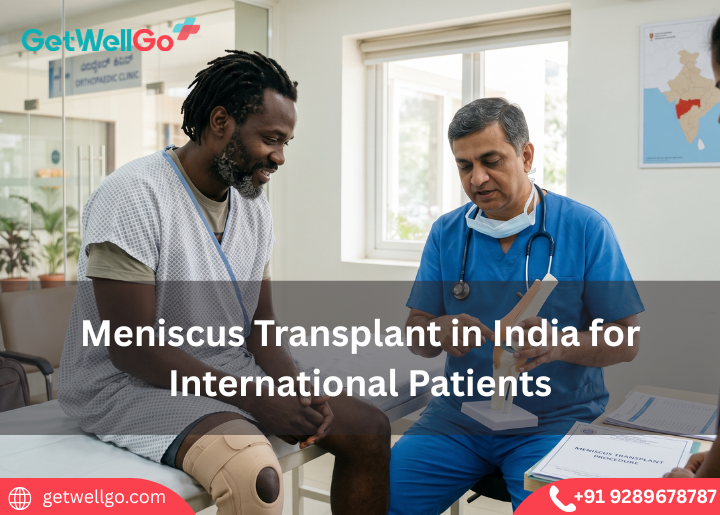
Meniscus Transplant in India: Save your knee joint and live active again! GetWellGo handles your top sports surgeon, medical visa & a cozy recovery home.
Read More
Total Knee Replacement in India for Uzbekistan Patients with robotic precision. GetWellGo handles your expert surgeon, Uzbek translator & a fast recovery home.
Read More
Get advanced kyphoplasty in India for spinal fractures. International patients benefit from expert care, modern hospitals, quick recovery, and affordable costs.
Read More
Advanced 3D Printed Bone Implants in India fit your body perfectly. GetWellGo handles your custom surgery, flight bookings, and a relaxing place to stay.
Read More
Hip sports injury in India slows you down, but we fix that. GetWellGo arranges your expert joint repair, airport rides, and a comfy room to rest.
Read More
Hip injuries in sports in India shouldn't end your game. GetWellGo books your top sports medicine doctor, visa, and safe stay so you can play again.
Read More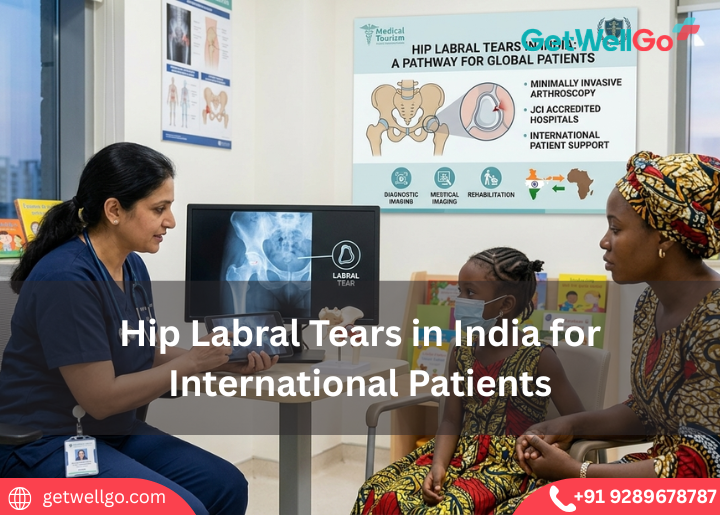
Get advanced hip labral tear care in India with skilled orthopedic surgeons, modern techniques, and cost-effective treatment for international patients.
Read More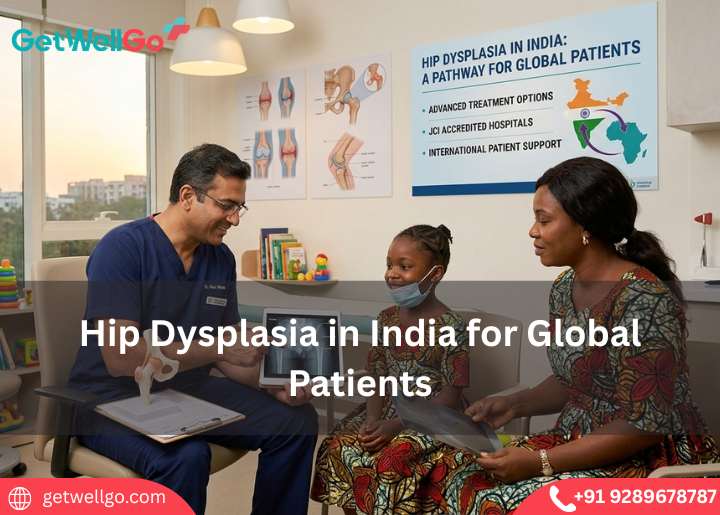
Affordable hip dysplasia treatment in India with skilled orthopedic care, advanced procedures, and support tailored for international patients.
Read More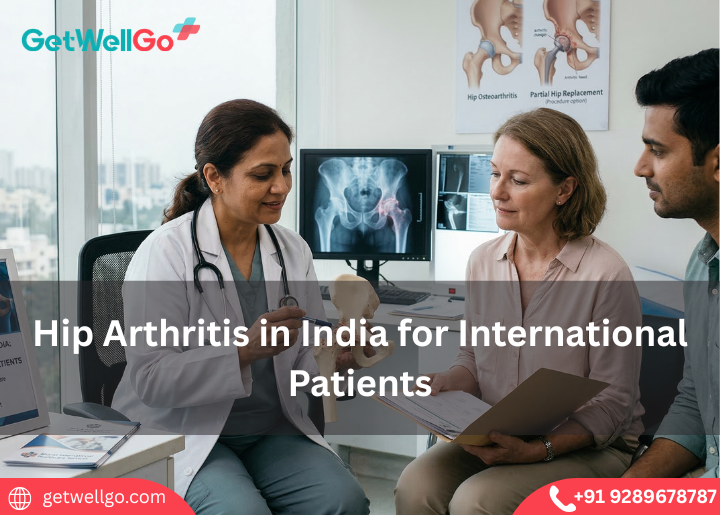
Hip Arthritis in India doesn't have to mean daily pain. GetWellGo handles your complete joint care trip, from finding top specialists to booking your hotel.
Read More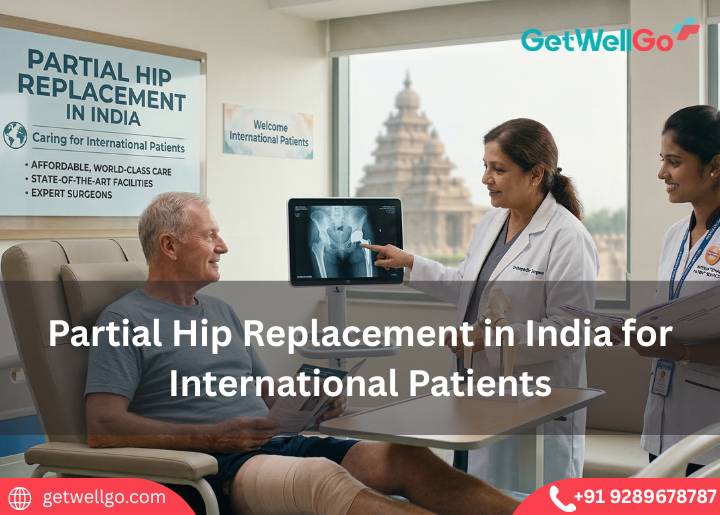
Partial Hip Replacement in India safely fixes hip fractures. We at GetWellGo handle your urgent hospital care, airport pickup, and smooth travel.
Read More