
Pediatric Cardiology in India at Max Hospital: A Guide for Nigerian Parents
A complete guide to pediatric cardiology in India, covering Max Hospital's child heart care, specialists, costs, and what Nigerian parents should expect.
Read More
Where is bone marrow located, and why does it matter? Discover its role in your body and why Nigerian patients should understand it. Learn more inside.
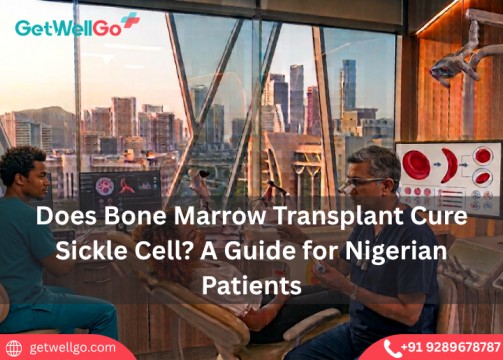
Sickle cell is an inherited lifetime blood disease prevalent in millions of people around the world including a large number of Nigerians. This can result in extreme pain, anaemia, fatigue, infections and organ problems. Many patients or families ask an important question: does bone marrow transplant cure sickle cell? Answering the question of whether bone marrow transplant is a cure for sickle cell is not trivial. The answer is that for a small number of patients with SCD, the bone marrow transplant or hematopoietic stem cell transplant (HSCT) can cure the condition. It transplants healthy stem cells from a suitable donor to replace the patient's diseased stem cells. There are, however, risks involved in the procedure, careful evaluation are needed and it is not suitable for all patients. When considering advanced treatment options in India, it is important for Nigerian patients to know what to expect including the procedure, eligibility requirements, benefits, risks and pricing to make informed healthcare decisions.
Sickle cell disease is a genetic disorder of the blood where the haemoglobin is abnormal in the blood and is known as haemoglobin S. Haemoglobin is the protein in the blood that carries oxygen around the body. Normally, red blood cells are flexible and round in healthy persons. In an SCD patient, the red blood cells may become hard, sticky and sickle-shaped. These abnormal cells may clog blood vessels, decrease the amount of oxygen to tissues and start to deteriorate early.
Symptoms and complications are:
While many of the symptoms can be controlled by treatment, the underlying genetic defect is still present unless the patient's blood-forming stem cells are replaced.
Yes, for a few patients. A bone marrow transplant may be able to cure sickle cell disease by replacing the blood-producing stem cells that cause the red blood cells to be sickle-shaped. A successful transplant would have healthy stem cells from a donor implant themselves in the patient's bone marrow and start to make normal red blood cells. This may eventually lead to the production of no sickle haemoglobin or a very small amount. It is, however, important to note that in this context "cure" refers to successful transplantation to remove the sickle cell disease process. It is not implying that all patients will be cured or that the procedure will be an appropriate treatment for all. Medical professionals assess each patient separately considering age, general health condition, complications of the disease, availability of donors and other factors.
There are several key steps to a bone marrow transplant.
Medical Evaluation
Prior to treatment, a thorough test is done to see if the patient is eligible for transplantation. Doctors may review:
This assessment can assist the physician in determining the patient's condition and risk factors.
Transplants are not for everyone who has sickle cell disease and not everyone who has the disease is eligible for a transplant. Bone marrow transplant is only recommended for patients with severe disease or serious complications.
Things that may be considered are:
Kids and younger adults may fare better at times because they might experience fewer permanent organ problems. Eligibility should always be based on a competent haematologist or transplant expert.
Bone marrow transplant survival relies on a variety of factors such as the compatibility of the donor and patient, the age of the patient receiving the transplant, the experience of the transplant center, the conditioning regimen and the health of the patient. The rates of long-term disease-free survival after matched sibling donor transplants have been established as high and especially high in younger patients. Research and implementation of newer methods are underway and are also employed in the cases of not having a fully matched sibling donor. One should not presume that transplantation is a treatment that will achieve the same outcome for all patients. Suggested treatments vary on a case-by-case basis. Based on the patient's medical history, a specialist will be able to tell the patient what to expect, what may be a problem and the chances of successful engraftment.
A bone marrow transplant is a serious medical treatment that may be a cure for sickle cell disease but it has risks.
Possible complications include:
Graft-versus-host disease is a type of rejection that is triggered by the immune system cells from the donor who recognise the recipient's tissues as foreign and attack them. This risk is minimised by prescribing preventive medicines and careful monitoring by doctors. All potential risks and benefits should be reviewed with the patient and family by the transplant specialist before deciding on treatment.
Recovering from transplantation may take several months and will depend on the individual patient. The patient will require intensive monitoring during the first hospital stay until the blood counts have improved and the immune system starts to recover.
Once discharged, patients should have regular follow-up appointments. Patients may need:
International patients also will need continued referrals to their local Nigerian healthcare providers and regular monitoring by their transplant team in India.
India has emerged as an important country for receiving patients from all over the world for special care in hematology and transplant. There are several premier hospitals in India that provide bone marrow transplantation facilities for sickle cell disease, leukemia, lymphoma and other blood disorders. Indian healthcare facilities might offer access to experienced hematologists, advanced transplant facilities, specialized laboratories and multidisciplinary teams which may be advantageous for Nigerian patients.
Patients should have a thorough medical assessment and treatment plan prior to travelling. Some key documents can include:
The case is looked over by a transplant center and decides if the patient is compatible to be treated.
The price of bone marrow transplant in India can change according to various factors. Examples of these are the type of transplant, donor match, hospital, conditioning therapy, post-transplant monitoring and medications.
Other costs could include:
GetWellGo can assist Nigerian patients to arrange medical views and treatment quotes from well-known hospitals in India. A customised cost estimate is normally given following the patient's medical records.
If families ask, "does bone marrow transplant cure sickle cell", the answer is transplantation can be a potential cure for carefully selected patients. In successful stem cell transplants, the procedure can eliminate the root cause of sickle cell disease by replacing the defective blood-forming stem cells with healthy donor stem cells. It is a complicated treatment however, and must be evaluated properly, donor matched and treated medically. Early consultation with an experienced hematologist and transplant center is crucial for Nigerian patients who are contemplating treatment in India. GetWellGo will be able to refer patient to the appropriate hospitals and doctors in India, explain the treatment available to them and assist them in their treatment process.
GetWellGo is regarded as a leading supplier of healthcare services. We help our Nigerian clients choose the best treatment locations that suit their needs both financially and medically.
We offer:
A complete guide to pediatric cardiology in India, covering Max Hospital's child heart care, specialists, costs, and what Nigerian parents should expect.
Read More
We help Ethiopian patients find the best kidney transplant hospital in India — expert surgeons, visa support & affordable packages. Free consultation today.
Read More
Mesothelioma cancer in India for Uzbekistan Patients with advanced care. GetWellGo handles your thoracic specialist, Uzbek translator, and a safe recovery stay.
Read More
Discover recovery, rehab, and follow-up care after cancer treatment in India, ensuring a smooth transition to a healthier life for international patients.
Read More
Explore affordable cancer treatment costs in India for international patients with quality care, advanced hospitals, and expert specialists.
Read More
Robotic-Assisted Radical Prostatectomy in India saves your normal daily function. GetWellGo books your skilled doctor, visa, and a private room to rest.
Read More
PRP and GFC Therapy for Hair Restoration in India brings your natural hair back. GetWellGo books your trusted clinic, stay, and flights to make it easy.
Read More
Advanced Eye Cancer Treatment in India protects your vision. GetWellGo handles your specialized tumor therapy, medical visas, and safe hospital stay.
Read More
Explore top Turkey hair transplant clinics with all-inclusive medical tourism packages by GetWellGo, helping international patients access expert surgeons, modern facilities, and smooth travel care.
Read More
Best Hair Transplant Turkey Medical Tourism Packages for a VIP transformation. GetWellGo arranges your premium clinic, flights, and 5-star Istanbul stay.
Read More
Learn the real cost of rhinoplasty in India, including surgeon fees, hospital stay, and recovery. GetWellGo helps international patients access quality care at affordable prices.
Read More
Hyperhidrosis Treatment in India for International Patients offers Botox, miraDry, iontophoresis, and ETS surgery by expert dermatologists. 90%+ success rates, visa support, English care at 70% lower costs attract global patients seeking sweat-free confid
Read More