

How Nigerian Patients Can Arrange a Bone Marrow Transplant in India
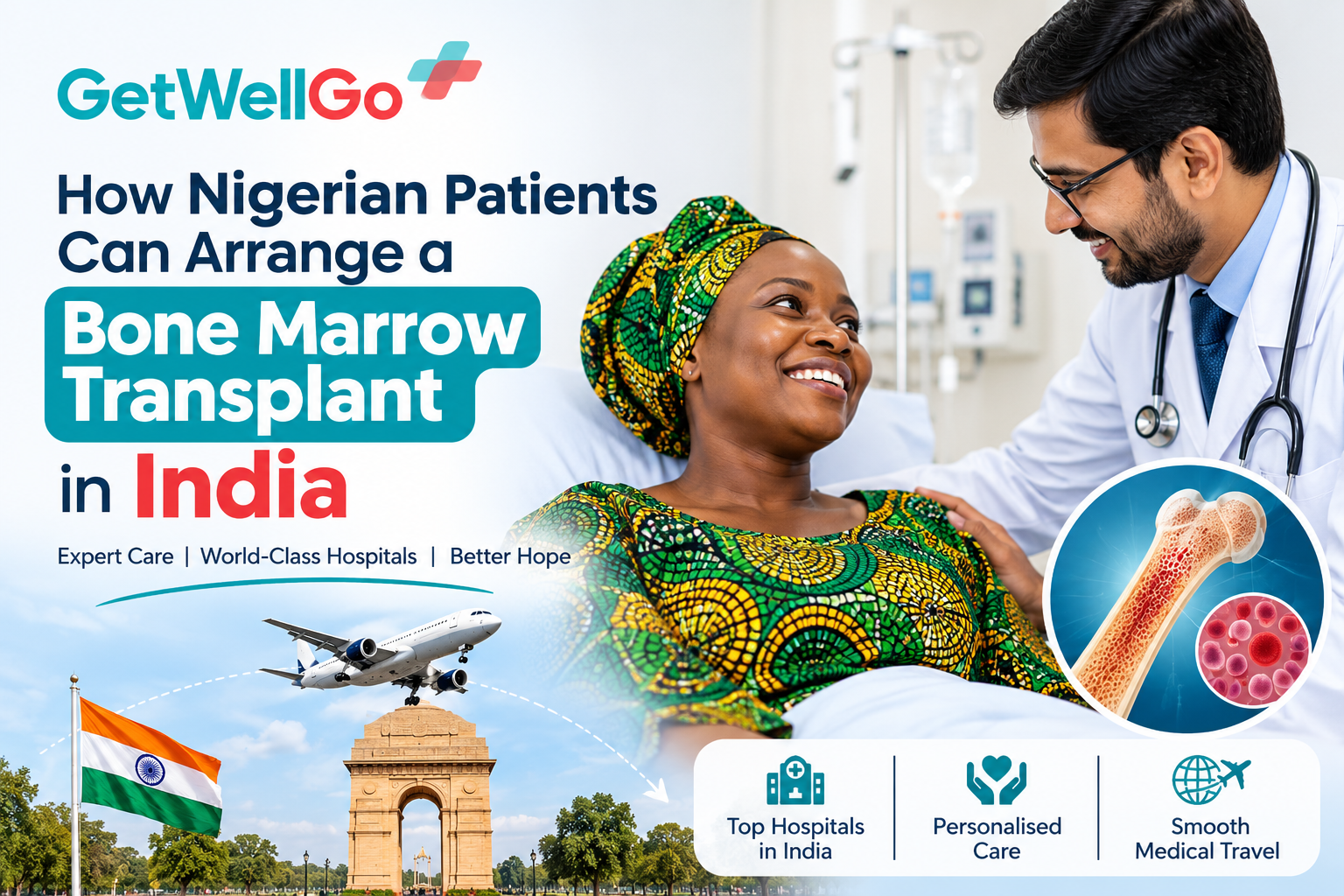
Bone marrow transplantation is a cutting edge treatment option for patients suffering from blood disorders, blood cancers and other genetic disorders including sickle cell disease and thalassemia. Many Nigerian patients choose to have a bone marrow transplant in India due to the specialist treatments available at hospitals.
To help you get started, below we have outlined the steps you will need to take to have your Bone Marrow Transplant in India.
Firstly, you will want to provide your medical reports to the hospitals. The specialist can then have a look at your case and see if you are suitable for bone marrow transplant. They will also be able to recommend the best treatment options for you and give an idea of the cost.
Below we outline how Nigerian patients can get a Bone Marrow Transplant in India, what medical reports are required, how to find a suitable donor, what the treatment may cost and how GetWellGo can help to get your treatment organised.
Why do Nigerian patients have a Bone Marrow Transplant in India?
India has many hospitals offering specialist treatments for Blood Disorders and Cancer. There are many hospitals that offer Bone Marrow Transplantation. These can include:
-
Access to specialist bone marrow transplant professionals: Many haematology experts and Bone Marrow Transplant doctors.
-
Specialist Bone Marrow Transplant Units: Includes isolation rooms and infection control.
-
Many options for donor: You may be able to have a Bone Marrow Transplant using a matched sibling, matched unrelated donor, haploidentical donor or another suitable donor.
-
Bone Marrow Transplant options: Both autologous and allogeneic Bone Marrow Transplants.
-
Access to other specialist departments: Including haematology, oncology, infectious diseases and other departments.
-
International patient support: Medical reports, appointments, accommodation, airport transfers and medical visa documents.
-
Treatment estimates: Get an estimate of the treatment costs.
Your hospital choice and Bone Marrow Transplant programme will depend on your diagnosis, availability of donors, medical condition and treatment.
Conditions Treated with Bone Marrow Transplant
Bone Marrow Transplantation (also known as Hematopoietic Stem Cell Transplantation) can treat a variety of blood related conditions.
Some conditions that doctors may recommend having a Bone Marrow Transplant for include:
-
Sickle cell disease
-
Thalassemia Major
-
Aplastic Anaemia
-
Acute Myeloid Leukaemia (AML)
-
Acute Lymphoblastic Leukaemia (ALL)
-
Chronic Myeloid Leukaemia (CML) (selected cases)
-
Multiple Myeloma (selected cases)
-
Lymphoma (selected cases)
-
Myelodysplasia
-
Certain genetic immune deficiencies.
Not all patients will require a Bone Marrow Transplant and will depend on the stage of the disease, previous treatments, age, general health, availability of donors and benefits and risks.
Types of Bone Marrow Transplant in India
Before getting your treatment organised you should know what types of Bone Marrow Transplant are available.
Autologous Bone Marrow Transplant
The patient’s own stem cells are removed and stored. The patient then has high dose chemotherapy. Once they have finished their conditioning treatment the stem cells are given back to them.
This is commonly used for certain cases of multiple myeloma and lymphoma.
Allogeneic Bone Marrow Transplant
The stem cells are taken from a suitable donor. This could be a sibling, family member or unrelated donor.
This type of Bone Marrow Transplant may be recommended for patients with leukaemia, aplastic anaemia, thalassemia and sickle cell.
Haploidentical Bone Marrow Transplant
Stem cells are taken from a partially matched family member. This could be a parent, child or sibling depending on the compatibility testing.
This can offer an alternative donor option for those who do not have a fully matched sibling donor.
The Bone Marrow Transplant specialist will decide what option will be suitable for you after assessing you and potential donors.
How to Get a Bone Marrow Transplant in India as a Nigerian Patient
As a Nigerian patient you can start organising your Bone Marrow Transplant. Usually you will need to:
Provide Medical Reports
You will need to provide your medical reports.
This will include:
-
Diagnosis and medical history.
-
Bone Marrow Biopsy.
-
Histopathology.
-
Full blood count.
-
Liver and kidney function.
-
Blood group.
-
Flow Cytometry.
-
Cytogenetics and Molecular Testing.
-
Previous Chemotherapy.
-
Summary of previous treatment.
-
Infection Screening.
-
Current medication.
For patients with sickle cell disease, doctors may ask for Haemoglobin Electrophoresis / HPLC reports, previous transfusion history and complications.
For patients with thalassemia, transfusion history, iron overload and appropriate cardiac and liver investigations may be required.
This will depend on the diagnosis.
Contact a Bone Marrow Transplant Hospital in India
Once you have provided your reports, you can contact a Bone Marrow Transplant Hospital in India.
When choosing a hospital you should consider:
-
Experience treating your condition.
-
Number of Bone Marrow Transplant specialists and their experience.
-
Specialist Bone Marrow Transplant Unit.
-
HLA testing and donor assessment.
-
Infection Control.
-
ICU and emergency support.
-
Post-transplant monitoring.
-
International patient support.
You can send your reports directly to the hospital or via a medical tourism facilitator such as GetWellGo.
This will help the hospital identify the correct specialist for your case.
Online Consultation with Bone Marrow Transplant Specialist
Many hospitals in India will offer online consultations for International Patients.
During your online consultation you will be able to discuss:
-
Your diagnosis.
-
Previous treatment.
-
Current symptoms and complications.
-
Whether you may be suitable for a Bone Marrow Transplant.
-
Donor options.
-
Length of treatment.
-
Further investigations required in India.
-
Initial treatment costs.
The doctor may recommend further tests to see if you are suitable for a Bone Marrow Transplant.
An online consultation can help you understand what treatment options are available.
Find a Suitable Stem Cell Donor
One of the most important parts of organising a Bone Marrow transplant is finding a suitable donor.
Depending on the type of transplant you may have:
-
Fully matched sibling donor.
-
Partially matched family donor.
-
Matched unrelated donor.
-
Autologous transplant using your own stem cells.
HLA (Human Leukocyte Antigen) testing will be carried out to see if you are compatible with a potential donor for an allogeneic transplant.
If you have a sibling or family member who may be suitable as a donor, the hospital may recommend HLA testing.
The donor will also be assessed medically to ensure they are suitable to donate their stem cells.
A suitable donor cannot be identified just by blood group. HLA and other medical assessments are important.
Get Treatment Plan and Estimate
Once the hospital has reviewed your reports they may be able to provide you with a treatment plan.
This may include:
-
Investigations.
-
HLA Typing and Donor Assessment.
-
Chemotherapy Conditioning.
-
Stem Cell Collection.
-
Bone Marrow/ Stem Cell Infusion.
-
Immunosuppressant medication.
-
Infection prevention and monitoring.
-
Admission.
-
Post-transplant follow up.
They may also be able to give you an initial estimate for your treatment.
The cost of Bone Marrow Transplant in India will depend on the type of transplant required, diagnosis, availability of donors, hospital, treatment protocol and length of admission.
The treatment plan and estimate may change once you and the donor have been further assessed in India.
Apply for Medical Visa to India from Nigeria
Once the hospital have reviewed your reports and recommended treatment, you can start applying for your medical visa.
You will need to provide:
-
Valid Nigerian passport.
-
Recent passport sized photos.
-
Medical reports.
-
Appointment letter/Invitation letter from hospital.
-
Medical Visa Application.
-
Attendant details (if applicable).
-
Other documents as requested by the relevant authority.
If you are travelling with a donor or family member, you should confirm what visa is required for them.
Attend Hospital in India for Pre-transplant Investigations
Once in India you will have further investigations.
This may include:
-
Full blood count.
-
Kidney and liver function.
-
Cardiac assessment.
-
Lung function.
-
Infection screening.
-
Bone Marrow assessment (if required).
-
HLA compatibility.
-
Donor assessment.
Other investigations related to your condition.
The doctors will review your results and confirm if you are suitable for a Bone Marrow transplant. If everything is suitable the transplant team will plan your conditioning treatment.
Have Bone Marrow Transplant
There are generally a few stages:
-
Preparation: You and the donor will have the required medical assessments.
-
Chemotherapy conditioning: Patients will have chemotherapy (and sometimes other treatments) to prepare for the transplant.
-
Stem cell infusion: The collected stem cells will be infused into the patient’s bloodstream via a central venous catheter.
-
Engraftment: The transplanted stem cells will start to produce new blood cells. Regular blood tests will be carried out to monitor this.
-
Monitoring: Patients will be monitored whilst in hospital. This may include monitoring blood levels, infections, Graft vs Host Disease (if allogeneic) and other complications.
Length of admission will vary depending on the type of transplant, diagnosis, recovery and complications.
Post-Transplant
Once you have had your Bone Marrow transplant you will need to be regularly monitored.
The transplant team may recommend:
-
Regular blood tests.
-
Monitoring for infections.
-
Immunosuppressant medication.
-
Graft vs Host Disease monitoring.
-
Nutritional support.
-
Medication adjustments.
-
Follow up appointments.
-
Appropriate vaccination planning.
Nigerian patients may need to stay in India for a long period of time after discharge depending on their recovery and recommendations from the Bone Marrow transplant specialist.
The doctors will advise when it is medically safe to return to Nigeria.
Cost of Bone Marrow Transplant in India for Nigerian Patients
The cost of Bone Marrow Transplant in India will vary depending on your condition, type of transplant, donor requirements and hospital.
The following are approximate costs to help with planning:
|
Type of transplant |
Approximate cost (USD) |
Approximate cost (NGN) |
|
Autologous BMT |
$10,000–$18,000 |
₦15–27 million |
|
Allogeneic BMT |
$15,000–$30,000 |
₦22.5–45 million |
|
Haploidentical BMT |
$18,000–$30,000 |
₦27–45 million |
Factors Affecting Cost of Bone Marrow Transplant in India
-
Type of transplant.
-
Medical condition.
-
Hospital and city.
-
Bone Marrow transplant specialist experience.
-
Availability of donors and compatibility testing.
-
Stem cell collection.
-
Chemotherapy conditioning.
-
Immunosuppressant medication.
-
Length of admission.
-
Isolation room.
-
ICU admission (if required).
-
Infection management.
-
Blood and platelet transfusions.
-
Post-transplant medication.
-
Follow up appointments.
Best Bone Marrow Transplant Hospital in India
India has many hospitals offering specialist Bone Marrow Transplant programmes for International Patients.
When looking for the best Bone Marrow Transplant Hospital in India as a Nigerian patient you should compare hospitals based on their experience of your condition, Bone Marrow Transplant facilities, specialist team and post-transplant support.
Some hospitals to consider include:
Fortis Memorial Research Institute, Gurugram
Fortis Memorial Research Institute (FMRI) offers specialist Haematology and Bone Marrow Transplant services.
They have experience treating patients with conditions such as sickle cell disease, thalassemia, leukaemia and other blood disorders.
They offer Bone Marrow Transplant services including assessment, donor assessment and post-transplant monitoring.
Medanta – The Medicity, Gurugram
Medanta offer specialist Haematology and Bone Marrow Transplant services.
Patients can access a multi-disciplinary team, specialist diagnostic facilities and specialist treatments for various blood disorders and cancers.
Max Super Speciality Hospital, Saket
Max Super Speciality Hospital offer specialist cancer and Haematology services including Bone Marrow Transplant.
Patients can have specialist appointments, investigations and treatment planning for various blood related conditions. The best hospital for you will depend on your diagnosis, transplant requirements, availability of donors and recommendations from the specialist. We would recommend comparing treatment plans and written estimates.
How Long Will Nigerian Patients Stay in India?
The length of time you will need to stay in India will depend on the type of transplant, diagnosis, donor and recovery.
Patients requiring a Bone Marrow Transplant may need to stay in India for a few weeks or months.
This will include:
-
Initial medical assessment.
-
Donor testing.
-
Investigations.
-
Chemotherapy conditioning.
-
Stem Cell Transplant.
-
Admission and engraftment monitoring.
-
Initial recovery.
-
Follow up appointments.
Some patients may need to stay close to the hospital after being discharged. The Bone Marrow transplant specialist will recommend when it is safe to return to Nigeria. Do not make any travel arrangements until you have received medical clearance.
How Can Nigerian Patients Send Medical Reports to Hospitals in India?
You do not necessarily need to travel to India to get started with your Bone Marrow Transplant assessment. Usually you can send your medical reports electronically to the international patient department or via a medical tourism facilitator.
We would recommend preparing the following:
-
Diagnosis: Confirmed diagnosis and medical history.
-
Blood tests: Recent Full Blood Count, Liver and Kidney Function.
-
Bone Marrow: Biopsy, Flow Cytometry and Molecular Testing reports.
-
Previous treatment: Chemotherapy, transfusion and medication history.
-
Donor: Potential family donor details.
-
Scanned documents: Ensure documents are clear PDFs and organised by date.
-
Imaging: Original imaging documents.
The hospital may ask for further investigations or updated reports.
How GetWellGo Can Help Nigerian Patients Get a Bone Marrow Transplant in India
Getting a Bone Marrow Transplant abroad can involve coordinating your treatment, finding the right hospital, donor assessment, travel and follow up. GetWellGo can help Nigerian patients with:
Reviewing Medical Reports
Send us your medical reports and we can help coordinate with the correct haematology or Bone Marrow Transplant specialist in India.
Find the Right Specialist
We can find the right specialist for your diagnosis and treatment requirements. Including doctors with experience treating:
-
Sickle cell disease.
-
Thalassemia.
-
Aplastic Anaemia.
-
Leukaemia.
-
Lymphoma.
-
Multiple Myeloma.
Find the Right Hospital
We can help find the right hospital for your Bone Marrow Transplant. We can compare hospitals based on Bone Marrow Transplant facilities, specialist experience, treatment options and international patient support.
Online Doctor Appointments
If you are unable to travel immediately we can help organise online appointments with Bone Marrow Transplant specialists in India. You can discuss your diagnosis, previous treatment and donor availability.
Initial Treatment Estimates
We can help you get initial treatment estimates from the hospitals once they have reviewed your medical reports. This can help you understand what the Bone Marrow Transplant cost in India may be.
Medical Visa Assistance
If the hospital recommends treatment in India we can help coordinate the invitation letter from the hospital. We can also help with the medical visa documents.
Travel and Accommodation
We can help with:
-
Airport pick up and drop off.
-
Accommodation close to hospital.
-
Local transport.
-
Hospital appointments.
-
Medical interpreters.
-
Patient coordination.
We aim to make it easier for Nigerian patients to get a Bone Marrow Transplant in India.
FAQs
-
How Can Nigerian Patients Get a Bone Marrow Transplant in India?
Nigerian patients can start by providing their medical reports. They can then be sent to a hospital in India or a medical tourism facilitator. A Bone Marrow Transplant specialist will review their case, see if they are suitable and recommend donor testing. They will also give you an initial treatment plan and estimate.
-
How much does Bone Marrow Transplant cost in India?
The cost generally ranges from around $10,000 to $30,000+ depending on the type of transplant, diagnosis, donor requirements, hospital and treatment complications. We would recommend asking for a personal estimate.
-
Can Nigerian patients get a Bone Marrow Transplant in India for Sickle Cell Disease?
Yes. Hospitals in India offer Bone Marrow Transplant for eligible patients with sickle cell disease. An Allogeneic Bone Marrow Transplant using a suitable related or other donor may cure the disease. Whether you are eligible will depend on your medical condition, availability of donors and risks involved with the transplant.
-
Do I need a fully matched sibling donor?
No. Whilst a fully matched sibling donor is an option, patients may also be considered for a Haploidentical or matched unrelated donor. The Bone Marrow transplant specialist will decide what option is best for you.
-
Can I get a Bone Marrow Transplant in India without travelling?
Yes. You can start by sending your medical reports electronically and having an online appointment with a Bone Marrow transplant specialist. However further medical assessments and investigations will be required to make the final decision on your transplant.
-
How long does Bone Marrow Transplant take in India?
The overall treatment can take a few weeks to a few months. This will include pre-transplant assessment, donor assessment, conditioning, transplant, admission and recovery. This will vary depending on the patient.
-
What is the best Bone Marrow Transplant Hospital in India?
Fortis Memorial Research Institute, Medanta and Max Super Speciality Hospital are hospitals you may want to consider. The best hospital will depend on your diagnosis, transplant requirements, specialist experience and hospital facilities.
-
Can a family member travel from Nigeria as a Bone Marrow donor?
Yes. If the Bone Marrow transplant team consider a family member as a potential donor they can travel to India. They will need to have HLA compatibility testing and be medically assessed.
-
Do Nigerian patients need a medical visa for Bone Marrow Transplant in India?
Yes. Generally Nigerian patients travelling to India for a Bone Marrow transplant will need to have the correct medical visa. Any attendant may also need to have the relevant visa. Please check the latest requirements with the Indian visa authorities.
-
Can GetWellGo help me get a Bone Marrow Transplant in India?
Yes. GetWellGo can help Nigerian patients with reviewing medical reports, finding Bone Marrow transplant specialists and hospitals, online appointments, initial treatment estimates, medical visa, airport transfers, accommodation and follow ups.
Recent Blogs
What Medical Reports Are Needed Before Travelling to India for Cancer Treatment?
Read More
Pediatric Heart Surgery Cost in India for Nigerian Children
Read More
How Can International Patients Arrange Online Consultations with Indian Doctors?
Read More
How to Choose the Best Hospital in India from Nigeria
Read More
How to Apply for an Indian Medical Visa from Nigeria
Read More
Does Bone Marrow Transplant Cure Sickle Cell? A Guide for Nigerian Patients
Where is bone marrow located, and why does it matter? Discover its role in your body and why Nigerian patients should understand it. Learn more inside.
Read More
Pediatric Cardiology in India at Max Hospital: A Guide for Nigerian Parents
A complete guide to pediatric cardiology in India, covering Max Hospital's child heart care, specialists, costs, and what Nigerian parents should expect.
Read More
Best Kidney Transplant Hospital in India for Ethiopian Patients
We help Ethiopian patients find the best kidney transplant hospital in India — expert surgeons, visa support & affordable packages. Free consultation today.
Read More
Mesothelioma cancer in India for Uzbekistan Patients
Mesothelioma cancer in India for Uzbekistan Patients with advanced care. GetWellGo handles your thoracic specialist, Uzbek translator, and a safe recovery stay.
Read More
Life after cancer treatment in India for International Patients
Discover recovery, rehab, and follow-up care after cancer treatment in India, ensuring a smooth transition to a healthier life for international patients.
Read More
Cancer treatment cost India for International Patients
Explore affordable cancer treatment costs in India for international patients with quality care, advanced hospitals, and expert specialists.
Read More