

How to Apply for an Indian Medical Visa from Nigeria
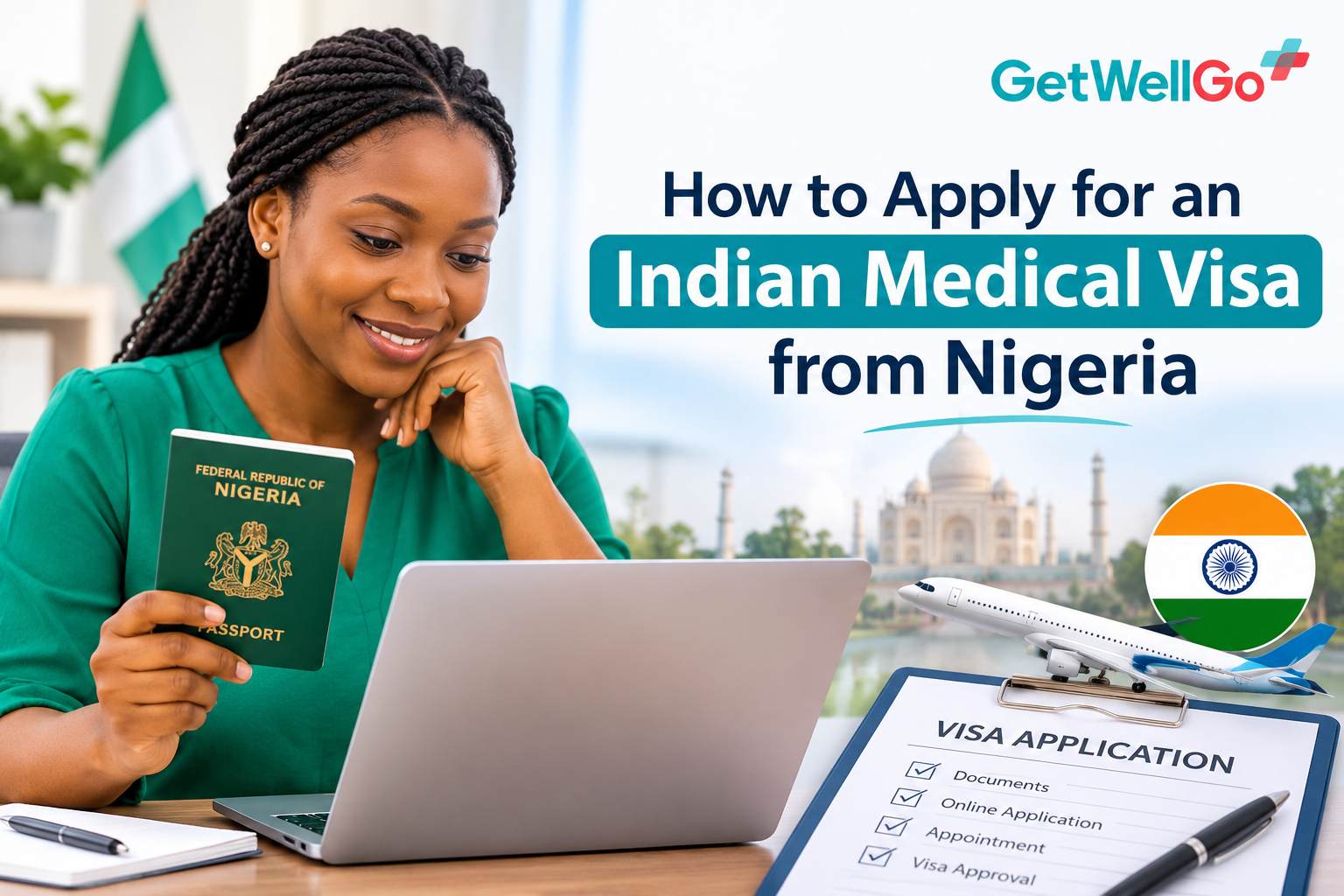
Traveling to India on a medical visa requires a valid medical visa alongside the proper documentation. Nigerian patients wishing to receive treatment in India for conditions including cancer, kidney problems, heart conditions, sickle cell anaemia, organ failure and orthopaedic problems will need to apply for the correct type of medical visa.
The Indian Medical Visa from Nigeria is often issued to patients traveling for specialist medical consultations, tests, treatments and procedures. All Nigerian passport holders should apply for a standard visa via the High Commission of India, Abuja and/or Consulate General of India, Lagos.
This article explains the visa requirements, documents, process, cost, processing time and how GetWellGo can help Nigerian patients.
What is an Indian Medical Visa?
An Indian Medical Visa is a travel document issued to foreigners who want to visit India for medical treatment. This allows international patients to receive medical treatment at recognised hospitals in India.
Nigerian patients may need to apply for a medical visa if they have a diagnosis of:
-
Cancer.
-
Kidney/liver transplant.
-
Bone marrow transplant for sickle cell.
-
Heart surgery and cardiac procedures.
-
Neurological treatment and brain surgery.
-
Joint and spine surgery.
-
Paediatrics and specialist surgery.
-
Complex testing and consultations.
The Medical Visa from Nigeria to India is for patients traveling to India for medical treatment.
Types of Medical Visa
There are two types of visa for patients and their accompanying family members.
Medical Visa (MED):
The Medical Visa is issued to the patient traveling to India for treatment. You will need to provide medical documentation and a letter of invitation or treatment from an Indian hospital.
Medical Attendant Visa (MED X):
The Medical Attendant Visa is for family members or attendants of medical visa holders. Usually immediate family members can accompany patients including parents, partners, siblings and children.
Up to two Medical Attendant Visas can be issued via the Indian e-Visa portal however Nigerian passport holders should apply via the standard visa process.
Who Can Apply for an Indian Medical Visa?
Nigerian citizens can apply for a medical visa to travel to India for genuine medical treatment.
Patients may need to apply if they have:
-
A diagnosis which requires specialist treatment.
-
Been referred to an Indian hospital.
-
Require surgery or complex treatments.
-
Require a specialist consultation or second opinion.
-
Require treatment that is not available or suitable for them.
-
Hospitals will usually review medical reports before issuing an invitation letter.
Eligibility for a Medical Visa to India from Nigeria
Medical Visas are issued to those traveling to India for genuine healthcare needs. The purpose of your travel must be documented and the correct documentation must be provided.
Medical Conditions
Patients may need to apply for a medical visa if they have:
-
Cancer and blood disorders.
-
Sickle cell and thalassaemia.
-
Kidney failure and organ transplant.
-
Cardiovascular conditions.
-
Neurological conditions.
-
Orthopaedic conditions.
-
Gastrointestinal and liver conditions.
-
Paediatrics and congenital conditions.
Can a family member come with me?
Yes, eligible family members can accompany you on your medical visa. They will need to apply for the correct Medical Attendant Visa.
They can help you whilst in hospital. Each attendant will need to apply for their own visa and correct documentation.
Can children apply for an Indian Medical Visa?
Yes, children will need a correct visa to travel to India for medical treatment. Usually the child will be accompanied by a parent or legal guardian who will apply for the correct attendant visa.
Further documentation including birth certificate, parental passports and consent forms may be requested.
Documents Required for a Medical Visa to India from Nigeria
One of the most important parts of the process is ensuring you have the correct documentation.
Depending on your situation, you may be asked for the following:
Patient Passports and Personal Documentation
-
Valid Nigerian international passport.
-
Copy of passport biodata page.
-
Completed Indian visa application form.
-
Recent passport size photos.
-
Proof of address (if requested).
-
Previous Indian visas (if applicable).
Ensure your passport meets the requirements of validity and blank pages.
Medical Documentation
You may be asked for:
-
Medical reports and diagnosis.
-
Previous treatment.
-
Test reports.
-
MRI/CT/X-ray reports.
-
Doctor referral.
-
Information on what treatment you will be having in India.
This will help the Indian hospital to understand your condition and give you the correct treatment recommendations.
Letter of Invitation from Indian Hospital
An invitation or treatment letter from an Indian hospital is an important part of the documentation.
Generally, this letter should include:
-
Full name.
-
Passport details and nationality.
-
Medical condition.
-
What treatment you will be having.
-
Expected treatment/admission dates.
-
Hospital details and contact information.
The hospital may issue you with this once they have reviewed your medical reports and confirmed they can treat you.
Financial Documentation
You may be asked to provide financial proof that you can afford the treatment and travel.
This may include:
-
Recent bank statements.
-
Proof of income/employment.
-
Bank guarantee/sponsorship documents (if applicable).
-
Cost of treatment from Indian hospital.
-
Proof of financial support from family members.
Medical Attendant Documentation
If you are accompanied by a family member, they may be asked for:
-
Valid passport.
-
Completed visa application form.
-
Recent photos.
-
Details of patient’s medical visa application.
-
Letter of invitation/attendant confirmation from Indian hospital.
-
Proof of relation (if applicable).
They should apply for the correct type of visa and not as a tourist.
How to Apply for an Indian Medical Visa from Nigeria
To apply for an Indian Medical Visa, you will need to gain medical confirmation from an Indian hospital and complete the correct documentation.
Find a Hospital in India
The first thing to do is find a suitable hospital and specialist for your medical condition.
Share your medical reports with an Indian hospital or medical tourism facilitator to understand what treatments are available.
They may review your reports and provide:
-
Recommendations for specialist.
-
Treatment plan.
-
Estimated cost of treatment.
-
Expected admission dates.
-
Medical invitation letters.
Invitation Letter from Hospital
Once they have reviewed your medical reports, the hospital may issue you with an invitation letter for your visa. Ensure your name, passport number, nationality and treatment details are correct.
Online Application Form
Nigerian citizens should apply using the standard Indian visa application portal.
Generally, you will need to:
-
Go to the official Indian Visa Online site.
-
Select 'Standard Application'.
-
Select the correct visa type.
-
Enter your personal details and passport information.
-
Enter your medical treatment details.
-
Enter hospital and travel information.
-
Carefully review your information.
Submit your application and print off your completed application. This does not guarantee you a visa will be issued. Nigerian citizens will also need to complete the physical application requirements.
Application to Indian Mission
As stated by the High Commission of India, Nigerian nationals will need to apply for their visa in person with the correct physical documents.
You will apply via:
-
High Commission of India, Abuja.
-
Consulate General of India, Lagos.
The Consulate General of India, Lagos will be for those applying from specific states in Southern Nigeria. Check the consular jurisdiction before attending. Your documents will be reviewed and you may be asked to attend an interview.
Application Fee
You will need to pay the correct visa application fee. This will vary depending on the Indian mission.
This fee is non-refundable.
Interview
You may be asked questions by the visa officer regarding:
-
Your medical condition.
-
What treatment you will be having.
-
Which hospital you have chosen in India.
-
Your financial arrangements.
-
How long you will be staying.
-
Who is accompanying you?
Answer truthfully and provide any extra documentation requested.
Collect Passport and Visa
Once your application has been processed, you can collect your passport. Check your visa to ensure:
-
Your name is correct.
-
Passport number is correct.
-
Visa type is correct.
-
Valid from/To dates are correct.
-
Number of entries.
-
Length of stay allowed.
Do not book any non-refundable flights or accommodation until you have your visa.
Processing Time for Medical Visa to India from Nigeria
The processing time will vary depending on your situation, documentation and extra clearance. The High Commission of India cannot guarantee a set time frame. Some applications may take longer to process than others.
Factors affecting processing time may include:
-
Application completion.
-
Medical documentation.
-
Hospital invitation letter.
-
Extra security/administration clearance.
-
Interview.
-
Extra documentation.
It is advisable to apply well in advance of your treatment date. If you have an urgent medical condition, inform the hospital and visa authorities. Provide supporting documentation. However, this does not guarantee you will receive an expedited process or visa.
Important Vaccinations for Nigerian Patients Traveling to India
Nigerian citizens traveling to India must adhere to the correct vaccination requirements. As stated by the High Commission of India:
Yellow Fever
Yellow fever vaccination is mandatory for those traveling from Nigeria. Exceptions are infants under 6 months old.
Those traveling should have a valid International Certificate of Vaccination/Prophylaxis (ICVP). This is commonly known as the yellow fever card.
Polio
Nigerian Nationals traveling to India must have proof of polio vaccination. As per current instructions, you should have had:
At least 1 dose of bivalent oral polio vaccine (bOPV) or inactivated polio vaccine (IPV):
-
Within the last 12 months.
-
At least 4 weeks prior to arriving in India.
Patients should arrange these vaccinations in advance. Ensure you are aware of the latest requirements.
What Happens Once I Have My Indian Medical Visa?
Once you have received your visa you can start making travel arrangements and hospital admissions.
Confirm Hospital Appointment
Contact the hospital to confirm your appointment. If you are traveling for major surgery, transplant or cancer treatment ensure all reports have been received by the medical team.
Book Flights and Accommodation
Book your flights once you have received your visa. Book your accommodation depending on how long your treatment will be. Those requiring lengthy hospital stays may need to book local accommodation for family members.
Have Medical Documentation to Hand
Ensure you have the following:
-
Passport and valid medical visa.
-
Hospital invitation letter.
-
Medical reports and test results.
-
Previous prescriptions.
-
Vaccination certificates.
-
Hospital appointment confirmation.
-
Accommodation and travel details.
-
Attendant travel documents.
Immigration
Upon arrival in India, you may be asked questions by the immigration officers regarding why you are visiting, which hospital you are going to and how long you will be staying. Ensure you have your medical documentation and hospital invitation letter to hand. Ensure you abide by the conditions on your visa and any registration requirements.
Can I Extend My Indian Medical Visa?
Medical visas may be eligible to be extended. This will depend on the immigration requirements and your medical needs.
If:
-
The treatment will take longer.
-
There are complications with your medical condition.
-
The doctor recommends you stay in hospital.
-
Further procedures are required.
You should obtain supporting documentation from the treating hospital and contact the Foreigners Regional Registration Office (FRRO) or relevant immigration authority. This will not be automatic and must be approved.
Common Reasons for Delays or Refusals on Medical Visa to India from Nigeria
Applications may be delayed or refused due to incorrect documentation. Common reasons for this include:
-
Incorrect application form.
-
Invalid or insufficient passport.
-
No hospital invitation letter.
-
Incorrect medical information.
-
Insufficient financial documentation.
-
No attendant documentation.
-
Incomplete vaccination certificates.
-
No extra documentation.
Check your documentation carefully.
How GetWellGo Can Help Nigerian Patients Apply for Indian Medical Visa
When arranging medical treatment abroad, there is much more to consider than just the visa. GetWellGo can help Nigerian patients find the right hospital, speak to specialists, understand the cost of treatment and make travel arrangements.
We can help by:
Reviewing Medical Reports
Helping you to share your medical reports with suitable hospitals and specialists in India
Finding the Right Hospital
Helping you find the right hospital depending on your medical condition, treatment requirements and budget.
Cost of Treatment
Helping you receive cost of treatment from hospitals.
Coordinating Invitation Letter from Hospital
Helping you to obtain the correct treatment invitation letter and appointment confirmation from your chosen hospital.
Understanding Medical Visa Documentation
Helping you understand the documentation required for a Medical visa to India from Nigeria. We can help you coordinate the correct hospital documentation. However, you will need to apply via the authorised Indian mission. The decision is ultimately down to the visa authorities.
Travel and Accommodation
We can help with:
-
Airport transfers.
-
Accommodation.
-
Hospital appointments.
-
Local transport.
-
Medical interpreter.
-
Dedicated patient coordination.
Support during Treatment
Our team can help to coordinate with the hospital and help you with your appointments, communication and follow up.
Recent Blogs
How Nigerian Patients Can Arrange a Bone Marrow Transplant in India
Read More
What Medical Reports Are Needed Before Travelling to India for Cancer Treatment?
Read More
Pediatric Heart Surgery Cost in India for Nigerian Children
Read More
How Can International Patients Arrange Online Consultations with Indian Doctors?
Read More
How to Choose the Best Hospital in India from Nigeria
Read More
Does Bone Marrow Transplant Cure Sickle Cell? A Guide for Nigerian Patients
Where is bone marrow located, and why does it matter? Discover its role in your body and why Nigerian patients should understand it. Learn more inside.
Read More
Pediatric Cardiology in India at Max Hospital: A Guide for Nigerian Parents
A complete guide to pediatric cardiology in India, covering Max Hospital's child heart care, specialists, costs, and what Nigerian parents should expect.
Read More
Best Kidney Transplant Hospital in India for Ethiopian Patients
We help Ethiopian patients find the best kidney transplant hospital in India — expert surgeons, visa support & affordable packages. Free consultation today.
Read More
Mesothelioma cancer in India for Uzbekistan Patients
Mesothelioma cancer in India for Uzbekistan Patients with advanced care. GetWellGo handles your thoracic specialist, Uzbek translator, and a safe recovery stay.
Read More
Life after cancer treatment in India for International Patients
Discover recovery, rehab, and follow-up care after cancer treatment in India, ensuring a smooth transition to a healthier life for international patients.
Read More
Cancer treatment cost India for International Patients
Explore affordable cancer treatment costs in India for international patients with quality care, advanced hospitals, and expert specialists.
Read More