
Historic Milestone: FMRI Celebrates 2500 Successful Bone Marrow Transplants
Celebrate a historic milestone of 2500 successful Bone Marrow Transplant at Fortis Gurgaon procedures, backed by our complete international patient visa care.
Read More
Learn about penile implant surgery, risks, and recovery. GetWellGo connects international patients with top urologists and care teams.

Penile implant surgery is performed on patients with Erectile Dysfunction to treat it if medications and vacuum treatment were not helpful. During this surgery, a device is put inside the penis so that a man can have intercourse.
Penile Implant procedure including pre-op steps, the surgical process, and post-op recovery:
Before surgery:
Steps Involved:
Inflatable Implant:
Malleable Implant:
Closure:
Bandaging:
Restrictions:
Follow-Up:
When treatments like pills or injections do not work, an inflatable penile implant is the typical surgical procedure for men with ED. With this type, you get an erection that appears natural and you can manage it better than other implants.
An implant placed inside the penis, scrotum and abdomen to enable a man to experience an erection at any time by pressing the unseen pump.
Components:
How it works:
Pros: Skin is both soft and tight, with the most natural appearance
Disadvantages: The surgery is more complicated.
Components:
Pros: Minimized surgery time and the absence of an abdominal pouch (helps those who have previous pelvic surgery).
Cons: This implant lacks some of the rigidity and flaccidity seen in the 3-piece collection.
Malleable penile implant, known as a semi-rigid implant, used to help men whose treatments for erectile dysfunction such as meds or pumps, have failed. A hormone implant is less complicated than an inflatable one and its effects usually cannot be reversed.
The implant has two bendable rods that your surgeon will place within the penis. Although the penis is hard, you can still bend it to have sex and then return it to its flaccid state once finished.
Structure:
Advantages
Recovery from penile implant surgery takes four to six weeks. Because different implants are involved and heal at varying rates, times for recovery will be unique for each person.
Day 0-1 (Day of surgery)
Days 2–7
Week 2
Week 3–4
Week 4–6
Key Factors Affecting Penile Implant Cost:
Most urologists agree that penile implant surgery offers safety and reliable results. On the other hand, there are also penile prosthesis complications as any surgical procedure may result in risks and various problems.
Penile implant side effects:
The success rate of penile implant surgery is very high, with most men and their partners reporting excellent satisfaction and long-term functional results.
Surgical success rate: 95–98%
Device survival rate (no need for revision/replacement):
Patient satisfaction:
Partner satisfaction: ~80–90%
Celebrate a historic milestone of 2500 successful Bone Marrow Transplant at Fortis Gurgaon procedures, backed by our complete international patient visa care.
Read More
Experience advanced Corneal Collagen Cross-Linking in India to stabilize keratoconus and protect your sight, with full medical visa help from our travel team.
Read More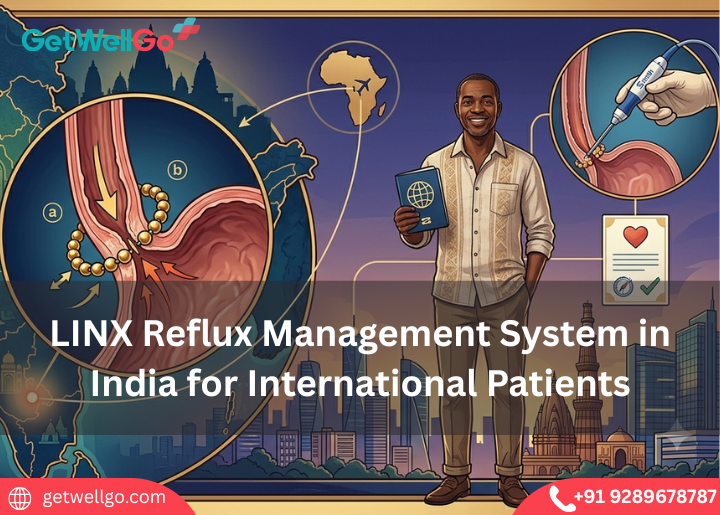
Experience the LINX Reflux Management System in India to stop severe heartburn using a tiny magnetic ring, fully organized by our fast-track medical visa team.
Read More
Experience advanced Stretta Procedure for GERD in India to eliminate chronic acid reflux without surgery, completely managed by our fast-track medical visa team
Read More
Get advanced vagus nerve stimulation treatment in India with expert care, modern hospitals, and affordable options for international patients.
Read More
Medical tourism in India for Uzbekistan Patients made easy. GetWellGo handles your top-tier surgery, Uzbek translator, and a safe, warm home for your family.
Read More
Palliative care services in India focus on your comfort and peace of mind. GetWellGo handles the expert pain relief, visa, and a serene, private home to heal.
Read More
Get reliable visa assistance for medical travel to India. Support with documentation, approvals, and a smooth entry process for global patients.
Read More
Transjugular Intrahepatic Portosystemic Shunt in India stops dangerous liver bleeding. GetWellGo handles your top specialist, visa, and a safe, cozy stay.
Read More
Keratoconus Treatment in India stops your vision from getting worse. GetWellGo handles your advanced eye care, visas, and a safe trip to save your sight.
Read More
Implantable Collamer Lens in India lets you ditch thick glasses forever. GetWellGo handles your expert eye doctor, flights, and a clear-vision holiday.
Read More
Cochlear Implants for Children in India opens a world of sound. We at GetWellGo plan your affordable ear surgery, airport pickup, and safe family trip.
Read More