
Where Is Bone Marrow Located? A Complete Guide for Nigerian Patients
Where is bone marrow located, and why does it matter? Discover its role in your body and why Nigerian patients should understand it. Learn more inside.
Read More
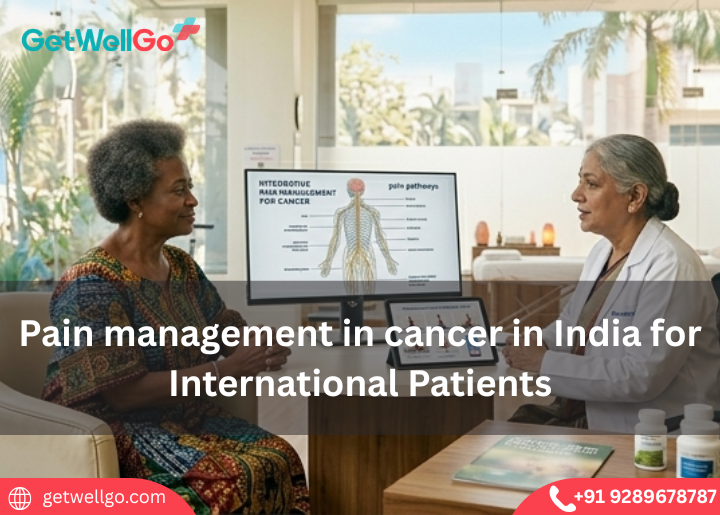
Get expert cancer pain management in India with advanced care, skilled specialists, and affordable options for international patients seeking relief.
Cancer pains may result due to:
Tumor pressure on nerves, bones, or organs
Side effects of treatment
Nerve injury
Outpatient Care
Regular pain assessment
Oral medications
Follow-up adjustments
Inpatient Care
In severe or uncontrolled pain.
Rapid opioid titration
IV opioid emergency pain crises.
Home Care
Supervised by qualified doctors and nurses.
Emphasize comfort and symptom management
Care at the end of life
Daily pain assessment
Use of injectable opioids if needed
Emphasis on dignity and comfort
The management of cancer pain includes treatment of the following pain:
Growth of the tumor
Cancer therapy
Nerve damage
The aim is optimal or total pain relief with minimal side effects.
The world-accepted WHO pain ladder is a stepwise approach to pain: India adheres to it:
Step 1: Mild Pain
Paracetamol
NSAIDs
Step 2: Moderate Pain
Weak opioids
Combined with non-opioids
Step 3: Severe Pain
Strong opioids
Critical to enhanced cancer pain.
This method can assist the majority of patients in attaining successful pain management.
Non-Opioid Drugs
Indicated in early or mild pain.
Frequently used in conjunction with other drugs.
Opioids
Morphine - gold standard of intense pain.
Fentanyl patches- come in handy as round-the-clock analgesics.
Tramadol – for moderate pain
Adjuvant Medicines
Applied to certain kinds of pain:
Antidepressants → nerve-related pain
Anticonvulsants → neuropathic pain
Steroids → inflammation and swelling.
High-level Pain Control
In patients whose pain cannot be managed by the use of medicines:
Nerve blocks (acting on specific nerves)
Spinal or epidural analgesia.
Intrathecal pain pumps
Radiofrequency ablation
In a holistic approach, many Indian hospitals operate:
Yoga and meditation
Mental health and counselling.
Support groups
These assist in the reduction of anxiety, which will increase the perception of pain.
They are combined medical services that are designed to:
Relieve cancer-related pain
Control side effects of treatment.
Give emotional and psychological support.
Enhance patient comfort at each step.
In India, they typically form a part of Palliative Care programs.
Pain Assessment & Personalized Planning
Frequent pain assessment and evaluation.
Individualized pain management plans.
Staging adjustments and response adjustments.
Multidisciplinary teams manage these patients.
Medication-Based Pain Control
Non-opioids
Strong pain
Adjuvant drugs for nerve pain
Most Indian hospitals use medication as the first-line treatment.
Interventional Pain Procedures
At advanced centers, available:
Nerve blocks
Epidural analgesia
Intrathecal pain pumps
Radiofrequency ablation
They are applied when drugs are not effective.
Palliative Care
Symptom control
Psychological counselling
End-of-life care planning
Family and caregiver support.
The aim is to guarantee comfort, dignity, and quality life.
Home-Based Pain Management
There are numerous Indian providers that provide:
Doctor home visits
Nursing care
Home management of pain medication.
Particularly useful in cancer patients who are at an advanced stage.
Palliative Care is a medical field that:
Treats pain and symptoms associated with cancer.
Helps patients to be emotionally and psychologically well.
Assists families to overcome illness.
Enhances comfort in any phase of cancer.
It may be administered with curative treatment or in the advanced stages as the primary focus.
The role of Palliative Care in cancer pain:
Periodic assessment on pain scales.
Determination of the type of pain (bone, nerve, organ-related)
Personalized treatment plans
Mild Pain
Paracetamol
NSAIDs
Moderate Pain
Weak opioids
Severe Pain
Powerful opioids such as Morphine
When administered properly, morphine is safe and very effective.
To be applied in case of insufficient medicines:
Nerve blocks
Epidural / spinal analgesia.
Intrathecal pain pumps
Palliative radiotherapy (of bone pain)
The Indian approach to palliative care is non-pharmacological:
Psychological counselling
Stress management
Nutritional support
Spiritual care (as requested)
This would alleviate the total pain (physical and emotional).
Most patients responding to effective pain therapy.
Improved sleep and everyday activity.
Less anxiety and depression.
Improved quality of life
Support for both patient and family
Dr. Ashu Kumar Jain
Dr. Raj Kumar
Dr. Megha Pruthi
Dr (Prof) Sushma Bhatnagar
In India, pain management in cancer has become a holistic, patient-focused practice that integrates medical knowledge and skills, sophisticated technologies and caring services. Through the prescribed guidelines of the World Health Organization, treatment plans, including simple analgesics and powerful opioid such as Morphine, help to alleviate most of the patients. The inclusion of Palliative Care will have the effect of not just addressing the physical pain but also the emotional and psychological pain which enhances the overall quality of life. The patients at various stages of cancer can be provided with customized and sustained care with the provision of interventional pain procedures, hospital-based services, and home care support available. Despite persisting challenges like inadequate awareness and access disparities, India is gradually building a palliative care network and access to key pain drugs. Consequently, the nation has remained the source of affordable, effective and holistic management of cancer pain, and as such, it remains a dependable source of cancer pain management among foreign patients.
GetWellGo is regarded as a leading supplier of healthcare services. We help our foreign clients choose the best treatment locations that suit their needs both financially and medically.
We offer:
Complete transparency
Fair costs.
24 hour availability.
Medical E-visas
Online consultation from recognized Indian experts.
Assistance in selecting India's top hospitals for Pain management in cancer.
Expert pain management doctors with a strong track record of success
Assistance during and after the course of treatment.
Language Support
Travel and Accommodation Services
Case manager assigned to every patient to provide seamless support in and out of the hospital like appointment booking
Local SIM Cards
Currency Exchange
Arranging Patient’s local food
If you want to read more about oncology Click Here
Where is bone marrow located, and why does it matter? Discover its role in your body and why Nigerian patients should understand it. Learn more inside.
Read More
Considering a bone marrow transplant? Understand the underlying bone marrow disease causes and discover how this life-saving procedure can restore your health.
Read More
Bone marrow biopsy indications: discover why doctors order this test, what it diagnoses, and what Nigerian patients should expect next. Learn more inside.
Read More
What is bone marrow transplant? Discover how this life-saving procedure works, who qualifies, and what Nigerian patients should expect. Learn more inside.
Read More
Is sickle cell an African disease? Not exactly — learn the real genetic and malaria link, and the myths Nigerians should stop believing about SCD.
Read More
Is there a cure for sickle cell disease? Yes — learn about bone marrow transplant and gene therapy options, plus real costs and access for Nigerians.
Read More
What is a stem cell transplant? This simple guide explains how it works, which conditions it treats, and what Nigerian patients should expect from it.
Read More
How long can a person live with sickle cell disease? Discover current life expectancy trends in Nigeria and what factors can improve outcomes. Learn more.
Read More
What is sickle cell disease? Discover the causes, symptoms, and treatment options every Nigerian family should really understand well. Learn more inside.
Read More
How does sickle cell disease affect daily life? Discover the real challenges Nigerian patients face at work, school, home, and beyond. Learn more inside.
Read More
How can sickle cell disease affect a child's physical development? Discover the growth, bone, and health impacts Nigerian parents should watch for. Learn more.
Read More
What is an autologous stem cell transplant? Learn how it works, which cancers it treats, and what Nigerian patients should know before considering it.
Read More