Urology
Vesicostomy Closure
Vesicostomy Closure
Vesicostomy closure is the surgical procedure to close the temporary bladder opening once normal urination is restored. It helps return bladder function and prevent infections after treatment.
Vesicostomy closure procedure
Vesicostomy closure is an operation done to seal an already existing vesicostomy (a small hole in the bladder via the lower abdomen). Vesicostomy is usually made in patients whose bladder outflow is obstructed, who have a neurogenic bladder, or suffer any other problems with the drainage of the urine. When the bladder function of the child enhances or the treatment can be conclusive, the vesicostomy can be operated again.
Vesicostomy Closure Indications
Closure is considered when:
- The child is able to urinate normally or by use of catheter.
- Compliance and capacity of the bladder is improved.
- The number of urinary tract infections is lower.
- Surgical planned reconstructive surgery or definitive treatment has already been performed.
- The child has matured to such an extent that even sophisticated urinary surgeries can be performed.
Preoperative Evaluation
The pre-procedure assessments are:
- Kidney an ultrasound and bladder to check size and drainage.
- Uroflowmetry or urodynamic investigation to determine the pressure and functioning of the bladder.
- Urine culture so as to verify the absence of persistent infection.
- Blood tests where necessary, to make sure that the child can take anaesthesia.
Procedure of Vesicostomy Closure (Step-by-Step)
Anaesthesia
- The child is administered general anaesthesia so that the procedure is pain free and comfortable.
Preparation & Incision
- The surrounding of the stoma is washed and sterilized.
- A micro-cut is drawn around the vesicostomy opening.
Bladder Repair
- It is the surgeon who determines the opening of the bladder.
- The bladder wall shall be closed in two layers:
- Inner mucosal layer
- Outer muscular layer
- Absorbable sutures are used.
Abdominal Wall Closure
- Layers of the muscles and skin are neatly closed.
- A small dressing is applied.
Catheter Placement
- A Foley catheter can be inserted via the urethra to guarantee the bladder draining and recovery.
- The catheter is normally maintained between 7 and 14 days, depending on recovery.
Post-Vesicostomy Closure Recovery
Hospital Stay
- Hospitalization of 1-2 days is the norm.
- Antibiotics and pain drugs can be administered.
Catheter Care
- Parents are taught how to take care of the catheters in case the child is discharged with it.
- The doctor is the one who removes the catheter when it is healed.
Monitoring
Watch for:
- Fever
- Difficulty urinating
- The incision is bleeding or discharging.
- Lower abdominal pain
Factors Affecting Vesicostomy closure surgery cost India
The cost of Vesicostomy Closure surgery in India is highly determined by the following factors:
Hospital Category & Room Type
- The higher-tier hospitals (in particular, in the metro cities) will charge more to general inpatient care, operating theatre (OT) use, ICU/HDU in case of necessity, etc.
- Bed-rent and ancillary charges greatly depend on the kind of room you choose (shared/twin-sharing vs single deluxe vs suite). As an illustration, there are other hospitals which charge high room rent in single/suite.
- Hospital stay (both pre-op and post-op days) will be expensive when prolonged.
Surgeon & Anaesthesia Fees
- The level of experience of the surgeon, the nature of the case (e.g. paediatric case as opposed to adult case), the presence of prior surgeries among others all influence the fee charged by the surgeon.
- The cost of anaesthesia is normally computed as a proportion of the cost of the surgeon (in certain hospitals).
- Additional surcharges might be imposed in case of performing the surgery during off-hours (night / emergency) or during the public holiday.
Operating theatre (OT) & Consumables
- OT charges such as equipment, staff, life-support etc. Hospitals can impose a given percentage of surgeon fee on the OT utilization.
- During hospitalization, consumables (sutures, drains, catheters, special bladder repair materials) and medications increase the price.
- In the event that any form of implants/ devices have been used (but not in a vesicostomy closure), this will add more.
Pre-operative Investigations, Imaging & Diagnostics
- These costs increase in case the patient requires a wide-range work-up (ultrasound, urodynamics, renal scans, and blood tests).
- Seeing any surprising results that will need additional testing or consultations will increase the bill.
Status of patient and complexity of operation
- The simple closure of a well-conditioned patient will be cheaper.
- In case of comorbidities (UTI, renal impairment, prior bladder surgery), or the complications of the initial vesicostomy, the operation is more complicated (increased cost).
- Also complicated cases can result in the increasing length of stay, which increases bed-rent, nursing, and medication expenses.
Location / City of Treatment
- There is a difference in cost depending on the city (Delhi NCR, Mumbai, Bengaluru, Chennai vs smaller towns). The metropolitan hospitals are more costly.
- It can also be expensive because the cost can be influenced by the state specific regulatory package rates used in certain empanelled hospitals.
Follow-Up/Post-operative Care
- More expenditure on catheter management, long hospitalization, nursing, and drugs in case of slow recovery.
- Any readmission or complication will also add cost.
Vesicostomy closure surgery recovery
Short term (First 24-48 hours after surgery) Recovery:
- The recovery room monitors the child.
- IV fluids, antibiotics and pain drugs are administered.
- The surgical site is observed in terms of bleeding, swelling or leakage.
- A urinary catheter (Foley catheter) is typically inserted via the urethra, to ensure emptying of the bladder and decreased pressure on the site of repair.
- It might also have mild bladder spasms which can be treated using medications.
Hospital Stay Duration:
- Average hospital stay of children ranges between 1 and 3 days.
- The stay can be extended by a little bit in case:
- Concerns on the bladder functions are present.
- The kid has additional health issues.
- Parents require more time to learn the information about catheter care.
Catheter Management (Week 1–2 Recent)
- The length of stay of a catheter is 7-14 days, depending on the choice of the surgeon and strength of the bladder closure.
The catheter ensures:
- Reduced bladder pressure
- It also involves healing of the closure site properly.
- Treatment of urinary leakage.
- To prevent backflow, the catheter area is recommended to be kept clean and the drainage bag lower than the bladder.
Wound Care
- The cut is minor and most of the time heals in 7-10 days.
- Clean the area with a lot of friction.
- The stitches usually get removable; otherwise, they are disposed of on follow-up.
- Observe redness, swelling or discharge.
Activity Restrictions:
For the first 2–4 weeks:
- Active playing, bike riding, jumping, and anything that adds pressure to the abdomen should be avoided.
- No tub bathing or swimming until the incision has healed.
- Walking and slight motion are recommended.
Follow-Up Appointments:
- First follow-up: 1 week subsequent to surgery to examine healing.
- Catheter removal visit: 7-14 days based on the close.
- Additional follow-up: 4-6 weeks to determine bladder soundness.
- There is a very rare case where an ultrasound or uroflow test is carried out to check adequate urinary flow.
Vesicostomy closure complications
The closure of vesicostomy is largely successful and safe with some complications that are likely to arise after the surgery. It may be early (during days to weeks) and late (weeks to months). Majority of the complications can be dealt with through timely healthcare.
Early (Immediate to Short-Term) Complications
Leakage of Urine at the Closure Site
- Among the most widespread initial issues.
- May develop when the wall of the bladder or the abdomen does not have a complete wall closure.
- Heals itself in most cases, however, continued leakage can necessitate re-suturing or catheterization to debride the pressure.
Infection
- Surgical site infection (SSI)
- Urinary tract infection (UTI)
- The symptoms can be fever, foul urine, redness, swelling, or pus around the incision.
- Controlled through antibiotics and hygiene.
Bladder Spasms
- May result in pain, urgency or leakage about the catheter.
- Put under antispasmodic drugs.
Bleeding or Hematuria
- Mild pinkish urine is common.
- Major blood loss is uncommon and typically associated with irritation of the catheter.
Catheter-Related Issues
- Pulling out, displacement or accidental pulling of the catheter.
- May lead to difficulty in passing urine or pain in the bladder.
Intermediate Complications (Weeks After Surgery)
Wound Healing Problems
- Delayed healing
- Seroma or fluid collection
- Incisional breakdown (rare)
Urinary Retention
- Problems with urinating subsequent to the removal of a catheter.
- May needs to be re-catheterized temporarily till the bladder functions stabilize.
Frequent Urinary Tract Infections
- Inflict in children with pre-existing dysfunction of the bladder or incomplete emptying.
- There may be the requirement of preventive measures (CIC, hygiene, hydration).
Long-term (Late) Complications
Stenosis or Stricture Formation
- The former stoma area can develop scar tissue.
This is rare but can cause:
- Pain
- Abdominal swelling
- Poor urinary flow
- May need an operative or dilation.
Bladder Dysfunction Recurrence
- Other children still experience problems with their bladder because of their initial problem (e.g., posterior urethral valves, neurogenic bladder).
- Not necessarily due to the closure process but may influence the urinary patterns after the surgery.
Re-opening Vesicostomy (Infrequent)
- In extreme situations whereby the pressure of the bladder does not subside, the vesicostomy may be reopened by the doctors.
Best hospital for vesicostomy closure India
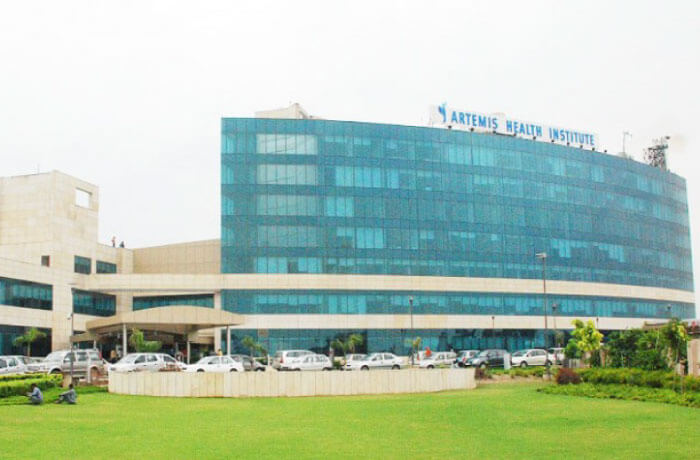
- Artemis Hospital, Gurgaon
- Medanta-The Medicity, Gurgaon
- Fortis Memorial Research Institute, Gurgaon
- Max Hospital, Saket
Vesicostomy closure in children India
Vesicostomy closure is a scheduled operation that is carried out on children in order to suture a vesicostomy that has been previously created - an opening between the lower abdomen and the bladder that allows the urine to leak out freely. Vesicostomy is used to preserve the kidneys and the bladder of infants and young children who have obstruction of the urinary tract or dysfunction of bladder. The vesicostomy can be surgically repaired when the child matures and the bladder functionality enhances, or when a conclusive treatment is achievable.
Why Is Vesicostomy Closure Done in Children?
The physicians advise closure in case of:
- The child is now able to control her bladder capacity and compliance.
- The child is able to urinate or by use of clean intermittent catheterization (CIC).
- The underlying condition (e.g., posterior urethral valves, neurogenic bladder) is stable.
- Plastic surgeries (where necessary) have been done.
- The stoma no longer requires the unremitting urine drainage in the child.
Conclusion
Vesicostomy is a successful and safe operation to restore normal urinary flow in children whose bladder functions have developed after the operation. The procedure has great results and few complications when conducted at the appropriate time, and backed with the correct preoperative assessment. Majority of children recover very fast with better control of their bladder and reduced chances of kidney damage or infections. Vesicostomy can be closed with proper aftercare, frequent follow-ups and constant bladder check-ups and the children can resume normal activities and go back to healthy urinary maturation.
Vesicostomy closure in India with GetWellGo
GetWellGo is regarded as a leading supplier of healthcare services. We help our foreign clients choose the best treatment locations that suit their needs both financially and medically.
We offer:
- Complete transparency
- Fair costs.
- 24 hour availability.
- Medical E-visas
- Online consultation from recognized Indian experts.
- Assistance in selecting India's top hospitals for Vesicostomy closure treatment.
- Expert urosurgeon with a strong track record of success
- Assistance during and after the course of treatment.
- Language Support
- Travel and Accommodation Services
- Case manager assigned to every patient to provide seamless support in and out of the hospital like appointment booking
- Local SIM Cards
- Currency Exchange
- Arranging Patient’s local food
FAQ
Does vesicostomy closure qualify as a significant operation?
- It is a relatively small and simple children urological surgery. It is normally performed with general anaesthesia, and it is very successful.
What is the duration of the surgery?
- The time of most vesicostomy closure processes ranges between 45 minutes and 1.5 hours depending on the anatomy of the child and the nature of the previous operations.
Will my child require any catheter following the operation?
- Yes. The catheter in the urethra is usually retained within 714 days so that the bladder can mend and the point of surgery is not strained.
Are there any chances of reopening vesicostomy after it is closed?
- This is rare. Reopening can be opened in most cases when bladder pressure is high or when it is complicated. Majority of closures are long-term stable.
Will my child pass urine after the closure normally?
- Following recovery, many children urinate normally.
- Nevertheless, patients who have underlying bladder dysfunction (e.g., neurogenic bladder) may require clean intermittent catheterization (CIC).
Is it painful to close vesicostomy?
- The pain is mild, moderate and easily controlled with medications. Certain children are also likely to experience temporary bladder spasms.
How successful is closure of vesicostomy?
- Its success rate is very high particularly when it is done when bladder functioning has improved. The majority of children perform well with little complications.
Will my child be able to resume normal operation after the operation?
- Yes. Light exercise is permitted in a few days and full activity can be regained in 3-4 weeks as soon as healing is done.
TREATMENT-RELATED QUESTIONS
GetWellGo will provide you end-to-end guidance and assistance and that will include finding relevant and the best doctors for you in India.
A relationship manager from GetWellGo will be assigned to you who will prepare your case, share with multiple doctors and hospitals and get back to you with a treatment plan, cost of treatment and other useful information. The relationship manager will take care of all details related to your visit and successful return & recovery.
Yes, if you wish GetWellGo can assist you in getting your appointments fixed with multiple doctors and hospitals, which will assist you in getting the second opinion and will help you in cost comparison as well.
Yes, our professional medical team will help you in getting the estimated cost for the treatment. The cost as you may be aware depends on the medical condition, the choice of treatment, the type of room opted for etc. All your medical history and essential treatment details would be analyzed by the team of experts in the hospitals. They will also provide you with the various types of rooms/accommodation packages available and you have to make the selection. Charges are likely to vary by the type of room you take.
You have to check with your health insurance provider for the details.
The price that you get from GetWellGo is directly from the hospital, it is also discounted and lowest possible in most cases. We help you in getting the best price possible.
No, we don't charge patients for any service or convenience fee. All healthcare services GetWellGo provide are free of cost.