Urology
Laying Open Stricture
Laying Open Stricture
Get expert care for Laying Open Stricture at GetWellGo. Trusted specialists and advanced treatment for international patients seeking lasting relief.
Laying open stricture procedure
The following is a clear and structured description of Laying Open Structure Procedure- also referred to as urethrotomy (open) or urethroplasty by laying open. This is typically done to some forms of urethral stricture where endoscopic techniques have failed or those strictures are in an area of the urethra that is readily reachable (e.g., penile urethra).
Surgical Procedure (Surgical Technique)
Preoperative Preparation
- Uroflowmetry, retrograde urethrogram (RUG) or cystoscopy evaluated in a patient.
- Wide-spectrum antibiotics were used.
- General/spinal anaesthesia is administered.
Patient Positioning
- Depending on the location of strictures, patient is put in supine or lithotomy.
- The sterilized and draped genital territory.
Surgical Incision
- An incision is made longitudinally on the stricture, ventrally or dorsally, on the penis.
- The dissection is done carefully to expose the urethra.
- The fibrotic stricture segment is localized.
Laying Open the Stricture
- This is opened longitudinally through the full length of the constricted area of the urethra.
- Scar tissue is removed or torn.
- The lumen is left to enlarge organically.
- To keep the catheter patent a Foley catheter is placed.
Healing through Secondary Intention
- The urethra segment that has been opened is mostly left to heal.
- Occasionally the edges can be sewed to the skin (marsupialization), when necessary.
- Dressing applied
Postoperative Recovery Following the Open Stricture Procedure
Hospital Stay
-
Usually 1–2 days
Catheter Duration
- Foley catheter with 7-14 days healing stricture duration depending on stricture length.
- Pre-discharge imaging could be followed up.
Healing Time
- Complete healing: 4–6 weeks
- Ability to resume sexual activity in 6-8 weeks.
- Early healing is characterized by mild discharge or swelling.
Laying open urethral stricture surgery
- Laying open urethral stricture surgery is an open operation procedure, which is used to treat some forms of urethral strictures by excising and enlarging the constricted area of the urethra.
- Depending on the method it is also referred to as open urethrotomy, lay-open urethroplasty, or urethral marsupialization.
This is a procedure that is typically desired with short, anterior (penile) strictures and in particular when:
- Endoscopic dilatation or internal urethrotomy is a failure.
- This is in combination with infection, abscess or fistula.
- Long-term narrowing is a result of lichen sclerosus.
- There is an occurrence of meatal or distal strictures.
Surgical indications of Laying Open Urethral Stricture Surgery
- Short urethral penile stricture.
- Repeat strictures following endoscopy.
- Focal or terminal urethral constrictions.
- Strictures in relation with urethral diverticulum or abscess.
- Lichen sclerosus cases-related strictures (chosen cases)
- Massive reconstruction failure.
- In cases of strictures so shallow that they cannot be excised and anastomized urethroplasty.
Advantages
- Easy and quick in appropriate cases.
- Enhances good accessibility and visibility.
- Improved meatal and distal stricture.
- Applicable in the infected tissues or scarred tissues where endoscopy cannot be effective.
- Considered as a good alternative in cases where repeated urethrotomies/dilations have already been administered.
Laying open stricture treatment
- Laying open stricture treatment is a surgery that is done to cure some form of urethral strictures by excising and enlarging the constricted part of the urethra.
- The use is primarily confined to short, superficial, anterior (penile) urethral strictures particularly where failed by endoscopic techniques.
What is Laying Open Structure Treatment?
It is an open surgical procedure in which the operation is performed in which the surgeon:
- Cuts incision on the stricture.
- Dilates the urethra longitudinally in the constricted region.
- Destroys or divides the scar tissue.
- Exposes the urethra to remedy in a broader position (natural healing or marsupialization).
- Places a catheter to keep the passage open in the course of healing.
- This makes the urinary flow better as it permanently increases the urethral passage.
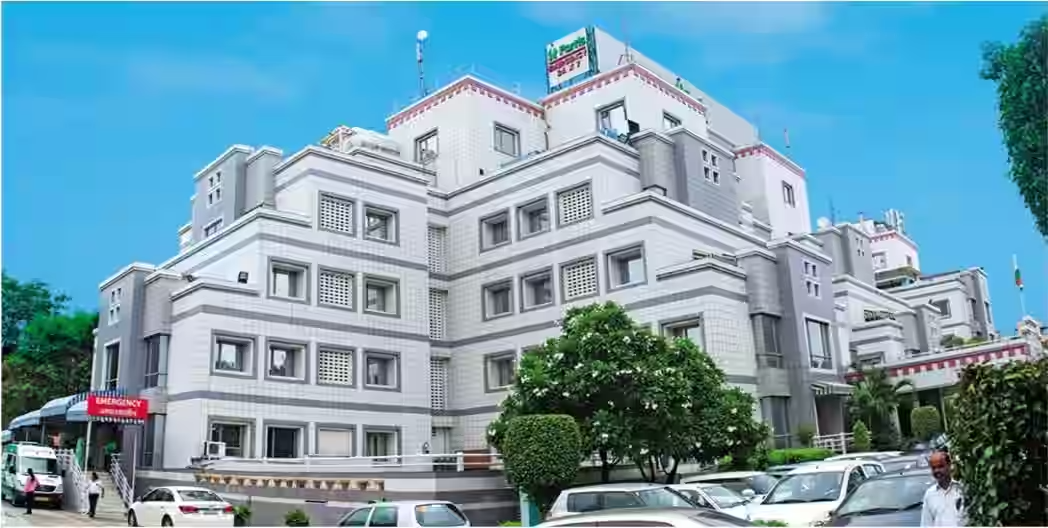
Best hospital for laying open stricture India
- Artemis Hospital, Gurgaon
- Medanta-The Medicity, Gurgaon
- Fortis Memorial Research Institute, Gurgaon
- Max Hospital, Saket
Factors Affecting Laying open stricture surgery cost India
The cost of a lay-open stricture surgery (i.e. open surgery on a urethral stricture) is influenced by the following factors in India, as follows:
Complexity of the stricter (length, location, previous treatment)
- Longer or longer strictures (e.g. penile -bulbar urethra) take more time, more graft/tissue, more catheterisation and hospital stay -more expensive.
- Additional costs are recurrent strictures (following unsuccessful endoscopic interventions), due to scar tissue, more cautious surgery.
- Place: strictures in hard-to-reach places or at the proximity of external meatus might require additional attention.
Surgical procedure / technique employed
- The simple lay-open or longitudinal urethrotomy is less demanding compared to the full urethroplasty with grafts or flaps.
- Grafts (e.g., buccal mucosa), flaps, or complicated reconstruction are more expensive.
- Cost may be different in case of minimum invasive or laser procedures or special equipment.
Facility / location / hospital level
- Types of hospitals (corporate hospital as opposed to smaller hospital and government) vary greatly in prices.
- Location of the city: there is more cost in metro cities (e.g., Delhi, Mumbai, Hyderabad) than in smaller town locations.
- Costs are increased by infrastructure, access to ICUs, advanced operating theatres as well as international-patient services.
Experience / specialist vs generalist Surgeon
- A high-volume centre, international accreditation urology specialist will be more expensive (or the hospital will be more expensive in that expertise).
- In the medical tourism case, patient-coordination, language assistance can be an additional part, and accommodation.
Pre-operative diagnostics and investigations
- Imaging (retrograde urethrogram, MCU, ultrasound), cystoscopy, lab works will increase the cost.
- In case supplemental tests are necessary due to comorbidities (e.g., diabetes, hypertension) then it becomes more expensive.
Length of stay in the hospital / room / after the surgery
- Prolonged stay in hospital (complications or recovery) is more costly.
- Room (single-bed/AC/private or shared) has an impact on price.
- Close observation, ICU hospitalization (when needed), is expensive.
Complications or other interventions
- In case of complications after the operation (e.g. infection, fistula, re-intervention) the costs increase.
- Graft harvesting requirement (e.g., buccal mucosa), diversion procedures, could increase costs.
Medication, catheterisation, follow up, ancillary costs
- Prices of consumables, catheters, dressings, medications (antibiotics, painkillers) number.
- The total cost is supplemented by follow-up visits, imaging of success, and possible re-treatment.
Medical tourism package
- In the case of international patient: package can consist of airport pickup, translation services, accommodation. These increase the cost but value as well.
- All-inclusive or itemised quotations are important due to transparency.
Laying open stricture recovery time
The recovery following the laying open urethral stricture surgery is dependent on the stricture length, presence of infection and healing ability of the patient. The recovery timeline is shown below.
Immediate Post-Surgery (Day 1–3)
- It is localized and mild with swelling.
- The patients tend to be discharged in 1-2 days.
- Foley catheter is not removed and this is necessary to have proper urethral healing.
- Marsupialization might necessitate changing of dressing.
- Light walking is encouraged
Catheter Duration
- The typical catheter time is 7-14 days.
- It can take a little longer in case of longer strictures or cases of lichen sclerosus.
- Catheter can only be removed once a surgeon has determined that it has healed well.
Recovery Timeline
1 Week:
- Majority of the patients come back to light household activities.
- Pain significantly reduces
- Still in place with catheter majority.
- Less than 20ml/kg discharge through the incision is normal.
2 Weeks:
- Catheter usually removed
- Patient will be able to go back to work or non-strenuous activities.
- The catheter removal leads to an instant improvement of the urine flow.
4–6 Weeks:
- Wound completely heals
- Urine flow is stabilized.
- Miscellaneous urinary spraying (where it occurs) gets better progressively.
- Swelling resolves
- The majority of the day to day operations become normal.
6–8 Weeks:
Safe to resume:
- Sexual activity
- Strenuous physical work
- Exercise and lifting weight
3 Months:
- Final healing
- Flow remains steady
- Follow-up uroflowmetry or RUG is normally attended by patients when necessary.
Conclusion
Open stricture surgery is the simplest and effective procedure of treating short, superficial and anterior strictures of the urethra particularly in patients who fail to respond to dilation and internal urethrotomy. The procedure restores urine flow by directly enlarging the constricted part of the urethra to give reliable symptom relief. Even though treatment might take time and entail temporary catheterization, most patients would have good long term outcomes when well taken care of in the post operation phase and follow up. Where recurrence may still occur, especially with severe fibrosis or lichen sclerosus, the procedure can still be a useful alternative in the treatment of the limited number of urethral strictures that have simple surgical characteristics.
Affordable laying open stricture surgery India GetWellGo
GetWellGo is regarded as a leading supplier of healthcare services. We help our foreign clients choose the best treatment locations that suit their needs both financially and medically.
We offer:
- Complete transparency
- Fair costs.
- 24 hour availability.
- Medical E-visas
- Online consultation from recognized Indian experts.
- Assistance in selecting India's top hospitals for laying open stricture treatment.
- Expert urosurgeon with a strong track record of success
- Assistance during and after the course of treatment.
- Language Support
- Travel and Accommodation Services
- Case manager assigned to every patient to provide seamless support in and out of the hospital like appointment booking
- Local SIM Cards
- Currency Exchange
- Arranging Patient’s local food
FAQ
1. Is the procedure painful?
- The majority of patients develop mild to moderate post-surgery discomfort, which is easily treated with painkillers.
2. When can I return to work?
- Majority of the patients are able to go back to office or light work within 1-2 weeks, but the strenuous work should be avoided in 4-6 weeks.
3. Will my urine flow improve immediately?
- Yes, the majority of patient feels that urine flow has greatly increased after removing the catheter.
4. Is the stricture recur following laying open surgery?
- Recurrence may occur, particularly with such conditions as lichen sclerosus or chronic fibrosis, but risks of recurrence are minimized by frequent follow-up.
5. Does laying open surgery outperform internal urethrotomy?
- In case of distal or superficial strictures, laying open surgery usually benefits long term outcomes than endoscopic procedures repeated.
6. Are there any special needs after surgery?
- Frequent dressing, catheter care, fluids and lack of strenuous activity are the keys to easy recovery.
TREATMENT-RELATED QUESTIONS
GetWellGo will provide you end-to-end guidance and assistance and that will include finding relevant and the best doctors for you in India.
A relationship manager from GetWellGo will be assigned to you who will prepare your case, share with multiple doctors and hospitals and get back to you with a treatment plan, cost of treatment and other useful information. The relationship manager will take care of all details related to your visit and successful return & recovery.
Yes, if you wish GetWellGo can assist you in getting your appointments fixed with multiple doctors and hospitals, which will assist you in getting the second opinion and will help you in cost comparison as well.
Yes, our professional medical team will help you in getting the estimated cost for the treatment. The cost as you may be aware depends on the medical condition, the choice of treatment, the type of room opted for etc. All your medical history and essential treatment details would be analyzed by the team of experts in the hospitals. They will also provide you with the various types of rooms/accommodation packages available and you have to make the selection. Charges are likely to vary by the type of room you take.
You have to check with your health insurance provider for the details.
The price that you get from GetWellGo is directly from the hospital, it is also discounted and lowest possible in most cases. We help you in getting the best price possible.
No, we don't charge patients for any service or convenience fee. All healthcare services GetWellGo provide are free of cost.