Urology
Diverticulectomy unilateral Treatment in India | GetWellGo
Diverticulectomy unilateral
Get unilateral diverticulectomy with GetWellGo featuring trusted surgeons, advanced treatment, cost-effective plans, and full assistance for global patients.
Unilateral diverticulectomy is an operation in which a diverticulum (a sac or pocket that protrudes from the wall of a hollow organ) is excised from one side (organ or anatomical location), and the other side is reserved.
However, the meaning and details can vary depending on the organ obscured because diverticula can develop in various parts of the body systems.
Common Forms of the Unilateral Diverticulectomies
Bladder Diverticulectomy
- Excision of a single bladder diverticulum on one side
- Common in children with posterior urethral valves or adults with bladder outlet obstruction
Indications
- Recurrent urinary tract infections
- Urinary retention
- Stones within the diverticulum
- Vesicoureteral reflux
- Risk of malignancy
Approach
- Open surgery
- Laparoscopic diverticulectomy
- Robotically assisted surgery
Ureteral Diverticulectomy
-
Excision of a diverticulum off of one ureter
Indications
- Obstruction
- Recurrent infections
- Stone formation
Urethral Diverticulectomy
- More common in females
- Excision of a diverticulum on one side of the urethra
Indications
- Dysuria
- Dyspareunia
- Recurrent UTIs
- Post-void dribbling
Colonic Diverticulectomy (Unilateral / Segmental)
- Rare
- Typically part of a segmental bowel resection when a single, localized diverticulum is causing trouble
Unilateral diverticulectomy surgery
Unilateral diverticulectomy is the excision of a single diverticulum on one side of an organ, mainly the bladder or urethra. Here is a generic stepwise surgical technique which can be applied to almost all urological unilateral diverticulectomies with variations in techniques mentioned in footnotes.
Preparation before Surgery
- Complete clinical evaluation and imaging
- Ultrasound/VCUG/CT/MRI(as indicated)
- Locate diverticulum by cystoscopy.
- Urine culture and antibiotics if infection is present.
- Informed consent for surgery and anaesthesia.
- Bowel preparation if needed.
- General or regional anaesthesia.
Procedure:
Anaesthesia and Positioning
-
General anaesthesia is recommended.
Patient is positioned:
- Supine (bladder diverticulectomy)
- Lithotomy (urethral diverticulectomy)
Exposure
Approach according to the technique:
- Open (lower abdominal incision)
- Laparoscopic
- Robot-assisted
Only the involved side is exposed (unilateral approach).
Detection of the Diverticulum
- Bladder is instilled with saline through a catheter
- Diverticulum bulges out
- Ureteric orifice is identified and safeguarded
- Ureteric stenting is sometimes performed.
Dissection of Diverticulum
- Gentle dissection around the circumference
- Diverticulum dissected free from adjacent structures
- Neck of diverticulum ligated and transfixed.
- Do not injure the ureter, vessels and nerves.
Excision (Diverticulectomy)
- Diverticulum is resected at its neck
- Whole sac resected
- Any stones or debris cleared
Closure and Reconstruction
- Organ wall is closed in 2 layers with absorbable sutures
- Watertight closure confirmed
- The ureter is re-implanted, if involved (only if required)
- Bleeding controlled.
Drain and Catheter Placement
- A foley catheter is placed
- Pelvic drain inserted if needed
Wound Closure
- The surgical field is irrigated.
- The layers are closed as needed.
Postoperative Care
- Catheter maintained for 7–14 days
- Antibiotics and analgesics
- Drain when the output diminishes
- Cystogram may be done before catheter removal.
Laparoscopic unilateral diverticulectomy
Laparoscopic unilateral diverticulectomy is a surgical intervention that consists of laparoscopic resection of a single diverticulum within one organ, being the urinary bladder the most common site.
Indications
- Repeat infections of UTI.
- Retention or poor emptying of the bladder.
- The stones in the diverticulum.
- Diverticulum-associated vesicoureteral reflux.
- Symptomatic or large bladder diverticulum.
- Conservative management failure.
Preparation before Surgery
- Radiography such as MRI, Ultrasound and CT scan
- Diagnostic cystoscopy for localization of the diverticulum.
- Urine culture and antibiotics (when necessary).
- Informed consent
- General anaesthesia
Procedure:
Patient Positioning
- Supine position
- Trendelenburg tilt
- General anaesthesia
Port Placement
- Umbilical 10-mm camera port
- Two or three 5-mm working ports
- The ports are located opposite the diverticulum to be more ergonomic.
Bladder Mobilization
- Peritoneum incised
- Space of Retzius entered
- Bladder revealed and moved.
Diagnosis of Diverticulum
- Bladder instill saline using Foley catheter.
- Diverticulum becomes pronounced.
- Ureteric orifice revealed.
- Diverticulum is close to ureter Stenting.
Dissection of Diverticulum
- Diverticular sac circumferential dissection.
- Close isolation to the environment.
- Diverticulum of the neck alone.
Excision
- Diverticulum resected at neck.
- Sac removed in an endobag
- Any stones removed
Bladder Closure
- Bladder closed in two layers
- Absorbable sutures
- Closure water-tight confirmed.
Drain and Catheter
- Foley catheter retained
- Pelvic drain inserted on need basis.
Port Closure
- Hemostasis ensured
- Ports closed
Postoperative Care
- Catheter for 7–14 days
- Antibiotics and analgesia
- Elimination of drains following decreased output.
- Cystogram (when needed) pre-removal of the catheter.
The benefits of Laparoscopic Approach
- Smaller incisions
- Less postoperative pain
- Faster recovery
- Shorter hospital stay
- Better cosmetic outcome
Unilateral diverticulectomy recovery
Post-operative recovery following unilateral diverticulectomy (most often bladder or urethral, including laparoscopic surgery) is generally uneventful particularly when the operations are minor.
Recovery after Surgery (Day 0-2)
Monitoring of the patient is required with the following tests:
- Urinary lab tests: urine examination for specific gravity, culture and sensitivity test
- Urine culture tests: detection of urine and sensitivity of E.coli and Staphylococcus, which are habitual bacteria of the urethra.
Monitoring in recovery room
- Mild to moderate pains (manageable by medications)
- IV fluids and antibiotics
- Urinary catheter in place
- Encouragement of early mobilization.
- Clear liquids: normal diet at tolerance.
Hospital Stay
- Laparoscopic surgery: 2–4 days
- Open surgery: 4–7 days
- Drain eliminated when output decreases.
First 1–2 Weeks at Home
- Foley typically retaining duration of 714 days.
- It may be mild discomfort or bladder spasms.
- Light walking allowed
- Avoid lifting heavy objects
- Maintain good hydration
- Full-course of prescribed antibiotics.
Catheter Removal
Often proceeded by:
- Cystogram or ultrasound to ascertain healing.
- Catheter is removed when there is no leakage.
- There could be mild burning during urination that can take up to 1-2 days.
Weeks 3–4
- Step by step re-entry into normal life.
- Pain significantly reduced
- Normal urination pattern is enhanced.
- No hard work or weight lifting.
Weeks 4–6
- Complete healing of the majority of patients.
- Re-entry to work and regular exercise.
- Follow-up imaging if advised
Robotic unilateral diverticulectomy
Robotic unilateral diverticulectomy is a sophisticated and less invasive operation performed on the diverticulum on one side of the organ, most commonly the urinary bladder, with the help of a robot-assisted laparoscopic system (e.g. da Vinci).
It is also more accurate, less opaque and easier to suture particularly in cases where the diverticulum is large or near the ureter.
Indications
- Symptomatic bladder diverticulum left side.
- Chronic urinary tract infection.
- Difficult emptying of the bladder / urinary retention.
- Diverticulum stones or tumors.
- Diverticulum close to ureteric orifice.
- Conservative or endoscopic failure of treatment.
Preoperative Evaluation
- Ultrasound, VCUG, CT/MRI
- Localization of diverticulum by cystoscopy.
- Urine culture, antibiotics as necessary.
- Ureteric stenting in case of diverticulum close to ureter.
- General anaesthesia consent
Procedure:
Positioning and Anaesthesia
- General anaesthesia
- Trendelenburg position on supine.
- Foley catheter inserted
Port Placement
- 8–12 mm camera port (umbilical)
- 2–3 robotic working ports
- 1 assistant port
- Ports that are situated opposite the diverticulum.
Docking the Robot
- Robot end docked or side docked.
- Devices such as scissors, forceps, and needle are used.
Exposure of the Bladder
- Peritoneum incised
- Space of Retzius entered
- Bladder mobilized
Diagnosis of Diverticulum
- On palpation of the diaphragm, a mass is displaced along with the diaphragm and is located in the peritoneum.
- Bladder filled with saline
- Diverticulum gets eminent.
- Ureter identified and safeguarded.
- Stent is used to confirm the position of the ureter in case it is put.
Diverticular Dissection
- Circumferential peritoneal dissection.
- Isolated Neck of diverticulum.
- Close maintenance of other structures.
Excision
- Excised diverticulum at the wall of the bladder.
- Specimen removed in endobag
Bladder Reconstruction
- Two-layer bladder closure
- Absorbable sutures
- Leak test performed
Drain and Catheter
- Pelvic drain catheterised (when necessary)
- Foley catheter retained
Closure and Undocking
- Hemostasis ensured
- Ports closed
- Robot undocked
Postoperative Care
- Catheter for 7–14 days
- Removal of drain when the output decreases.
- Cystogram prior to catheter discharge (where necessary)
- Analgesia and antimicrobials.
Best hospital for unilateral diverticulectomy India
- Artemis Hospital, Gurgaon
- Medanta-The Medicity, Gurgaon
- Fortis Memorial Research Institute, Gurgaon
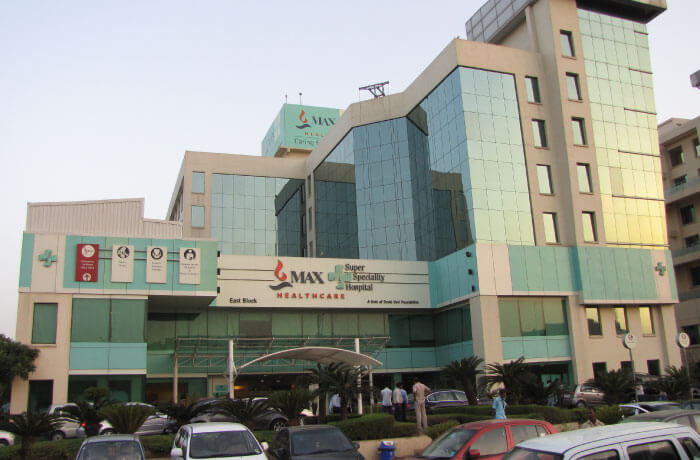
- Max Hospital, Saket
Conclusion
Unilateral diverticulectomy is a successful surgical option in the management of a symptomatic diverticulum limited to one side of an organ, usually the urinary bladder. With the progress in minimally invasive surgery, robotic unilateral diverticulectomy was found to be an accurate and safe procedure. With its unparalleled visualization, sharp dissection, and excellent suturing, the da Vinci® system is also ideally suited for excision of large or complex diverticula, particularly when they are situated close to critical structures such as the ureter. Patients generally have less pain, minimal blood loss, shorter hospital stay and more rapid recovery relative to open surgery. In the setting of appropriate preoperative evaluation and postoperative management, robotic unilateral diverticulectomy results in outstanding functional, longterm results, and improvement of overall quality of life when performed by a experienced surgical institution, making a positive impact on patient’s quality of life.
Diverticulectomy unilateral India GetWellGo
GetWellGo is regarded as a leading supplier of healthcare services. We help our foreign clients choose the best treatment locations that suit their needs both financially and medically.
We offer:
- Complete transparency
- Fair costs.
- 24 hour availability.
- Medical E-visas
- Online consultation from recognized Indian experts.
- Help in choosing from among Best Diverticulectomy unilateral surgery Hospitals in India.
- Deserve expertise of urologist with proven results in success.
- Assistance during and after the course of treatment.
- Language Support
- Travel and Accommodation Services
- Case manager assigned to every patient to provide seamless support in and out of the hospital like appointment booking
- Local SIM Cards
- Currency Exchange
- Arranging Patient’s local food
FAQ
1. Why is the robotic approach preferred?
- Robotic surgery offers 3D magnified vision and the surgeon has more precision and can suture better, which is especially important when the diverticulum is very big or very close to one of the ureters. And you have less pain and you recover faster.
2. Is robotic unilateral diverticulectomy safe?
- Yes. When the surgeon is experienced, it is a safe, established procedure with low rates of complications.
3. Will the diverticulum come back after surgery?
- Recurrence is uncommon if the diverticulum is completely excised and the underlying cause is remedied.
4. Is this surgery done in children as well?
- Yes. Robotic unilateral diverticulectomy may be performed safely in certain pediatric patients by experienced pediatric urology teams.
5. Does this surgery affect bladder function?
- Most patients report improved bladder emptying and reduced urinary symptoms after recovery.
TREATMENT-RELATED QUESTIONS
GetWellGo will provide you end-to-end guidance and assistance and that will include finding relevant and the best doctors for you in India.
A relationship manager from GetWellGo will be assigned to you who will prepare your case, share with multiple doctors and hospitals and get back to you with a treatment plan, cost of treatment and other useful information. The relationship manager will take care of all details related to your visit and successful return & recovery.
Yes, if you wish GetWellGo can assist you in getting your appointments fixed with multiple doctors and hospitals, which will assist you in getting the second opinion and will help you in cost comparison as well.
Yes, our professional medical team will help you in getting the estimated cost for the treatment. The cost as you may be aware depends on the medical condition, the choice of treatment, the type of room opted for etc. All your medical history and essential treatment details would be analyzed by the team of experts in the hospitals. They will also provide you with the various types of rooms/accommodation packages available and you have to make the selection. Charges are likely to vary by the type of room you take.
You have to check with your health insurance provider for the details.
The price that you get from GetWellGo is directly from the hospital, it is also discounted and lowest possible in most cases. We help you in getting the best price possible.
No, we don't charge patients for any service or convenience fee. All healthcare services GetWellGo provide are free of cost.