Urology
Cystoscopy Diagnostic
Cystoscopy Diagnostic
Experience reliable cystoscopy diagnostics with GetWellGo, providing global patients precise bladder assessment, expert specialists, and smooth international care
Cystoscopy diagnostic
A cystoscopic diagnosis involves the introduction of a cystoscope through the urethra into the bladder. By using it, the doctor has the capability to watching in real-time urinary tract on a monitor.
What is the Objective of Diagnostic Cystoscopy?
It is normally prescribed to:
Urinary symptoms
- Blood in urine
- Frequent UTIs
- Painful urination
- Difficulty in urination.
- Urinary incontinence.
- Bladder symptoms
Diagnosis of conditions
- Bladder stones
- Bladder tumors / cancer
- Urethral strictures
- Obstructed due to large prostate.
- Interstitial cystitis
- Congenital abnormalities
Follow-up
- After bladder tumor surgery
- To oversee chronic bladder diseases.
- Prior to specific urological operations.
Types of Cystoscopy
Cystoscopy (Office Procedure Flexible)
- Performed in local anesthesia (gel).
- Usually outpatient
- More comfortable
- Primarily in the context of diagnostic analysis.
Rigid Cystoscopy (OT Procedure)
- In general or spinal anaesthesia.
- Permits to carry out biopsies or minor treatment.
Diagnostic cystoscopy procedure
A diagnostic cystoscopy enables the physician to examine the urethra and the bladder and occasionally the lower ureters with the help of a thin camera referred to as cystoscope.
Before the Procedure
Patient Preparation
- Flexible cystoscopy requires no fasting.
- In case of rigid cystoscopy, there may be a need to fast 6 hours.
- To rule out infection a urine sample can be undertaken.
- Before you start, you will be requested to empty your bladder.
- The genitals are cleaned with an antiseptic solution. Anaesthesia
Anaesthesia
- Flexible cystoscopy: Urethra (local anaesthetic gel).
- Rigid cystoscopy: It may be performed under spinal or general anaesthesia.
During the Procedure
Step 1 — Positioning
-
You are lying on the back and the legs are usually apart. Rigid cystoscopy might require the use of stirrups on legs.
Step 2 -Application of Anaesthetic gel.
-
To alleviate pain, a numbing gel is carefully inserted in the urethra.
Step 3 -Cystoscope Insertion
- The doctor carefully passes the flexible or rigid cystoscope via the opening of the urethra.
- You will experience the pressure, which is not to hurt.
Step 4 — Bladder Filling
- The bladder is slowly filled with sterile water or saline causing the walls to be stretched and visible.
- This can give you an impression that you need to urinate.
Step 5 — Visualization
The doctor examines:
- Urethra
- Prostate area (in men)
- Bladder neck
- Bladder lining
- Openings of ureters
The images are displayed on a video display screen.
Step 6 — Diagnostic Actions
The doctor may, according to findings:
- Check tumor, stones, inflammation.
- Examine strictures or abnormalities.
- Look for bleeding sources
Step 7 — Removal of the Scope
- After examination, the liquid is removed and cystoscope is taken out.
- Total Time: 5–20 minutes
After the Procedure
Immediate Effects
- Light burning of urination between 24 and 48 hours.
- Slight blood-tinged urine
- It is characterized by an increase in urinary frequency.
- Bladder fullness sensation
Recovery Instructions
- Take lots of water during the following 24 hours.
- Do not lift heavy or have vigorous exercise that day.
- Normal activity can be resumed on the same day.
- Antibiotic therapy can be short-course in case of necessity.
Cystoscopy for bladder diagnosis
One of the best tests that are used to diagnose bladder diseases is through cystoscopy, as the doctor can view the inside of the bladder at first hand through a thin tube equipped with a camera (cystoscope).
It has the capability of detecting issues that are not visible using ultrasound, CT scan, and urine tests.
The Diagnosis of Bladder Cystoscopy
-
The cystoscopy is indicated in case the symptoms or findings associated with the bladder require a clear visual evaluation.
Usual Bladder Symptoms for Cystoscopy are:
- Blood in urine
- Frequent UTIs
- Burning or pain during urination.
- Unable to urinate.
- Bladder pain or pressure
- Urinary incontinence
- Abnormal bladder imaging
The Cystoscopy and its assistance in making a diagnosis of the bladder
Direct Visualization
Real time observation of bladder lining will enable observation of:
- Lesions
- Ulcers
- Bleeding points
- Growths
- Scars
Biopsy During Cystoscopy
-
In case of abnormal tissue a rigid cystoscopy may be done to provide biopsies to make a definite diagnosis.
Therapeutic Combination
Simple treatments may be performed though they are mostly diagnostic:
- Removing small stones
- Bleeding point’s fulguration.
- Treatment of small tumors
Bladder Evaluation Cystoscopy Procedure
- Local anaesthesia (gel) or general/spinal in case of rigidity.
- Cystoscope through urethra into bladder.
- Visualization with bladder of saline.
- Physician examines whole lining of bladder.
- Abnormalities are noted and biopsy can be performed where necessary.
- Scope cut total time: 5- 20 minutes.
Advantages of Cystoscopy in Diagnosis of Bladder
- Most precise way of checking the bladder.
- Identifies diseases not detected by imaging.
- Helps in early cancer diagnosis.
- Guides treatment planning
- Gives visual affirmation of diagnosis.
Cystoscopy for hematuria diagnosis
The gold standard procedure of assessing hematuria (both gross and on a urine test) is cystoscopy.
It can be used to directly view the urethra, bladder and bladder neck to determine the precise origin of bleeding.
The necessity of cystoscopy in Hematuria
-
Depending on the location of the urinary tract, hematuria may develop.
The significance of cystoscopy is that:
It is capable of early diagnosis of bladder cancer.
-
One of the most severe causes of hematuria is bladder tumor.
The best test to see is cystoscopy:
- Small tumors
- Flat lesions (carcinoma in situ)
- Bleeding points
It is able to detect structural or inflammatory causes.
Including:
- Bladder stones
- Ulcers
- Chronic cystitis
- Radiation cystitis
- Foreign bodies
It is able to examine the urethra and the bladder neck.
For:
- Urethral strictures
- Obstruction caused by the prostate (in men).
It is also more sensitive as compared to ultrasound and CT.
-
Small or flat bladder lesions cannot be identified through imaging, but can be observed directly through cystoscopy.
When Cystoscopy is required for Hematuria?
Emergency cystoscopy is required in:
- Visible blood in the urine.
- Persistent or chronic microscopic hematuria.
- Urine in the individuals who are older than 35-40 years.
- Smokers or former smokers (increased risk of cancer)
- Abnormal imaging findings
- Bleeding without infection
At other times done following initial tests such as:
- Urinalysis
- Urine culture
- Ultrasound / CT urography
Cystoscopy Procedure in Hematuria Examination
Steps:
- Gel of local anaesthetic on urethra.
- Bladder Flexible cystoscope.
- Bladder with saline to distend walls.
Complete inspection of:
- Urethra
- Bladder neck
- Bladder wall (back, front, sides, dome)
- Ureteric openings
Doctor looks for:
- Active bleeding sources
- Tumors
- Stones
- Ulcers or lesions
- Inflammation
- In case of suspicious lesions detected → biopsy could be performed (rigid cystoscope)
Procedure ends in 5–20 minutes
Benefits of Cystoscopy in Hematuria
- Most precise method of diagnosing bladder cancer.
- Identifies minute and flat lesions.
- Treats minor bleeding points.
- Leads to future research.
- Minimal Risk and Low-involvement.
- Short term outcomes observable by the doctor.
Best hospital for cystoscopy diagnostic India
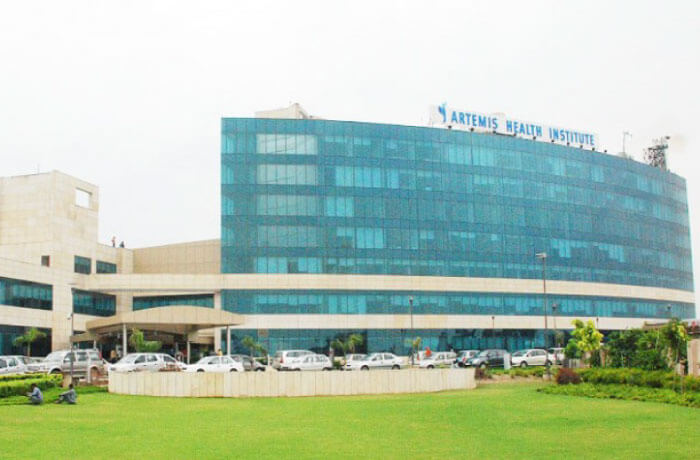
- Artemis Hospital, Gurgaon
- Medanta-The Medicity, Gurgaon
- Fortis Memorial Research Institute, Gurgaon
- Max Hospital, Saket
Conclusion
Cystoscopy is the surest and the best instrument to determine the cause of hematuria. It gives the direct visualization of the urethra and the bladder, which aid the physicians in determining the location of bleeding, early bladder cancer, stones, strictures, infections, and structural defects that can be missed by the imaging workups. It is a fast, safe, and minimally invasive procedure, which supplies instant diagnostic data, and in certain cases, may be used together with biopsy or minor treatment. Since hematuria may be an indication of critical issues, particularly, bladder tumor, cystoscopy is significant in the accurate diagnosis and early treatment.
Diagnostic cystoscopy procedure India GetWellGo
GetWellGo is regarded as a leading supplier of healthcare services. We help our foreign clients choose the best treatment locations that suit their needs both financially and medically.
We offer:
- Complete transparency
- Fair costs.
- 24 hour availability.
- Medical E-visas
- Online consultation from recognized Indian experts.
- Assistance in selecting India's top hospitals for diagnostic cystoscopy.
- Top doctors who have a proven record of success
- Support during and after treatment.
- Language Support
- Travel and Accommodation Services
- Case manager assigned to every patient to provide seamless support in and out of the hospital like appointment booking
- Local SIM Cards
- Currency Exchange
- Arranging Patient’s local food
FAQ
1. Why do I require cystoscopy of blood in my urine?
- Because cystoscopy is the best test to show the location of bleeding within the bladder and urethra. Ultrasound or other imaging may not detect small tumors or flat lesions which can be seen with cystoscopy.
2. Is cystoscopy painful?
- The majority of them experience pressure or a slight feeling of discomfort, but nothing serious.
- The procedure is done using a numbing gel and it takes a short time (5-10 minutes of flexible cystoscopy procedure).
3. Is there any bleeding following cystoscopy?
- Normal 24-48 hours urine is light pink or some drops of blood.
- Evidence of heavy bleeding needs medical care
4. Is cystoscopy possible in the course of UTI?
Usually, no.
- The procedure can be deferred in case of an active infection or a fever.
5. Is there anything to worry about in case I have microscopic hematuria?
- Not everything, but it must be reviewed.
- The cystoscopy process will be used to exclude severe reasons such as tumors or stones.
TREATMENT-RELATED QUESTIONS
GetWellGo will provide you end-to-end guidance and assistance and that will include finding relevant and the best doctors for you in India.
A relationship manager from GetWellGo will be assigned to you who will prepare your case, share with multiple doctors and hospitals and get back to you with a treatment plan, cost of treatment and other useful information. The relationship manager will take care of all details related to your visit and successful return & recovery.
Yes, if you wish GetWellGo can assist you in getting your appointments fixed with multiple doctors and hospitals, which will assist you in getting the second opinion and will help you in cost comparison as well.
Yes, our professional medical team will help you in getting the estimated cost for the treatment. The cost as you may be aware depends on the medical condition, the choice of treatment, the type of room opted for etc. All your medical history and essential treatment details would be analyzed by the team of experts in the hospitals. They will also provide you with the various types of rooms/accommodation packages available and you have to make the selection. Charges are likely to vary by the type of room you take.
You have to check with your health insurance provider for the details.
The price that you get from GetWellGo is directly from the hospital, it is also discounted and lowest possible in most cases. We help you in getting the best price possible.
No, we don't charge patients for any service or convenience fee. All healthcare services GetWellGo provide are free of cost.