General Surgery
Bronchoscopic Dilatation
Bronchoscopic Dilatation
Get safe, effective bronchoscopic dilatation for airway obstruction. GetWellGo helps international patients access top specialists and smooth medical travel support.
Bronchoscopic dilatation
Bronchoscopic dilatation is a form of minimally invasive surgery performed using a bronchoscope to dilate narrowed and occluded airways (bronchi). It is mostly utilized for treating tracheobronchial stenosis (airway obstruction) due to the following conditions such as post-intubation, tumor, infections and congenital defects.
Indications
Bronchoscopic dilatation is generally advised in the presence of:
Benign airway stenosis
- This is scarring that occurs after intubation or tracheostomy.
- Postinfectious scarring
Airway obstruction- malignant
-
Tumors (palliative or pre-surgical) which cause airway narrowing.
Congenital airway abnormalities
-
Collapse resulting from tracheomalacia or bronchomalacia.
External compression of the airways
-
Out of lymph nodes, vessels or mediastinal masses.
Advantages
- Less invasive than the open surgical airway reconstruction.
- The relief of airway obstruction symptoms.
- Repeatable, in case of restenosis.
Bronchoscopic balloon dilatation
Bronchoscopic balloon dilatation (BBD) is one of the non-surgical approaches and is done by the transbronchial insertion of a balloon which is subsequently inflated to press the stenotic walls of the tracheobronchial lumen. It is among the most often applied method in benign and certain malignant stenosis of airways.
Bronchoscopic dilatation procedure
Bronchoscopic dilatement is an intervention that involves the enlargement of constricted airways (trachea or bronchi) by mechanical or balloon means through a bronchoscope. It is mostly prescribed to airway stenosis.
Preparation before the procedure
Patient evaluation:
- History, physical examination and tests of pulmonary functions.
- CT scan or chest X-ray to detect stenosis.
- Fasting: 6–8 hours, sedation/general anaesthesia as a rule.
- Consent: Risk and benefit description.
- Premedication: Local anaesthesia or sedatives, when necessary.
Anaesthesia
- Flexible bronchoscopy (conscious sedation).
- General anaesthesia (rigid bronchoscopy, severe stenosis or children patients)
Bronchoscope Insertion
- Flexible bronchoscope: nasomastically or orally.
- Rigid bronchoscope: Oral (in more severe cases of stenosis or mechanical dilators are required)
- Airways are scanned in order to determine the length of stenosis, diameter and location.
Dilatation Techniques
Balloon Dilatation (most prevalent)
- The bronchoscope is used to introduce balloon catheter in the narrowed part.
- Balloon slowly blows up as a way of stretching the stenotic airway.
- The inflation lasts 30-60 seconds and can be repeated.
- Balloon is pumped and taken out.
Mechanical Dilators
-
Bougies or rigid bronchoscopes can be gently inserted in order to dilate the airway.
Adjunctive Measures
- Obstructing tissue to be removed, laser, electrocautery, or cryotherapy.
- Stenting in the case of airway prone to collapse or restenosis.
Post-dilatation Assessment
- Bronchoscope is again introduced to ensure airway clearance.
- Bleeding, mucosal injury, or trauma.
- Measure change in airway diameter.
Recovery
- Watch for a few hours to 24 hours depending on anaesthesia and the size of the procedure.
- You may experience mild coughing, sore throat or hoarseness.
- The improvement of symptoms is most often immediate.
Bronchoscopic dilatation recovery
Post-bronchoscopic lasting improvement is generally rapid, as it is a minimally invasive operation. The majority of the patients report an immediate improvement in breathing.
Recovery Post-Procedure
-
2-6 hour observation in a recovery area.
Monitoring includes:
- Breathing pattern
- Oxygen levels
- Cardiac rate and blood pressure.
- General anaesthetic patients might require more time of observation.
Post-Procedural Activity
- Take rest the rest of the day.
- Recovery should resume normal activity within the 24 hours, unless otherwise.
- Avoid smoking, intense physical activities and heavy lifting within 24 -48 hours.
Eating and Drinking
- Fluids may usually be consumed within 1-2 hours of the procedure when the numbness in the throat has subsided.
- On the first day, soft diet in case of irritation of the throat.
Breathing Improvement
Most patients experience:
- Immediate decompression of obstruction.
- Easier breathing
- Better physical performance or movement.
- In severe or recurrent stenosis cases improvement can however be slow.
Follow-Up
Follow-up is very important:
- Initial review (typically 1-2 weeks).
- Further bronchoscopy can be required to examine re-stenosis.
- In case a stent has been inserted, it needs to be observed periodically.
Long-Term Recovery
- Repeat dilatation may be necessary to some patients depending on the cause of the stenosis.
- Maintenance bronchoscopy is also carried out after every 3 to 6 months in case of a stent.
- Benign stenosis with follow-up care is excellent in terms of long-term outcome.
Bronchoscopic dilatation complications
Bronchoscopic dilatation (balloon or mechanical) is also relatively safe, however, as any airway intervention, it can be risky. Majority of the complications are not serious but are easy to manage with and serious cases are not common.
- Bleeding
- Airway Trauma
- Pneumothorax
- Bronchospasm
- Hypoxia
- Infection
- Re-stenosis (Re-narrowing of the Airway)
- Edema (Airway Swelling)
Best hospital for bronchoscopic dilatation India
- Artemis Hospital, Gurgaon
- Medanta-The Medicity, Gurgaon
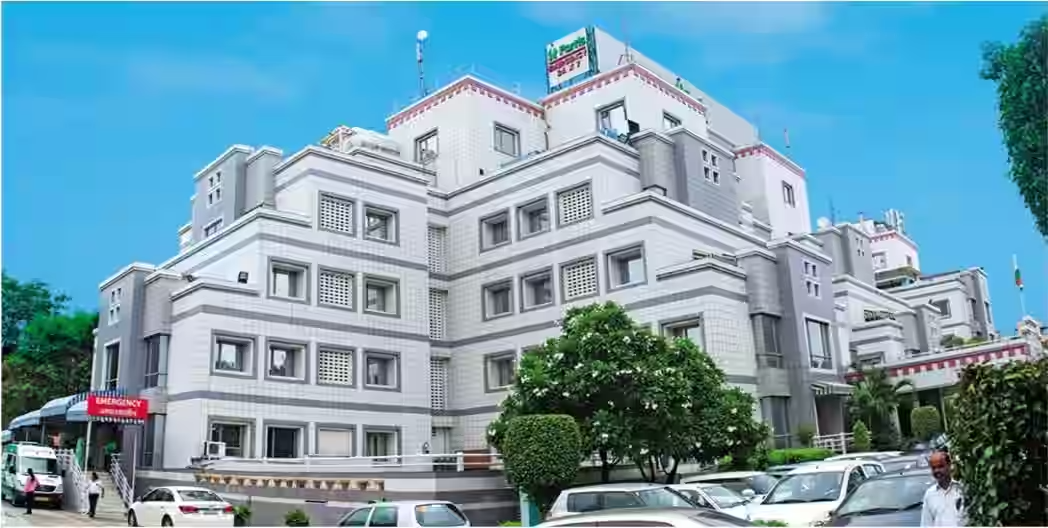
- Fortis Memorial Research Institute, Gurgaon
- Max Hospital, Saket
Conclusion
Bronchoscopic dilatation is a low risk, efficient and minimally invasive procedure of airway stenosis treatment. It is useful as it allows rapid relief of airway obstruction, improves breathing as well as the quality of life by widening narrowed tracheal or bronchial segments with the help of a mechanic or balloon. The surgery is not only tolerated well, it has a short recovery time and can be repeated in case of a need. Even with the complications expressed, including bleeding, airway trauma or restenosis, they can be controlled with the right technique and aftercare. All in all, bronchoscopic dilatation is a useful treatment measure against both benign and malignant airway constriction.
Bronchoscopic dilatation procedure India GetWellGo
GetWellGo is regarded as a leading supplier of healthcare services. We help our foreign clients choose the best treatment locations that suit their needs both financially and medically.
We offer:
- Complete transparency
- Fair costs.
- 24 hour availability.
- Medical E-visas
- Online consultation from recognized Indian experts.
- Assistance in selecting India's top hospitals for bronchoscopic dilatation procedure.
- Expert pulmonologist/thoracic surgeon with a strong track record of success
- Assistance during and after the course of treatment.
- Language Support
- Travel and Accommodation Services
- Case manager assigned to every patient to provide seamless support in and out of the hospital like appointment booking
- Local SIM Cards
- Currency Exchange
- Arranging Patient’s local food
FAQ
1. Is the procedure painful?
- No. The operation is carried out under sedation or general anaesthesia, so you won’t feel any pain during the procedure.
2. How long does the procedure take?
- Most dilatation procedures take 20 to 40 minutes and this depending on the location and severity of the stricture.
3. How soon will I feel better?
- The majority of patients report to have their breathing improved immediately after the procedure.
4. Will the constriction of the airways recur?
- Sometimes, yes. The re-stenosis may also take place particularly in severe or protracted strictures. Repeat dilatation or stenting could be required.
5. Am I required to have a stent following dilatation?
- Not always. The placement of a stent is only possible in case of an unstable airway or in case the constriction recurs.
6. Can this be done for children?
- Yes. Bronchoscopic balloon dilatation is also popular in the cases of airway stenosis in children and is deemed to be safe in the hands of qualified professionals.
7. Is the procedure safe?
- Yes. Bronchoscopic dilatation when done by trained pulmonologists or thoracic surgeons have high success rate with low chances of complication.
TREATMENT-RELATED QUESTIONS
GetWellGo will provide you end-to-end guidance and assistance and that will include finding relevant and the best doctors for you in India.
A relationship manager from GetWellGo will be assigned to you who will prepare your case, share with multiple doctors and hospitals and get back to you with a treatment plan, cost of treatment and other useful information. The relationship manager will take care of all details related to your visit and successful return & recovery.
Yes, if you wish GetWellGo can assist you in getting your appointments fixed with multiple doctors and hospitals, which will assist you in getting the second opinion and will help you in cost comparison as well.
Yes, our professional medical team will help you in getting the estimated cost for the treatment. The cost as you may be aware depends on the medical condition, the choice of treatment, the type of room opted for etc. All your medical history and essential treatment details would be analyzed by the team of experts in the hospitals. They will also provide you with the various types of rooms/accommodation packages available and you have to make the selection. Charges are likely to vary by the type of room you take.
You have to check with your health insurance provider for the details.
The price that you get from GetWellGo is directly from the hospital, it is also discounted and lowest possible in most cases. We help you in getting the best price possible.
No, we don't charge patients for any service or convenience fee. All healthcare services GetWellGo provide are free of cost.