
Who Can Donate Bone Marrow for a Family Member? A Guide for Nigerians
Who can donate bone marrow for a family member? Discover the eligibility rules, matching process, and steps Nigerians need to follow. Learn more inside.
Read More
Looking for Sacral Nerve Stimulation Surgery in India? GetWellGo helps international patients with expert doctors, modern hospitals, and end-to-end care.
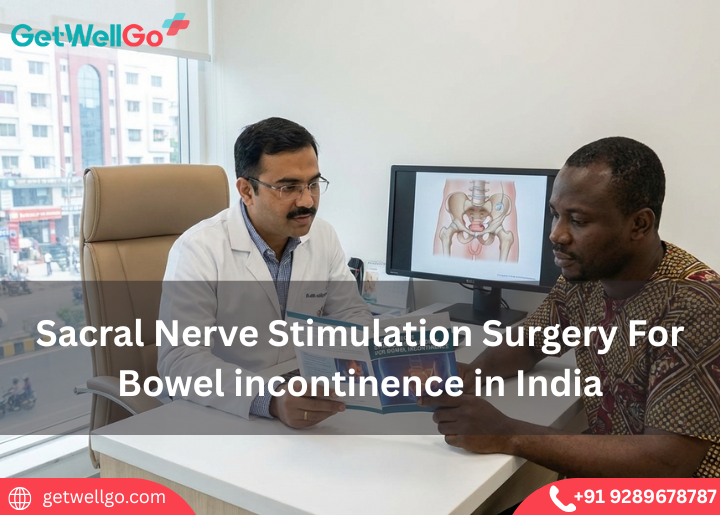
Sacral nerve stimulation (SNS) is a least invasive procedure which involves the application of mild electrical impulses to stimulate the sacral nerves, which aid in the regulation of the bowel, bladder, and pelvic floor. It is normally provided in situations where the conservative programs (such as change of diet, pelvic floor exercises or medications) have failed to do the job satisfactorily.
Sacral nerve stimulation (SNS) or sacral neuromodulation (SNM) is a minimally invasive implanted treatment designed to improve bowel control in patients with chronic fecal incontinence who failed to respond to non-invasive methods of a non-continence restoration including bowel training, dietary modi?cation, medications, or biofeedback. It operates through transmitting such mild electric impulses on the sacral nerves that assist in regulating the functioning of the pelvis floor, an ushers stool and bowel.
The therapy typically is two-step:
An interim electrode is inserted close to the sacral nerves (usually the S3 level). A patient goes with the external stimulator during a few days to weeks to evaluate the response. In case the level of bowel control is elevated, then permanent stage is advised.
This is a permanently implanted small pulse generator (like a pacemaker) that is placed under the skin close to the buttock, and attached to the lead. This continued stimulation assists in enhancing continence.
SNS therapeutic intervention has been approved to treat fecal incontinence and it has been demonstrated internationally to decrease the number of episodes by substantial numbers, particularly in long-term follow-up research.
Sacral neuromodulation (also known as SNS or SNM) is a minimally invasive surgical implanted procedure wherein minor electrical impulses are used to stimulate the sacral nerves - the nerve roots that govern pelvic floor, anal sphincter and bowel/bladder. It is targeted at individuals with a history of fecal incontinence or bowel control problems that have not responded to the effects of conservative interventions such as dietary changes, pelvic floor muscles or drugs.
The treatment is effective as it enhances the communication between the sacral nerves and the brain that may result in the enhancement of bowel control and the reduction of the incontinence episodes.
The Sacral neuromodulation to bowel control / fecal incontinence is offered in India and has been able to access it as the advanced neurostimulation device is being introduced into the Indian market. For example:
InterStim X system- a FDA approved sacral neuromodulation device employed by Medtronic to control the bladder and chronic fecal incontinence, has been introduced in India, extending the access of SNM therapy to bowel control problems that are not responding to other therapies.
SNS/SNM is available at many large tertiary care hospitals and specialist centers in metro areas - typically within the urology, colorectal surgery, pelvic floor medicine, or neuromodulation programs.
The following is a straightforward analysis of the key drivers of the cost of the sacral neuromodulation (SNS/SNM) of bowel control (fecal incontinence) in India:
The neurostimulator device and leads which are implantable comprise a huge percentage of the entire cost. They are hi-tech medical equipment that is imported or provided by multinational corporations and this can be expensive depending on the model:
Most patients’ pre-SNS require a lot of tests including:
Such tests assist in deciding whether you are a good candidate or not but this is on top of the total bill prior to the procedure even taking place.
SNS typically entails a trial stimulation period prior to permanent implant:
Follows permanent implantation:
Costs may be increased by some patient-dependent conditions:
Sacral neuromodulation (SNS) or sacral nerve stimulator (SNS) is a minimally invasive surgical intervention that includes an small electrical device to modulate the sacral nerves – the nerves that manage bowel, bladder and the pelvic floor. It is generally offered only after conservative measures (diet, exercises, medications, bio-feedback) fail to demonstrate sufficient improvement.
The therapy is effective because it involves the delivery of small electrical shocks to the sacral nerve roots and this allows the nerves to communicate with the bowel/bladder muscles in order to minimise the symptoms of incontinence and urgency.
In general, the use of sacral nerve stimulator implantation is an option to people who:
Sacral nerve stimulation (SNS) also called sacral neuromodulation is a minimally invasive procedure in which a small device is implanted in the body to provide mild electrical stimulation to the sacral nerves located at the lower end of the spine. These nerves help in regulation of the bowel and the bladder. Therapy is able to enhance control in individuals with fecal incontinence, urinary urgency, or unobstructed urinary retention who does not respond to other therapies.
Such therapy has been seen in India using sophisticated equipment like the InterStim X of Medtronic.
Trial (Evaluation) Phase
This is to see whether the stimulation can prevent your symptoms, and then a permanent implant can be performed:
Permanent Phase of Implantation
Once the trial shows benefit:
How long it takes:
The trial and the permanent implant stages normally take around 1-2 hours each.
Immediate Aftercare
Programming & Follow-Up
Activity & Recovery
Below is a complete list of the possible complication and risks of sacral nerve stimulation (SNS) / sacral neuromodulation -and what may occur during and after the surgery:
Common and Expected Complications
Less Common or Rare Complications
Long-Term or Maintenance Issues
SNS or sacral neuromodulation is an effective, established treatment for bowel (fecal) incontinence and other pelvic floor disorders in India especially when other conservative treatments turn out to be inadequate. Though the procedure is minimally invasive and generally safe, it is not without risks. The majority of complications, like pain at the location of the implant, lead displacement, infection, or the necessity to reprogram can be managed and cured in the early stages. The incidences of serious complications are rare, especially where the procedure is done in experienced centres under the right selection of the patient, and when the procedure is done under sterile conditions. The Indian healthcare environment has similar outcomes and safety rates to the international ones, particularly in tertiary multispecialty hospitals that have specific pelvic floor or neuromodulation initiatives. The trial stimulation step is important to reduce the risks in the long-term since it would guarantee that only patients who respond well would go ahead to permanent implantation.
GetWellGo is regarded as a leading supplier of healthcare services. We help our foreign clients choose the best treatment locations that suit their needs both financially and medically.
We offer:
Who can donate bone marrow for a family member? Discover the eligibility rules, matching process, and steps Nigerians need to follow. Learn more inside.
Read More
Where is bone marrow located, and why does it matter? Discover its role in your body and why Nigerian patients should understand it. Learn more inside.
Read More
Where is bone marrow located, and why does it matter? Discover its role in your body and why Nigerian patients should understand it. Learn more inside.
Read More
What are bone marrow disorders? This complete guide breaks down the various types, causes, and available treatment paths for Nigerian patients. Read more now.
Read More
Considering a bone marrow transplant? Understand the underlying bone marrow disease causes and discover how this life-saving procedure can restore your health.
Read More
Bone marrow biopsy indications: discover why doctors order this test, what it diagnoses, and what Nigerian patients should expect next. Learn more inside.
Read More
What is bone marrow transplant? Discover how this life-saving procedure works, who qualifies, and what Nigerian patients should expect. Learn more inside.
Read More
Fortis Hospital Delhi India: discover the treatments, top doctors, and real costs Nigerian patients need to know before booking travel. Learn more inside.
Read More
Is sickle cell an African disease? Not exactly — learn the real genetic and malaria link, and the myths Nigerians should stop believing about SCD.
Read More
Is there a cure for sickle cell disease? Yes — learn about bone marrow transplant and gene therapy options, plus real costs and access for Nigerians.
Read More
What is a stem cell transplant? This simple guide explains how it works, which conditions it treats, and what Nigerian patients should expect from it.
Read More
A complete guide to pediatric cardiology in India, covering Max Hospital's child heart care, specialists, costs, and what Nigerian parents should expect.
Read More